Not all skin cancers are created equal. While both basal cell carcinoma and melanoma fall under the umbrella of skin cancer, they behave very differently in terms of appearance, severity, and treatment. Understanding how basal cell carcinoma is different from melanoma can be the key to early detection and proper care. In this guide, we’ll break down the origins, symptoms, and outcomes of both to give you a clearer picture of what makes each type of cancer unique—and why it matters.
Quick Summary
- Basal cell carcinoma (BCC) starts in basal epidermal cells, grows slowly, and rarely spreads but can damage nearby tissue if untreated.
- BCC often appears as a pearly bump, open sore, or scar-like patch on sun-exposed areas and may crust, bleed, heal, then return.
- Melanoma starts in melanocytes, is more aggressive, can appear anywhere, and may arise from a mole or new dark irregular spot.
- Melanoma warning signs follow ABCDE: asymmetry, irregular border, varied color, >6mm diameter, and evolving changes; itching or bleeding can occur.
- BCC is often treated with excision, Mohs, cryotherapy, or topicals; melanoma may need surgery plus immunotherapy, targeted therapy, chemo, or radiation.
Basal Cell Carcinoma
As the most common type of skin cancer, basal cell carcinoma is slow-growing and rarely life-threatening. But that doesn’t mean it should be ignored. Left untreated, it can damage surrounding tissue and lead to disfigurement.
Characteristics
Basal cell carcinoma forms in the basal cells of the epidermis, which are responsible for producing new skin cells. It typically shows up in sun-exposed areas like the face, neck, or scalp.
- Grows slowly and tends not to spread (metastasize)
- Most frequently appears as a pearly bump, open sore, or scar-like patch
- May crust, bleed, or heal and return in the same spot
Though it’s rarely fatal, it still requires prompt attention from a dermatologist or skin cancer specialist to prevent progression.
Causes
The primary cause of basal cell carcinoma is long-term sun exposure. Ultraviolet (UV) radiation from the sun or tanning beds damages basal cells, triggering abnormal growth.
Other contributing factors include:
- Having fair skin tones and a history of frequent sunburns
- A family history of skin cancer
- Exposure to radiation or certain chemicals
- A weakened immune system due to medications or illness
Preventive measures like wearing sunscreen, protective clothing, and avoiding peak sun hours can significantly reduce your risk of skin cancer.
Symptoms
Because basal cell carcinoma can resemble other skin conditions, early symptoms are often overlooked. Common signs include:
- A small, shiny bump that may appear pink, white, or translucent
- A flat, flesh-colored or brown lesion that resembles a scar
- A bleeding or scabbing sore that won’t heal
- A pink growth with a slightly raised, rolled edge and a crusted center
While painless, these lesions can slowly expand, damaging surrounding tissue. A biopsy is the only way to confirm diagnosis.
Treatment
Basal cell tumors are usually treated with outpatient procedures and have a high cure rate when caught early.
Common treatment options include:
- Surgical excision – removing the tumor and some surrounding skin
- Mohs surgery – a precise method often used on the face to conserve healthy tissue
- Cryotherapy – freezing the abnormal cells with liquid nitrogen
- Topical medications – creams applied to smaller, superficial tumors
In rare advanced cases, radiation or immunotherapy may be recommended.
Melanoma
Melanoma is a more aggressive form of skin cancer that begins in the melanocytes—the cells responsible for producing melanin, the pigment that gives skin its color. Though less common than basal cell carcinoma, melanoma is significantly more dangerous due to its high likelihood of spreading to other parts of the body if not caught early.
Characteristics
- Often develops from an existing mole or appears as a new dark spot
- Can occur anywhere on the body—not just areas with high sun exposure
- May show rapid changes in shape, color, or size
- Commonly linked to malignant melanoma, a fast-spreading and potentially fatal form
Melanoma skin cancer requires immediate medical attention, as early intervention is critical for a positive outcome.
Causes
Like other types of skin cancer, melanoma is strongly associated with UV radiation from the sun or tanning beds. However, genetics and personal history play a much larger role compared to basal cell carcinoma.
Risk factors include:
- Having many moles, especially atypical or irregular ones
- Family history of melanoma or other skin cancers
- Fair skin, light eyes, and a tendency to burn rather than tan
- A weakened immune system
- History of severe, blistering sunburns (especially during childhood)
Some cases may develop without obvious sun exposure, which is why regular skin checks are so important.
Symptoms
Melanoma often presents in ways that mimic ordinary moles, which makes early detection a challenge. But certain warning signs can help differentiate between harmless spots and something more serious.
Watch for the ABCDEs of melanoma:
- A – Asymmetry: One half of the mole doesn’t match the other
- B – Border: Irregular, ragged, or blurred edges
- C – Color: Multiple shades of brown, black, or even red and white
- D – Diameter: Larger than 6mm (about the size of a pencil eraser)
- E – Evolving: Changes in size, shape, or color over time
Other red flags include itching, bleeding, or the sudden appearance of an abnormal mole. Any suspicious change should prompt an immediate visit to a dermatologist.
Treatment
Melanoma requires prompt and often aggressive treatment, especially if it has spread beyond the surface of the skin.
Typical treatment options include:
- Surgical excision – Complete removal of the tumor with clear margins
- Immunotherapy – Boosts the immune system to fight melanoma cells
- Chemotherapy – Used in advanced stages or when other methods are not effective
- Targeted therapy – Attacks specific genetic mutations within the cancer
- Radiation therapy – Sometimes used after surgery to reduce the chance of recurrence
Early-stage melanoma can often be cured with surgery alone, but advanced cases may require a combination of therapies.
Key Differences
Now that we’ve covered both types, let’s break down the core contrasts between basal cell carcinoma and melanoma to clarify the difference between melanoma and other forms of skin cancer.
Variations in Appearance
Basal cell carcinoma and melanoma often look quite different, which can be a helpful clue during early detection:
- Basal cell lesions usually appear as shiny, pearly bumps or flat, scar-like patches. They grow slowly and are often flesh-toned or slightly pink.
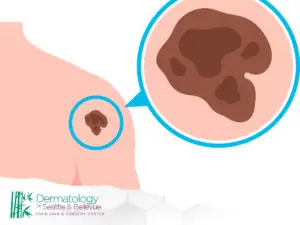
- Melanoma, on the other hand, tends to be darker, irregular, and more aggressive in appearance. It may develop from a pre-existing mole or emerge as a new, oddly pigmented spot.
Understanding these differences can help you recognize potential problems before they become serious.
Treatment Approaches
Both conditions require medical attention, but the treatment paths diverge significantly:
- Basal cell carcinoma is usually managed with minor outpatient procedures like surgical excision or topical therapies.
- Melanoma may require surgery, but more advanced stages often involve immunotherapy, chemotherapy, or targeted therapy, depending on how far the cancer has spread.
While both can be treated successfully when caught early, melanoma carries a much higher risk if left untreated.
Prognosis
- Basal cell carcinoma has an excellent prognosis when detected early, with a very low risk of spreading. However, it can be locally destructive if ignored.
- Melanoma has a more guarded outlook due to its aggressive nature. Survival rates drop significantly once it metastasizes to other parts of the body.
This makes early detection of melanoma absolutely critical.
Risk Factors
While both forms of skin cancer share some common risk factors, there are key distinctions:
Shared risks:
- Sun exposure
- Fair skin and light hair
- Personal or family history of skin cancer
Melanoma-specific risks:
- Multiple or atypical moles
- Weakened immune system
- Inherited gene mutations
Basal cell-specific risks:
- Older age
- Cumulative sun damage
- Actinic keratosis or chronic skin inflammation
Understanding these differences allows for better screening, prevention, and ultimately, improved outcomes.
Disclaimer
This content is for informational purposes only and does not replace professional medical advice, diagnosis, or treatment. Always consult a qualified dermatologist or skin cancer specialist for accurate assessment and care if you notice any changes in your skin.