

Telehealth dermatology can be a lifesaver when you’ve got a rash, acne flare, or a weird spot you want checked without driving across town. But the big question is always the same: does medicare cover telehealth? The answer is often yes, but it depends on what kind of virtual visit you’re having, who your provider is, and how the appointment is set up.
In this guide, you’ll learn what Medicare (including Original Medicare and Medicare Advantage) usually covers, what “telehealth” really means in Medicare language, what you might pay, and how Medicaid telehealth and private telehealth insurance often compare. And yes, we’ll also talk about common reasons claims get denied and how to avoid surprises.
Best for: People who want a covered virtual visit for a medical skin concern and need to understand Medicare rules before scheduling.
Not ideal when: Your issue needs a hands-on exam, a biopsy, or urgent care that can’t be done safely over video or phone.
Good first step if: You’re scheduling a virtual appointment and want to confirm the provider, visit type, and technology match coverage rules.
Call a pro if: You get a denial, the billing code seems wrong, or your symptoms are severe, fast-changing, or frightening.
Quick Summary
-
Medicare telehealth coverage is real, but it hinges on the exact service, the provider’s status, and the visit format.
-
“Telehealth” isn’t one thing under Medicare. E-visits and virtual check-ins can be billed and covered differently.
-
Original Medicare usually pays for covered services through Part B, which often means deductible and coinsurance still apply.
-
Medicare Advantage plans can add extra virtual options, but the rules can vary by plan and network.
-
Audio-only phone visits may be covered in some situations, but video is often the safer bet for skin concerns.
-
You can reduce denials by confirming the provider is Medicare-enrolled and asking how the visit will be billed.
Quick Answer: When Medicare Covers Telehealth (and When it Doesn’t)
Medicare covers telehealth when the service is Medicare-covered, medically necessary, and provided by an eligible, Medicare-enrolled clinician using an approved setup. Coverage often fails when the service is non-covered, the provider can’t bill Medicare, or the visit is cosmetic. A virtual visit for a changing mole is more likely to fit coverage than a visit focused only on wrinkle treatment.
What Counts as Telehealth Under Medicare (Telehealth Vs. E-visits Vs. Virtual Check-ins)
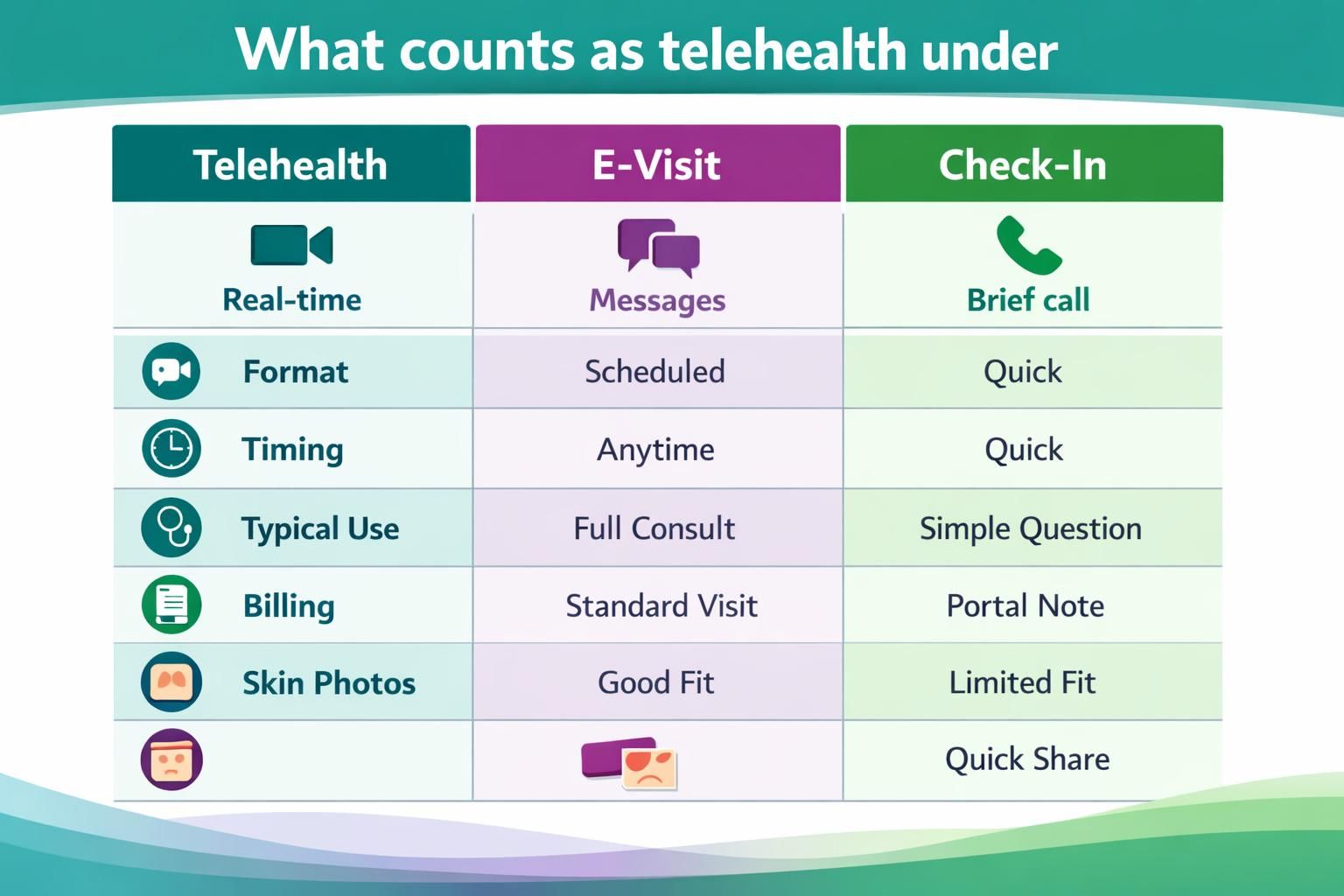
Medicare treats “virtual” care types differently for billing. A full telehealth visit, an e-visit, and a virtual check-in can have different coverage and patient costs. When scheduling, ask what type of remote service it is and how it will be billed. If you plan to share photos, ask whether images are included or billed separately. For concerning changes, review warning signs in spots so you report key details.
Telehealth Vs. E-visits
A telehealth visit is usually a real-time appointment, like a normal office visit but on video (and sometimes phone). An e-visit is typically a message-based exchange through a patient portal, where you and the clinician communicate back and forth over a short period.
Why this matters: e-visits can be billed differently than video visits, and not every “send a photo and we’ll reply” setup counts as the same covered service as a scheduled telehealth appointment.
Telehealth Vs. Virtual Check-ins
A virtual check-in is usually a brief, low-complexity contact, often to decide if you need an in-person visit. Think of it like a quick “triage” chat, not a full evaluation.
In Medicare terms, virtual check-ins can have specific requirements, including that they’re not simply part of a visit you already had (or are about to have). If you’re trying to diagnose something new, you’ll usually want a full telehealth visit instead.
What Medicare Covers Via Telehealth (Common Covered Visit Types)
Medicare Part B can cover many medically necessary outpatient services by telehealth when they’re on Medicare’s covered telehealth list and done under the rules. In dermatology, common covered reasons include rashes, eczema flares, acne not improving, or a suspicious lesion discussion. If the dermatologist needs dermoscopy, palpation, or a biopsy, telehealth is usually just the first step toward an in-person exam.
Primary Care and Specialist Visits
Medicare can cover virtual primary care visits and specialist visits when they’re medically necessary and billed as covered services. For skin issues, you might start with your primary care provider or go straight to a dermatologist if you can.
If you’re dealing with something like eczema and you’re trying to understand medication options, it may help to skim a practical guide like topical options for eczema so your questions are more focused during the visit.
Mental Health and Substance Use Care
Medicare also covers many mental health services through telehealth, and those rules matter even if you’re reading this for dermatology. Why? Because anxiety, depression, and stress can affect sleep, picking behaviors, and flare patterns for conditions like acne, psoriasis, and eczema.
Substance use care may also be available remotely in many cases, which can be important if medications or alcohol are aggravating skin symptoms and you need coordinated care.

Eligibility Rules That Can Affect Coverage (Location, Technology, and Provider)
Eligibility rules can determine whether Medicare pays because telehealth is billed under specific requirements. Common issues include where you’re located, whether the visit is audio-only versus video, and whether the clinician type is eligible to bill for that service. If any piece doesn’t match the allowed pattern, the claim can be denied. Before confirming, ask how the office will bill it and whether they expect Medicare coverage.
Where You’re Located During the Visit
Your physical location during the appointment can matter because Medicare historically used geographic restrictions like a rural area requirement and rules about the originating site (the place you’re “at” when you receive care). During temporary telehealth expansions, home as originating site became much more common.
So what should you do? When scheduling, tell them where you’ll be (home, work, a family member’s house) and ask if that affects coverage for your specific visit type.
Audio-only Vs. Video Visits
Audio-only visits are phone appointments, and Medicare coverage may be more limited depending on the service and current rules. For dermatology, video is usually preferred because the clinician must see the skin, and image quality matters. If you can’t do video, ask whether you can submit photos in advance and whether the office expects Medicare to pay it as audio-only or as a different service type.
What You’ll Pay for Medicare Telehealth (Part B Costs and Cost Sharing)
Under Original Medicare, telehealth is usually paid through Medicare Part B, so your costs generally follow Part B rules. You may owe the Part B deductible (if not met) and then coinsurance based on the Medicare-approved amount. To avoid surprises, confirm the clinician is Medicare-enrolled and accepts assignment, ask about any separate facility fee, and clarify whether sending photos is included or billed separately. Telehealth can still involve copays or coinsurance.
Medicare Advantage Telehealth Coverage: What’s Different (and What Can Be Extra)
Medicare Advantage (Part C) plans must cover what Original Medicare covers, but they can add network rules, different copays, and extra virtual-care options. Coverage is often “yes, if you use the right provider and platform.” You may need in-network clinicians, a plan-sponsored app, or a specific visit type. Costs may be a flat copay or vary by video, phone, or urgent virtual care. Always confirm plan rules before scheduling.
Coverage Timeline: What Changed Recently and What to Watch Next
Medicare telehealth rules expanded during the COVID-19 Public Health Emergency, and some flexibilities continued afterward, which is why advice can sound inconsistent. The practical move is to confirm coverage details when you schedule, not assume them. If a skin concern may be serious, don’t let policy uncertainty delay care; switch to an in-person visit if needed.
Changes Effective in Late 2025/early 2026
Some flexibilities have been scheduled to shift over time, and late 2025 or early 2026 has been a common window discussed for changes to certain telehealth rules. The key point for you is not memorizing dates. It’s understanding what might tighten: location requirements, which services qualify, and how audio-only visits are treated.
Before you book a future appointment, ask the provider’s billing team if any policy sunset date could affect your visit date, not just today’s rules.
Through Dec. 31, 2027 and Beyond
Some Medicare telehealth provisions have been extended, with references to coverage continuing through Dec. 31, 2027 for certain rules. After that, Medicare may keep, change, or end specific policies, including eligible services and conditions. In practice, stay flexible and verify rules each time you schedule. For skin changes, see spot differences to know before your visit.
Conclusion
Telehealth can be a convenient way to start care for a medical skin concern, but coverage depends on the visit type, your setup, and the provider’s ability to bill correctly. If you remember one thing, make it this: confirm details before the visit, not after. Ask what kind of virtual visit it is, whether it’s billed under Medicare Part B, and what you’ll owe. That simple checklist prevents a lot of frustration and helps you use does medicare cover telehealth rules to your advantage, not as a surprise later.