
Can Skin Cancer Appear Overnight?
Quick Summary
- Most skin cancers develop over time, but may seem sudden when scabbing, bleeding, darkening, or noticed in better lighting.
- Basal cell and squamous cell cancers often appear as persistent bumps, scaly patches, or sores that don’t heal.
- Melanoma can change quickly; it may be dark, multicolored, or pink/red, and can appear as a new spot.
- Warning signs include rapid enlargement, ulceration, unexplained bleeding, recurring scabs, or evolving ABCDE mole changes and “ugly duckling” lesions.
- Diagnosis relies on clinical exam and often biopsy; early evaluation generally means simpler treatment and recovery than waiting for pain.
A spot that seems to show up out of nowhere can be alarming. Many people notice a mark in better lighting and assume it appeared overnight. Often, the spot was there but became noticeable as it darkened or scabbed.
Some skin cancers can change quickly, so “fast” is a valid reason to get checked. The best approach is understanding what grows slowly, what can evolve faster, and which warning signs deserve evaluation.
Understanding Skin Cancer
Skin cancer starts when skin cells grow in an uncontrolled way. It can look like a new bump, a changing mole, a sore that will not heal, or a scaly patch that keeps returning. Not every new spot is cancer, but new and changing lesions deserve attention.
What is Skin Cancer?
Skin cancer is the abnormal growth of cells in the skin. It most often develops because of cumulative ultraviolet exposure, but genetics, immune status, and other factors can contribute. Some cancers arise from pigment-producing cells, while others arise from the more common surface skin cells.
A key point: skin cancer is diagnosed by examining the lesion and, when needed, taking a small sample (biopsy). Photos and self-checks can help you track change, but they cannot confirm what a spot is.
Types of Skin Cancer
The most common types are basal cell carcinoma and squamous cell carcinoma. They often develop on sun-exposed areas like the face, scalp, ears, neck, and hands, but they can appear anywhere.
Melanoma is less common but more serious because it can spread. It may develop in an existing mole or appear as a new spot. Melanoma is not always dark; some are pink, red, or skin-colored.
Basal cell carcinoma often looks like a shiny or pearly bump, a persistent pink patch, or a spot that bleeds easily and then “heals” before returning. Squamous cell carcinoma more often appears as a rough, scaly patch, a crusted bump, or a sore that does not fully heal. These patterns are not perfect, but they help explain why many non-melanoma cancers are found after months of recurring change rather than in a single day.
Common Myths about Skin Cancer
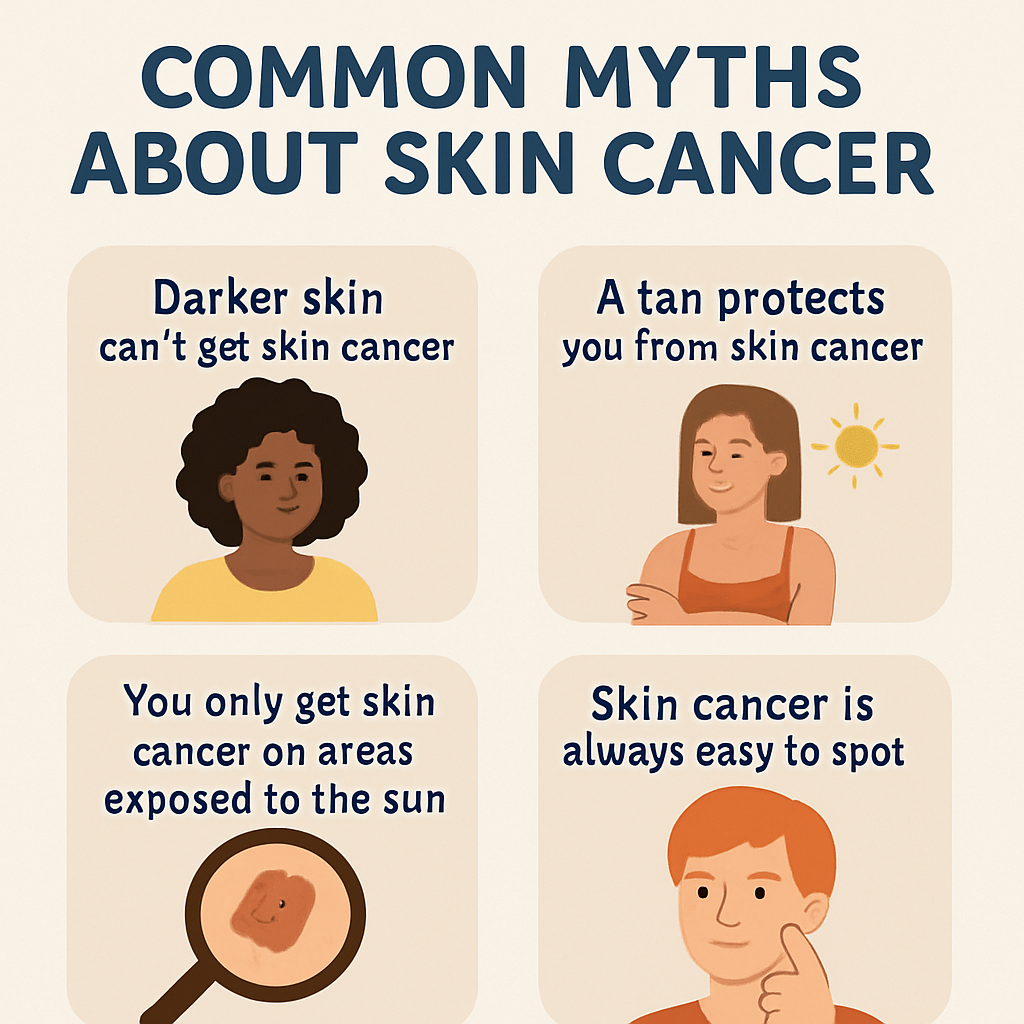
Myth: Does skin cancer appear overnight? If it looks new, it must have started that day.
Reality: Most skin cancers develop over time. A lesion may become noticeable suddenly because it changes or because you finally spot it.
Myth: Only very dark moles can be melanoma.
Reality: Melanoma can be dark, multicolored, or not pigmented at all.
Myth: If it does not hurt, it is harmless.
Reality: Many early skin cancers are painless.
The Growth Patterns of Skin Cancer
Not all skin cancers behave the same way. Some tend to creep along slowly, while others can change over weeks. The question is not only how fast something grows, but whether it behaves like a problem: does it heal, recur, bleed, or evolve?
Do All Skin Cancers Develop Slowly?
No. Many basal cell carcinomas grow slowly and can be present for months or years before being diagnosed. Some squamous cell carcinomas progress gradually, but others can enlarge faster.
Melanoma growth rate varies. Some change slowly, while others can grow noticeably over a short period. This is why “can skin cancer appear suddenly” and “can melanoma appear suddenly” are reasonable questions. The underlying process usually began earlier, but visible change can happen quickly.
If a spot seems to appear overnight, it is often because:
- It reached a size or color that made it stand out
- A tiny area scabbed or bled and became obvious
- Inflammation or irritation changed its appearance
- You saw it in better lighting or at a new angle
Factors Influencing the Growth Rate
Several factors influence how fast a lesion changes:
- Type of cancer: basal cell, squamous cell, or melanoma
- Location: friction-prone areas may crust or bleed sooner
- Immune status: immunosuppression can increase risk
- UV history and sun damage: heavily sun-damaged skin can develop multiple changing lesions
- Trauma or irritation: scratching can make a lesion look suddenly worse
A few fast-growing lesions can also mimic “overnight” change. For example, a rapidly enlarging, dome-shaped, crusted bump can be a benign growth, but it can also represent a form of squamous cell carcinoma and should be assessed.
Also consider the difference between true growth and surface change. A lesion may not be growing deeper, but it may crust, ulcerate, or become inflamed, which makes it look dramatically different.
Can Skin Cancer Appear Overnight?
Most skin cancers do not truly appear overnight, but some can become noticeable very quickly, and some can change faster than people expect. If you are asking “can skin cancer show up in one day or overnight,” focus on warning signs and ongoing change, not the exact hour it started.
Common Symptoms to Look For
Skin cancer can look like many things, but a few patterns are common:
- A new bump that grows, bleeds, or forms a persistent scab
- A sore that does not heal within a few weeks
- A rough, scaly patch that keeps returning
- A shiny or pearly bump, sometimes with visible blood vessels
- A firm, crusted spot that enlarges
- A new or changing pigmented spot with irregular borders or multiple colors
For moles and pigmented spots, use the ABCDE guide:
- Asymmetry
- Border irregularity
- Color variation
- Diameter getting larger
- Evolving in any way
Also consider the “ugly duckling” concept: a spot that looks different from the others on your body deserves attention.
Warning signs that should prompt faster evaluation include bleeding without a clear reason, ulceration, rapid enlargement, or a lesion that changes noticeably over days to weeks.
Understanding Rapid Changes in Moles or Skin Spots
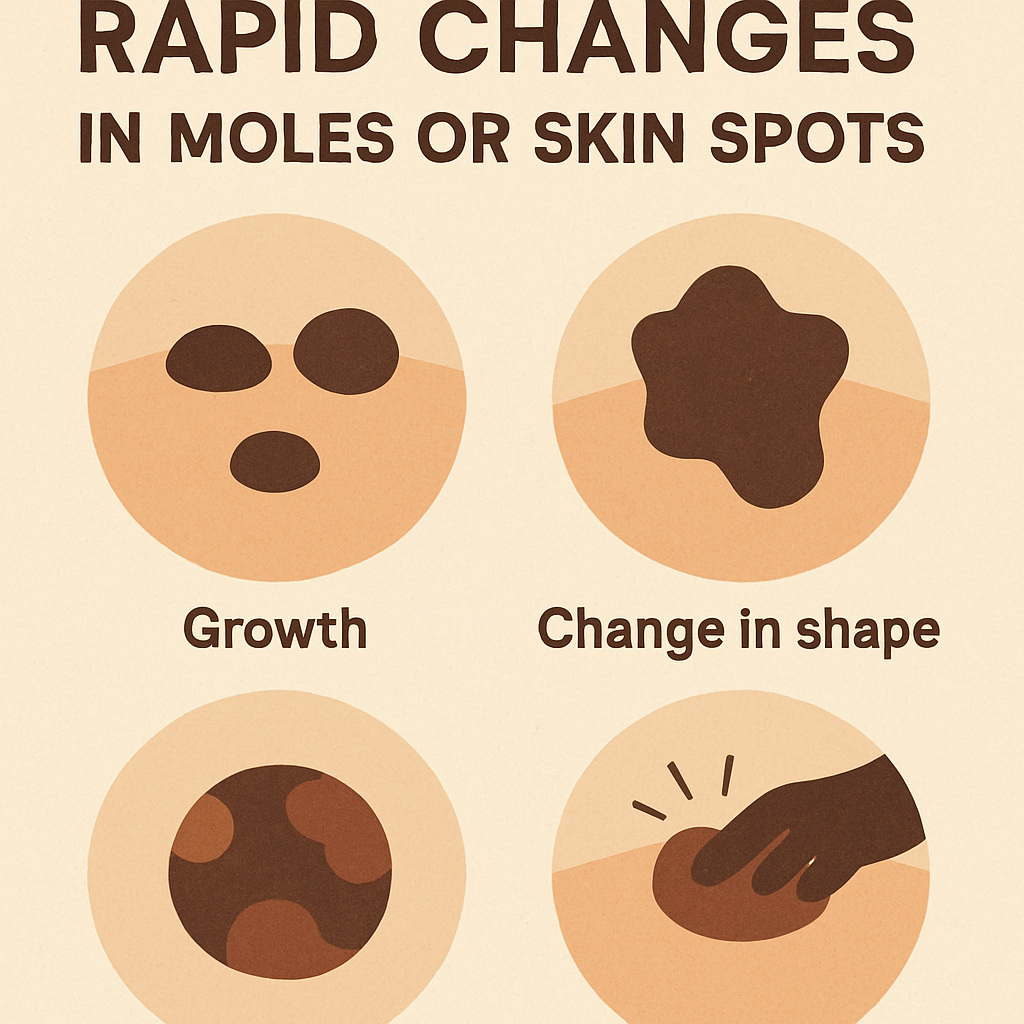
A fast change does not automatically mean cancer. Several harmless issues can seem to appear overnight:
- Insect bites or localized allergic reactions
- Irritated benign growths that become inflamed
- Folliculitis or inflamed cysts
- Minor trauma causing a blood blister or bruised spot
However, rapid change is still a reason to be cautious. “Can melanoma appear overnight” is common because some melanomas can enlarge quickly. These may appear as a new, firm bump that can be dark, blue-black, pink, or red, and they may bleed or crust.
Pay attention to where the spot is and how it behaves. A new dark spot under a nail, a new pigment mark on a palm or sole, or a lesion that rapidly spreads at the edges deserves prompt evaluation. Likewise, if you are immunosuppressed or have a personal history of skin cancer, it is safer to check new lesions sooner rather than later.
If a spot seems new, ask:
- Is it resolving in 1 to 2 weeks like an inflammatory bump would?
- Is it persisting and evolving over 3 to 4 weeks?
- Is it bleeding, scabbing repeatedly, or not healing?
- Is it changing in color or border rather than just being irritated?
If the answer points toward persistence and evolution, a dermatology visit is the most efficient next step.
Testimonials from Patients
People often describe the “overnight” feeling in similar ways. The examples below reflect common experiences people report, not a diagnosis.
“I noticed a dark spot and I swear it was not there last week.”
Sometimes this turns out to be a small bruise or irritation-related pigment. If it does not fade, it should be checked.
“I had a scab that kept coming back in the same place.”
Recurrent scabbing and bleeding are reasons clinicians evaluate for skin cancer, especially on sun-exposed areas.
“I thought it was a pimple, but it kept growing and started bleeding.”
A growing bump that bleeds easily should be evaluated.
Can Melanoma Appear Suddenly?
Melanoma can sometimes seem to appear suddenly because certain subtypes grow in a more vertical pattern and become noticeable quickly. That does not mean melanoma truly begins overnight, but it can change quickly enough that a person notices it over a short window.
Characteristics of Melanoma
Melanoma can present as:
- A new mole-like spot that is changing
- A changing existing mole
- A dark streak under a nail that widens or extends to the surrounding skin
- A pigmented spot on the palms or soles
- A firm bump that may be dark or may be pink or red (amelanotic melanoma)
If you are asking “how quickly can melanoma, basal cell, or squamous cell skin cancer develop,” melanoma is the one where rapid change deserves the most urgency.
The Importance of Early Detection
Early detection can reduce treatment complexity and improve outcomes. The goal is not to panic over every new freckle. The goal is to avoid delay when a lesion is clearly evolving, ulcerating, bleeding, or looking atypical.
If you notice a new or changing spot in Bellevue, especially one that is growing or bleeding, it is reasonable to schedule a dermatology evaluation. If it is rapidly changing over days, or if it is bleeding without healing, it may warrant a more urgent appointment.
Diagnosis and Treatment Options
If a spot is concerning, evaluation is usually straightforward. The decision often comes down to whether the lesion looks benign, needs monitoring, or requires biopsy.
How Skin Cancer is Diagnosed
Dermatologists start with a visual exam and often use a dermatoscope, a handheld device that helps reveal structures beneath the surface. They may compare the spot to other lesions and ask about timing and symptoms.
In some cases, a clinician may recommend short-term monitoring with photographs if the lesion looks likely benign but you and your clinician want to confirm stability. More often, when a spot is changing or has concerning features, biopsy is the fastest way to remove uncertainty.
If the lesion is suspicious or uncertain, a biopsy is performed under local numbing medicine so it can be examined under a microscope. This is the definitive way to diagnose skin cancer.
Treatment Procedures
Treatment depends on the type, size, location, and depth. Many basal cell and squamous cell cancers are treated with surgical removal. In cosmetically sensitive areas, a tissue-sparing technique may be recommended to preserve healthy skin. Some superficial cancers can be treated with topical medications or targeted destruction techniques when appropriate. Melanoma is treated with excision with appropriate margins and may require additional steps depending on depth.
For all types, earlier treatment generally means smaller procedures and simpler recovery. Waiting for pain is not a good strategy, because many lesions are painless early on.
Conclusion
Summary of Insights on Skin Cancer Growth Patterns
Can skin cancer appear overnight? Most of the time, no. Most skin cancers develop over time, but they can become noticeable quickly when they crust, bleed, change color, or reach a point where you finally see them. Some lesions can evolve faster than people expect, which is why sudden change should not be ignored.
A practical rule: a new spot that resolves quickly is usually less concerning, while a new spot that persists and evolves over weeks, bleeds, or repeatedly scabs deserves evaluation.
Encouragement for Regular Skin Checks
Regular skin checks help you notice changes earlier, including in easy-to-miss areas like the scalp, ears, back, and the soles of the feet. A monthly self-check, plus periodic professional exams if you have risk factors, can reduce uncertainty and support earlier detection.
If you are unsure whether a spot is harmless or concerning, document it with a photo and a date, and seek a dermatology evaluation. When a lesion is changing quickly, do not wait to see what happens.
Disclaimer
This article is for general educational purposes only and does not provide medical advice, diagnosis, or treatment. If you have a new or changing skin lesion, especially one that is growing, bleeding, painful, or not healing, seek evaluation from a qualified healthcare professional.