
Quick Summary
- Triamcinolone is a mid- to high-potency steroid for eczema, contact dermatitis, and some psoriasis on thicker body skin.
- Hydrocortisone is weaker and safer for face, folds, and kids, but may not control moderate or thick plaques.
- Non-steroid options (tacrolimus, pimecrolimus) reduce inflammation without skin thinning, ideal for eyelids/face/groin.
- Other steroid substitutes vary by potency: desonide (low), mometasone/fluocinonide (stronger), clobetasol (very strong, short bursts).
- Choose based on diagnosis, location, and severity; contact your clinician if triamcinolone is unavailable or causing side effects.
If you rely on triamcinolone acetonide for eczema or rash, running out or finding it back-ordered can be stressful. The good news: there are several safe, dermatologist-approved substitutes that can often control itching and inflammation just as well—sometimes even better—when chosen correctly.
In this guide, I’ll walk you through what triamcinolone actually does, how it compares with hydrocortisone and other steroid creams, and when non-steroid options make more sense. The goal is simple: help you understand your choices so you can have an informed conversation with your provider, not guess at the drugstore shelf.
If you’re in Bellevue or the greater Seattle area, these are the same principles I use when helping patients choose an alternative in clinic.
Triamcinolone Acetonide Substitutes for Eczema and Rash
When people ask, “What can I use instead of triamcinolone acetonide?” they’re usually dealing with one of three situations:
- The pharmacy can’t fill the prescription (back-order or insurance issue).
- The cream is too strong, too weak, or causing irritation.
- They’d like a non-steroid option for long-term control.
A triamcinolone acetonide substitute isn’t one single product. It’s a category of options that can include milder steroids like hydrocortisone, stronger steroids like clobetasol in select cases, or non-steroid medications that calm inflammation without thinning the skin. The right choice depends on your diagnosis, where the rash is located, and how sensitive your skin is.
Understanding Triamcinolone Acetonide
What is Triamcinolone Acetonide?
Triamcinolone acetonide is a medium- to high-potency topical corticosteroid. In practical terms, that means it’s stronger than most over-the-counter steroid creams but not the very strongest prescription options. Dermatologists often use it as a “workhorse” cream for many inflammatory rashes on the body, such as eczema flares, allergic contact dermatitis (for example, poison ivy), and certain forms of psoriasis.
Indications for Use
Triamcinolone is typically prescribed for:
- Eczema (atopic dermatitis) on the arms, legs, trunk, or hands
- Allergic or irritant contact rashes
- Insect bite reactions with significant swelling or itch
- Some forms of psoriasis or lichen simplex chronicus (thick, itchy plaques)
It is usually avoided—or used only very short term—on areas with thin, delicate skin such as the face, eyelids, groin, or underarms, where side effects can appear quickly.
Mechanism of Action
Triamcinolone doesn’t “cure” eczema or allergies. Instead, it:
- Reduces local inflammation by dialing down overactive immune signals in the skin
- Decreases redness, swelling, and warmth
- Calms itching by stabilizing irritated nerve endings
Because it’s more potent than hydrocortisone, it usually works faster on moderate to severe flares. That same potency, however, is why we have to respect its limits—using the right amount, for the right duration, and in the right body areas.
Comparison with Hydrocortisone
Triamcinolone vs. Hydrocortisone
Hydrocortisone is a milder steroid than triamcinolone acetonide. Most over-the-counter “anti-itch” creams contain 0.5–1% hydrocortisone, while prescription triamcinolone products sit several steps higher on the potency scale. So no—hydrocortisone is not the same as triamcinolone; in most cases, it’s weaker.
For very sensitive areas like the face, neck, groin, or in young children, a weaker steroid such as hydrocortisone is often safer. On thicker skin (hands, feet, or lichenified plaques), triamcinolone usually works better and faster.
Efficacy and Potency
When patients ask, “Which is better, hydrocortisone cream or triamcinolone?” the honest answer is: it depends on where and what we are treating.
- Mild eczema on the face or in skin folds → low-potency hydrocortisone is usually preferred.
- Moderate eczema or allergic rash on the arms, legs, or trunk → triamcinolone is often more effective.
- Very thick, stubborn plaques → sometimes we step up briefly to a stronger steroid than triamcinolone.
Dermatologists balance potency with safety. The goal is to use the mildest medication that controls the inflammation, not the strongest cream available.
Side Effects and Warnings
Both hydrocortisone and triamcinolone share steroid-related risks, but those risks rise as potency and duration increase. Possible side effects include:
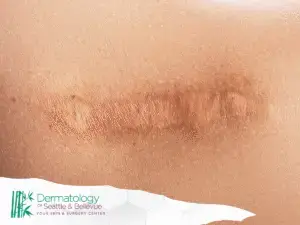
- Skin thinning or easy bruising
- Stretch marks or visible blood vessels with long-term use
- Worsening around the mouth or eyes if used in those areas
- Delayed wound healing or masking of infection
With proper use—thin layer, limited duration, correct body site—these creams are generally safe. Problems usually arise when a moderate- or high-potency steroid is used daily for weeks or months without supervision.
Alternatives to Triamcinolone
Alternative #1: Hydrocortisone Cream
For people asking, “What can I use instead of triamcinolone acetonide for eczema or rash?” the most common substitute is hydrocortisone. Prescription-strength hydrocortisone (stronger than drugstore versions) can be a good step-down option when:
- Your skin is improving and you’re tapering off a flare
- The rash is on a sensitive area such as the face, neck, or skin folds
- You’ve had side effects from stronger steroids
It’s usually not powerful enough for very thick or long-standing plaques, but it’s kinder to delicate skin.
Alternative #2: Calcineurin Inhibitors
Non-steroid creams called calcineurin inhibitors—tacrolimus (Protopic) and pimecrolimus (Elidel)—are often used when we want steroid results without steroid side effects. They:
- Reduce immune overactivity in the skin
- Do not thin the skin
- Are especially useful for eyelids, face, neck, and groin
These are prescription medications and can cause temporary burning or warmth when first applied, but they’re excellent long-term options for recurrent eczema in sensitive areas.
Alternative #3: “Natural” or Non-Steroid Supportive Remedies
There’s no true “natural triamcinolone substitute,” but certain non-steroid strategies support the skin so you may need steroids less often:
- Thick, fragrance-free moisturizers used twice daily
- Gentle, non-soap cleansers and shorter, lukewarm showers
- Barrier-repair creams containing ceramides or colloidal oatmeal
Herbal creams and essential oils are trickier—some can actually cause allergic contact dermatitis. Before trying alternative remedies, it’s worth discussing them with a dermatologist so you’re not unknowingly irritating already fragile skin.
Alternative #4: Other Topical Steroids
Sometimes the best triamcinolone substitute is simply a different steroid in the same family, chosen for its specific potency and formulation. Options include:
- Desonide – a low-potency steroid for face and skin folds
- Mometasone or fluocinonide – mid- to high-potency options for more stubborn plaques
- Clobetasol – a very high-potency steroid reserved for short bursts on thick skin (scalp, palms, soles), never for routine use or sensitive areas
We may step up to stronger steroids when triamcinolone hasn’t controlled a severe flare and the skin location is appropriate. The key is tight time limits and close follow-up.
Choosing the Right Substitute
Factors to Consider
Picking a substitute for triamcinolone isn’t something to do randomly in the pharmacy aisle. In clinic, I weigh factors such as:
- The exact diagnosis (eczema, contact allergy, psoriasis, etc.)
- Where the rash is located and how thick the skin is
- The severity and duration of the flare
- Age and overall health, including pregnancy or other medications
- How the skin has responded—or reacted—to steroids in the past
The same “strength” cream might be safe on the legs but too strong for the eyelids. That’s why your friend’s prescription is not automatically right for you.
Consultation with Healthcare Providers
If your triamcinolone acetonide cream isn’t available, the safest move is to contact your dermatologist or primary care provider before swapping products. We can:
- Suggest an equivalent or step-down steroid based on your chart
- Send a new prescription that your insurance is more likely to cover
- Add a non-steroid cream if you’re needing steroids too often
- Set limits on how long and how often to use each product
For patients in Bellevue and the greater Seattle area, we often coordinate directly with local pharmacies to find in-stock or covered substitutes so you’re not left guessing.
Conclusion
Summary of Options
Triamcinolone acetonide is a reliable, mid-range topical steroid for many inflammatory rashes—but it’s not your only option. Depending on your skin type and the area involved, substitutes may include: milder steroids like hydrocortisone, non-steroid medications such as calcineurin inhibitors, other prescription steroids chosen for specific body sites, and supportive skincare that keeps the barrier healthy between flares.
Importance of Monitoring Usage
Whatever substitute you use, the rules remain the same: apply a thin layer, follow your provider’s instructions on frequency and duration, and avoid long-term daily use without supervision. If you notice skin thinning, new stretch marks, worsening redness, or a rash that changes rather than improves, it’s time for a re-evaluation. Early adjustment is far safer than pushing ahead with a cream that isn’t quite right for your skin.