
Quick Summary
- Psoriasis is an autoimmune condition causing fast skin turnover, leading to thick, scaly plaques and possible nail or joint symptoms.
- Modest UVB can improve plaques, but sunburn can trigger flares via the Koebner phenomenon and worsen psoriasis.
- If approved by a dermatologist, start with 5–10 minutes midday sun on plaques a few times weekly; protect other skin with SPF 30+.
- Avoid indoor tanning beds: they’re mostly UVA, raise melanoma risk, and can burn without providing therapeutic UVB dosing.
- Excess UV increases aging, actinic keratoses, and skin cancer risk; review meds and get regular skin exams if using UV therapy.
Is Sun Tanning Safe if You Have Psoriasis?
For many people with psoriasis, the relationship with the sun is confusing. You may have heard that “sunlight helps psoriasis,” but you’ve also heard about skin cancer and sun damage—and maybe even wondered whether indoor tanning beds are a shortcut to clearer skin.
The truth is more nuanced: small, controlled amounts of natural sunlight can help some psoriasis patients, but too much sun or the wrong type of UV exposure can be dangerous. Let’s break down how psoriasis works, how light affects it, and what “safe” sun exposure really means if you’re in the Bellevue / Seattle area and living with psoriasis.
Understanding Psoriasis
Psoriasis is more than “just dry skin.” It’s a chronic inflammatory condition that speeds up how quickly your skin cells grow and shed. That’s why the skin can look thick, scaly, and red in certain areas, especially when the disease is active.
What is Psoriasis?
Psoriasis is an autoimmune skin disease. Your immune system mistakenly signals the skin to turn over too rapidly, which leads to:
- Thickened plaques of skin
- Flaky, silvery-white scale on top
- Red or violaceous (purple-red) background, depending on skin tone
Common areas include the scalp, elbows, knees, lower back, and sometimes nails, hands/feet, or even skin folds. Psoriasis tends to wax and wane over time, with flares triggered by stress, infections, medications, cold/dry weather, or skin injuries.
Although psoriasis primarily affects the skin, it’s linked to inflammation elsewhere in the body as well (joints, metabolic health, cardiovascular risk), which is why dermatologists take it seriously and treat it as a systemic condition—not just a cosmetic issue.
Symptoms and Types of Psoriasis
Psoriasis doesn’t look the same on every person. The most common forms include:
- Plaque psoriasis – The classic type: raised, red (or darker) plaques with thick scale.
- Scalp psoriasis – Flaky, inflamed patches along the hairline, back of the neck, or throughout the scalp.
- Guttate psoriasis – Small drop-like spots, often appearing after a strep infection.
- Inverse (flexural) psoriasis – Smooth, red or darker patches in skin folds (armpits, groin, under breasts).
- Pustular or erythrodermic psoriasis – More severe, widespread or pustule-forming types that require urgent medical care.
Symptoms can include:
- Itching, burning, or soreness in affected areas
- Cracking or bleeding skin in severe plaques
- Thickened, pitted, or discolored nails
- Joint pain or stiffness (possible psoriatic arthritis)
Understanding what type of psoriasis you have and how severe it is is important before deciding how aggressive to be with sunlight or any form of tanning. For some patients, controlled UV exposure is part of treatment; for others, it can be risky or should be avoided.
The Role of Sunlight in Managing Psoriasis
Sun and psoriasis have a love–hate relationship. Dermatologists have used carefully controlled UV light to treat psoriasis for years, but the same UV light—and especially sunburns—also raises your risk of skin cancer and premature aging.
The key is dose, timing, and control. A little bit of the right kind of light can help; too much, or the wrong exposure, can do real harm.
?
For many people, yes—modest sunlight exposure can improve psoriasis. That’s because:
- Certain wavelengths of UV light (mainly UVB) slow down the overactive skin cell growth in psoriasis.
- UV exposure can dampen some of the overactive immune signals in the skin.
That’s why medically supervised phototherapy (narrowband UVB in a clinic) is a standard treatment option.
However:
- The fact that some UV is therapeutic does not mean “more is better.”
- The line between “helpful dose” and “sunburn” is surprisingly thin, especially in fair skin.
- Sunburn itself can trigger new psoriasis plaques (Koebner phenomenon), so overdoing it can actually make things worse.
?
You can think of it this way:
- A little, carefully controlled sunlight can be good for psoriasis.
- Unprotected, prolonged sun exposure or tanning to burn/brown is not.
In practical terms, that means:
- Some patients notice their plaques soften and fade a bit after short daily exposures in spring/summer.
- Others are very sun-sensitive (because of skin type or medications) and burn before they see any benefit.
If you’re considering using sunlight to help your psoriasis in the Bellevue / Seattle area, talk with a dermatologist first. We can help you set safe time limits based on your skin type, medications, and history.
h3 : Benefits and Risks
Potential benefits:
- Plaques may get thinner, less red, and less scaly.
- It may reduce itch and discomfort.
- Some patients need less topical medication during sunnier months.
Real risks:
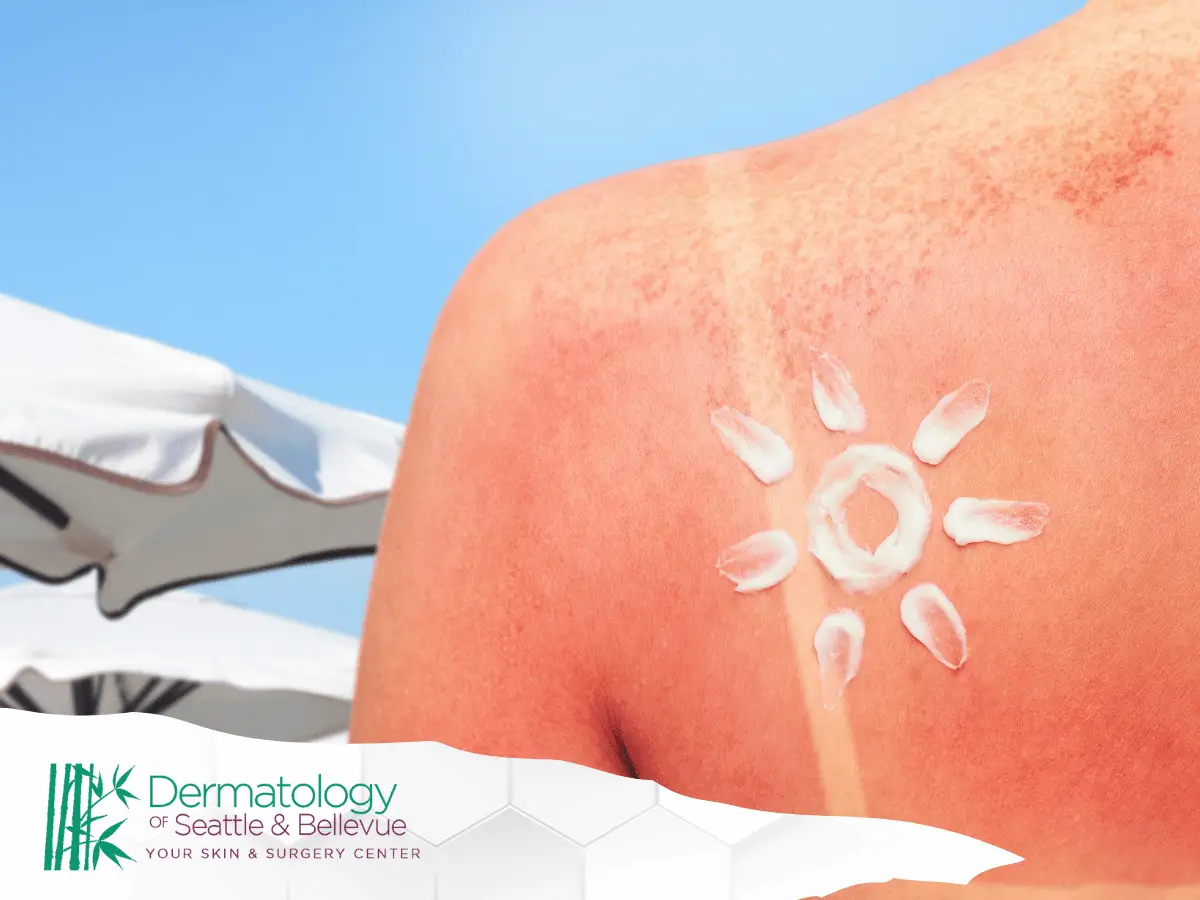
- Sunburn, which can trigger new psoriasis lesions and cause pain.
- Increased risk of actinic damage (sun spots, rough precancerous patches).
- Long-term skin cancer risk, especially with a history of tanning, burns, or certain medications.
Because of these risks, dermatology guidelines favor supervised phototherapy over “do-it-yourself tanning” as a psoriasis treatment strategy.
Safe Tanning Practices
If you’re living with psoriasis, the goal isn’t to “get a tan”—it’s to explore whether controlled UV exposure can safely support your overall treatment plan without raising your cancer risk.
Natural Sunlight Exposure Guidelines
If your dermatologist agrees that limited sun exposure is reasonable for you, some general guidelines often used include:
- Start low and go slow
- Fair/light skin: start with about 5–10 minutes of midday sun on affected areas, a few times per week.
- Darker skin tones may tolerate a bit more time, but you should still start conservatively.
- Protect unaffected skin
- Apply broad-spectrum SPF 30+ to areas without psoriasis plaques.
- You can leave plaques uncovered for the short, prescribed window to allow UV to reach them.
- Avoid burning at all costs
- If you see any pinkness, redness, stinging, or tenderness later that day or the next, the dose was too high.
- Increase exposure time slowly, if at all, and only if you’re not burning.
- Consider the Bellevue climate
- In the Pacific Northwest, UV intensity varies a lot by season and cloud cover. You can still burn on cloudy days.
- Use a UV index app as an extra guide to how strong the sun is on a given day.
These are general ideas—not personal medical advice. Your own plan should be customized with your dermatologist.
Indoor Tanning and Psoriasis: Does It Help?
Short answer: we do not recommend indoor tanning beds as a psoriasis treatment.
Why:
- Most commercial tanning beds emit primarily UVA, while medical psoriasis treatment relies on narrowband UVB or specific UVA in a controlled setting.
- Tanning beds deliver high, artificial doses of UV and have been strongly linked to increased melanoma and other skin cancer risks, especially with use before age 35.
- Indoor tanning can still cause burns, and burns can worsen psoriasis or trigger new plaques.
If you’re wondering, “?” the safer, evidence-based option is prescribed phototherapy in a dermatologist’s office—not self-directed use of salon tanning beds.
Risks Associated with Excessive Sun Exposure
Skin Damage and Cancer Risks
Whether you have psoriasis or not, excessive UV exposure increases your risk of:
- Premature aging – Wrinkles, sagging, uneven pigment.
- Actinic keratoses – Rough, scaly “pre-cancers” that can progress to skin cancer.
- Non-melanoma skin cancers – Basal cell and squamous cell carcinoma.
- Melanoma – The most dangerous type of skin cancer, which can look like a new dark spot or changing mole.
If you already receive phototherapy or have used strong immunosuppressants or certain biologics in the past, your overall UV load and cancer risk profile can be more complex. That’s another reason we want a dermatologist involved in any “sun as treatment” plan.
Special Considerations for Psoriasis Patients
If you have psoriasis, sun exposure has extra nuances:
- Koebner phenomenon – Skin trauma (including sunburn) can trigger new psoriasis plaques where the injury occurred.
- Medications – Some psoriasis treatments (certain pills, biologics, or topicals) can make you more sun-sensitive, increasing the chance of burning.
- Skin tone – On darker skin, psoriasis plaques may look different (more violaceous / darker), and sunburn can be harder to spot early.
For these reasons, anyone with psoriasis who is considering using sunlight intentionally should:
- Review all current medications and topicals with their dermatologist.
- Get clear guidance on how much sun is safe and where sunscreen should be applied.
- Have regular full-body skin exams if they have a history of tanning, burns, or long-term UV treatment.
Conclusion: Finding Balance with Sun Exposure
The safest mindset is:
- Think “controlled phototherapy,” not “lay out and tan.”
- Use brief, measured sun exposure as a supportive treatment, not a replacement for medical therapies.
- Make sun protection the default, even if certain plaques are temporarily left uncovered under medical guidance.
Recommended Sun Safety Tips
A few practical habits for patients in the Bellevue / Seattle area:
- Use broad-spectrum SPF 30+ daily on exposed skin, reapplying every 2 hours when outdoors.
- Wear hats, sunglasses, and UPF clothing when you’ll be outside for longer periods.
- Avoid intentional sunbathing or trying to “tan through” your psoriasis.
- Never use tanning beds as a self-directed “treatment.”
- Check your skin regularly for new or changing spots, especially if you have a history of heavy sun exposure or phototherapy.
Consulting with Dermatology Professionals
If you’re living with psoriasis and trying to figure out how much sun is safe:
- A dermatologist can help you decide whether natural sunlight, in-office phototherapy, or neither is appropriate for you.
- We can tailor a plan based on your psoriasis type, skin tone, medications, and skin cancer risk.
- In many cases, the best approach combines topicals or systemic medications with either supervised phototherapy or cautious lifestyle sun exposure.
If you’re in Bellevue or the greater Seattle area, scheduling a dedicated psoriasis visit is the best way to answer, for you personally, how sunlight should fit into your treatment plan.
Disclaimer
This article is for educational purposes only and is not a substitute for personalized medical advice, diagnosis, or treatment. Sun exposure and phototherapy carry risks, especially if you have psoriasis or are using prescription medications. Always talk with a dermatologist before changing your treatment plan, increasing sun exposure, or using any form of tanning as a psoriasis therapy.