
Sunscreen is the skincare product with the strongest evidence behind it and, somehow, the one people are most likely to skip. The American Academy of Dermatology estimates that one in five Americans will develop skin cancer in their lifetime. Consistent, correct sunscreen use is the single most modifiable factor in that statistic. And yet, there you are at 10am, heading outside without any on, because the last sunscreen you tried left you looking like you lost a fight with a powdered donut. Fair. Let's fix that.

Photo: Pexels / Free to use
Chemical vs. Mineral: The Foundational Argument You Have to Settle First
Every sunscreen on the market uses one of two protection strategies, or a combination of both. Understanding which camp your sunscreen falls into explains most of the texture differences, the white cast complaints, the "reef safe" debates, and the reason your sensitive skin reacts to some formulas and not others.
Mineral sunscreens use zinc oxide, titanium dioxide, or both. These minerals sit on top of the skin and physically scatter and reflect UV radiation before it can penetrate. They work immediately upon application and are generally well-tolerated by sensitive and reactive skin types. The tradeoffs are texture and cosmetics: both minerals are white, and in high concentrations or on deeper skin tones, they can leave a visible white or grayish cast that no amount of blending fully erases. Micronized (nano-particle) versions reduce the cast considerably, though they also reduce the photo-blocking coverage somewhat.
Chemical sunscreens use organic (carbon-based) filter molecules that absorb UV radiation and convert it to heat, which dissipates harmlessly. Common filters in U.S. formulas include avobenzone, octinoxate, octisalate, octocrylene, and homosalate. Chemical sunscreens tend to be cosmetically elegant: they're thin, transparent, and layer smoothly under makeup or other skincare. The drawbacks are that some chemical filters, particularly avobenzone, are photounstable (they degrade in sunlight, requiring stabilizing partners like octocrylene) and a subset of chemical filters have raised questions about skin penetration and systemic absorption. We will come back to the systemic absorption question in the FDA section, because it matters more than the beauty community has acknowledged.
Hybrid formulas combine mineral and chemical filters to balance broad-spectrum coverage with cosmetic finish. Many of the most wearable everyday options are hybrids: they use zinc oxide for UVA stability while chemical filters handle UVB and reduce the amount of zinc needed to stay transparent.
There is no universally "better" category. The best sunscreen is the one that works with your skin and that you will actually apply every morning without negotiating with yourself.
SPF Numbers: What They Mean and Where the Math Gets Weird
SPF stands for Sun Protection Factor, and it specifically measures protection against UVB radiation: the wavelengths responsible for sunburn and a significant portion of skin cancer risk.
Here is where the numbers surprise people. SPF 30 blocks approximately 97% of UVB rays. SPF 50 blocks approximately 98%. SPF 100 blocks approximately 99%. The difference between SPF 50 and SPF 100 is one percentage point of additional protection. The difference between SPF 30 and SPF 50 is also roughly one percentage point. What this means practically: chasing SPF 100 over SPF 50 is not the priority. Applying enough product, and reapplying it, is the priority.
The FDA requires any sunscreen labeled "broad spectrum" to also protect against UVA radiation, the wavelengths responsible for premature aging, tanning, and a portion of melanoma risk. UVA penetrates cloud cover and glass more effectively than UVB. You can sit in a sunny car all day, never burn, and still accumulate significant UV damage. Always look for "broad spectrum" on the label. SPF alone tells you nothing about UVA coverage.
The AAD recommends a minimum of SPF 30 for daily use, with SPF 50 or higher for extended outdoor activities, water exposure, or high-elevation environments like ski slopes, where UV intensity is significantly greater.
Sunscreen by Skin Type: Matching Formula to Physiology
The failure mode most people fall into is choosing a sunscreen based on SPF number alone, then abandoning it because it breaks them out, leaves a cast, or feels suffocating. Skin type matters enormously here.
Oily and Acne-Prone Skin
This is the skin type most likely to abandon sunscreen after a bad experience with a greasy formula, which is unfortunate because sun exposure worsens post-inflammatory hyperpigmentation (the dark marks left by acne) dramatically. The goal is a lightweight, non-comedogenic formula with a matte or dry finish.
Look for: gel or fluid textures, niacinamide as a co-ingredient (it helps control oil and has anti-inflammatory properties), and the words "oil-free" and "non-comedogenic" on the label. Water-resistant formulas tend to sit on the skin rather than absorbing, which can feel heavier for oily types; a non-water-resistant daily SPF is often a better fit for non-beach use. Avoid heavy cream formulas with silicones like dimethicone high in the ingredient list, as these can trap oil and exacerbate congestion in acne-prone skin.
Dry Skin
Dry skin benefits from richer, more emollient formulas that serve double duty as a moisturizer. Look for cream or lotion sunscreens with hydrating ingredients like hyaluronic acid, glycerin, ceramides, or squalane. The mineral filters, particularly zinc oxide in cream form, tend to provide a more moisturizing base than thin chemical fluid formulas. A common approach for dry skin is a dedicated moisturizer followed by a separate lightweight SPF, which gives more control over hydration levels than a single SPF-moisturizer hybrid.
Sensitive and Reactive Skin
Sensitive skin tends to do better with mineral-only formulas (zinc oxide and/or titanium dioxide), which have a long track record of tolerability and don't require the complex filter chemistry that can irritate reactive skin. Fragrance-free is non-negotiable. Avoid chemical filters like oxybenzone, which has a higher rate of contact sensitization than other filters, and octisalate, which can cross-react with aspirin sensitivity in some individuals. If you have rosacea, eczema, or a history of contact dermatitis, a patch test on the inner arm before facial application is worth the two days of waiting.
Sunscreen sensitivity can also be product-specific rather than filter-specific: preservatives, emulsifiers, and fragrance compounds are frequently the actual irritants in a formula that a patient assumes is reacting to the SPF filter. If multiple sunscreens bother your skin, a board-certified dermatologist can help identify whether you have a contact allergy and, if so, to what.
Darker Skin Tones
The white cast problem is not a minor aesthetic inconvenience; it is a legitimate access barrier. Traditional mineral sunscreens formulated with untinted zinc oxide are functionally unwearable on deeper skin tones, which has historically driven people with melanin-rich skin toward chemical-only formulas. This matters because darker skin tones are not immune to UV damage: while melanin provides some natural protection, people of color develop post-inflammatory hyperpigmentation more readily, are more likely to have their skin cancer diagnosed late (when outcomes are worse), and often underestimate their personal risk.
The good news is formulation has improved. Tinted mineral sunscreens, which add iron oxides to the formula, reduce the white cast substantially and have the added benefit of blocking visible light (which drives hyperpigmentation in darker skin even when UV is limited). Universal shades and deeper-toned tints are now widely available. Chemical or hybrid formulas with limited mineral content also work well for deeper skin tones. The EWG's annual sunscreen guide now filters by finish and skin tone compatibility, which is a genuinely useful resource for navigating the current market.
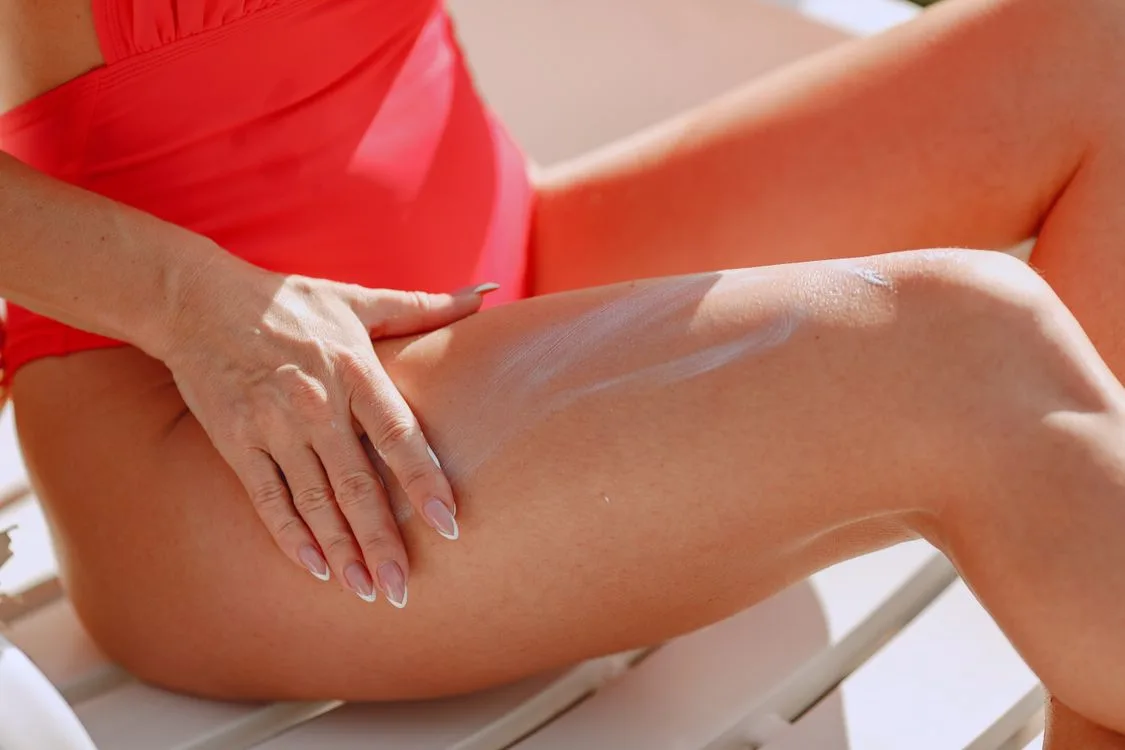
Photo: Pexels / Free to use
The Grease Problem: Why So Many Sunscreens Feel Terrible and How to Find One That Doesn't
The sunscreen-skipping epidemic has a texture problem at its center. Most American chemical sunscreens were designed to a different brief than the modern consumer expects. They were engineered for water resistance at the beach, not for layering under a full face of skincare and a moisturizing primer at 7am. The result is products that are heavy, greasy, and that cause makeup to slide off by noon.
Several specific formulation ingredients drive the greasy feel. Homosalate, octisalate, and octocrylene are oily liquids at room temperature; they need to be present in relatively high concentrations to hit SPF targets because no single filter achieves sufficient protection on its own under current FDA concentration limits. The combined weight of these liquid filters is a significant part of what makes American chemical sunscreens feel the way they do.
What to look for if greasiness is your dealbreaker:
- Gel formulas: Water-gel or hydrogel textures tend to be the lightest, absorb quickly, and leave a near-invisible finish. They work particularly well on oily skin and over other skincare layers.
- Fluid or essence textures: Very thin, fast-absorbing liquids that function more like a serum than a lotion. Excellent for daily urban use.
- Dry-touch or matte-finish labeling: These formulas include mattifying agents (silica, nylon powder, or sebum-absorbing starches) that counteract the inherent oiliness of chemical filter bases.
- Zinc oxide in serum form: Modern zinc oxide serums are significantly more elegant than the zinc sticks and cream blocks of earlier generations. They absorb relatively quickly and don't have the heavy feel of traditional mineral formulas.
- Hybrid tinted SPF formulas: Tinted SPFs often handle the "this looks like product on my face" problem by functioning as a light coverage skin tint rather than a separate white sunscreen layer.
One common mistake is applying too much SPF on top of too little everything else. Sunscreen sitting directly on dry, un-moisturized skin often feels more textured than the same product over a hydrated, prepped base. Application order matters: cleanse, moisturize if needed, let it absorb for a minute, then apply SPF as the final skincare step before makeup.
Dry Sunscreens, Powders, and Spray Formats: What They Can and Can't Do
Beyond lotion and cream, the market now offers SPF in powder, spray, stick, and mousse formats. Each has a legitimate use case and a legitimate limitation.
SPF powders and brush-on formulas are the most popular option for reapplication over makeup. They work, but with an important asterisk: achieving the lab-tested SPF from a powder requires applying a quantity that most people would consider extreme. Studies on SPF powders suggest that typical reapplication amounts deliver far less than the stated SPF. The practical consensus: SPF powders are better than nothing for midday touch-ups, but they should not be your primary morning application. Start the day with a proper lotion or fluid SPF on bare skin, and use powder for reapplication convenience.
SPF sprays are the most tempting for large body coverage and quick reapplication but are the most likely to be under-applied. The FDA has noted concerns about inhalation risk with spray sunscreens, particularly for children. The dermatologist consensus is to spray into hands first (or spray and then rub in) rather than direct-spraying the face, and to hold the nozzle close enough to deposit an adequate quantity. Wind is the enemy of spray application outdoors.
Sunscreen sticks are excellent for targeted application: ears, nose, lips, hairline, and areas that get missed with lotion application. They're not the most practical format for full-face coverage on their own.
Setting sprays with SPF are generally not sunscreens. They contain cosmetic ingredients that happen to include a small amount of UV filter, but they are not formulated or tested as sun protection products. Do not count on them for SPF coverage.
The FDA Chapter: Why American Sunscreens Have Been Behind (and What Just Changed)
Here is something that surprises most people: the United States has not approved a new sunscreen active ingredient since 1999. Until very recently. Europe has approved more than 30 UV filters. South Korea, Japan, and Australia all offer a broader palette of filter chemistry than Americans have had access to. The gap is not because newer filters are dangerous. It is primarily because of how the FDA classifies sunscreens.
In the U.S., sunscreens are regulated as over-the-counter drugs, not cosmetics. That classification sounds protective, but in practice it means new active ingredients must go through a regulatory review process that has historically been slow, underfunded, and structured around a 1970s-era framework that was never updated for modern sunscreen chemistry. Manufacturers seeking to add newer filters to American formulas face the burden of submitting New Drug Application (NDA)-equivalent safety data, a requirement that does not exist in the European cosmetic regulatory system where many of these filters have been approved and used for decades.
The practical consequence has been a two-tier global sunscreen market. Asian and European consumers have had access to lightweight, photostable, elegant formulas built on advanced filter chemistry: Tinosorb S, Tinosorb M, Mexoryl XL, Uvinul A Plus. American consumers have been largely limited to filters that were characterized in the 1970s, some of which are inherently oily at room temperature, require high concentrations to achieve broad-spectrum coverage, and have raised questions about systemic absorption that remain unresolved.
The FDA's own 2021 proposed rule acknowledged that only two of the currently approved U.S. filters, zinc oxide and titanium dioxide, have been classified as "generally recognized as safe and effective" (GRASE). Twelve others, including common chemical filters like avobenzone and oxybenzone, were placed in a "not GRASE pending additional data" category, which has not stopped their widespread use but reflects real regulatory uncertainty about systemic absorption profiles.
What changed in June 2026: The FDA formally approved bemotrizinol as a permitted active sunscreen ingredient, the first new UV filter approved for the American market in more than 25 years. Bemotrizinol (sold under the trade name Tinosorb S) has been widely used in European and Asian sunscreens for over two decades with an excellent safety and efficacy record. It is photostable, offers excellent UVA coverage, and is part of the reason Korean and European sunscreen textures tend to be lighter: it can be used at lower total filter concentrations to achieve strong broad-spectrum coverage. American formulas incorporating bemotrizinol will begin reaching the market over the next one to two years as brands reformulate. It is a meaningful update to a regulatory situation that genuinely needed one.
For the history and details on why this took so long, the NIH's published analysis on modernizing U.S. sunscreen regulations is a thorough read if you enjoy that kind of thing. NBC News also published a readable explainer on the competitive gap if you do not.
What People Are Saying About Korean Sunscreen (and What Dermatologists Notice)
If you have a skincare-interested person in your life, you have heard about Korean sunscreen. The internet's enthusiasm is not unfounded, though it benefits from some context.
The appeal is real and primarily comes down to formulation. In South Korea, sunscreen is culturally embedded as a daily non-negotiable, worn 365 days a year. When a product gets used every morning as a final skincare step before leaving the house, its texture and finish have to meet a completely different standard than a product people apply once at the beach. Korean formulators have spent decades optimizing for how sunscreen feels and wears, not just what it blocks. The results are products that people on Reddit, YouTube, and TikTok describe as having no white cast, a weightless or even skincare-like finish, and no greasiness even through a full workday.
Korean sunscreens also use the PA rating system for UVA protection, a graded scale ranging from PA+ to PA++++ that is more informative than the simple "broad spectrum" binary required in the United States. PA++++ indicates the highest available UVA protection. This gives consumers a clearer picture of the full protection profile of a product.
The filter chemistry difference is part of the story too. Korean formulas frequently use filter combinations that include Tinosorb M (bisoctrizole), Uvinul A Plus (diethylamino hydroxybenzoyl hexyl benzoate), and others not approved in the U.S. at the time this article was written. These filters are more photostable and allow for lighter-weight formulations than the older U.S.-approved chemistry, which is part of why the texture gap has existed.
There is an important catch for American consumers: Korean sunscreens sold in the United States must comply with FDA regulations. Products imported for U.S. sale are required to use only FDA-approved active ingredients and meet American labeling standards. This means many of the Korean sunscreens praised online for their filter chemistry are not legally sold with those same filters in the U.S. market. Consumers who order directly from Korean retailers or purchase abroad are using products formulated under Korean regulatory standards, not American ones.
We are not going to tell you what to do with that information. What we will say is that the ingredients used in Korean and European sunscreens have decades of safety data from global markets, and the regulatory gap is a product of American regulatory process, not global scientific consensus. The Nevada Cancer Coalition's overview on the topic is a good-faith summary of the situation if you want more context.
The bottom line for patients in the U.S.: the gap is real, it is getting narrower following the bemotrizinol approval, and American formulators are already working on next-generation products that leverage the new ingredient. If the texture of American sunscreens has been your barrier to consistent use, watch this space.

Photo: Pexels / Free to use
How to Apply Sunscreen Correctly (Most People Are Doing This Wrong)
The lab-tested SPF on the bottle is achieved when sunscreen is applied at 2 milligrams per square centimeter of skin. In practice, most people apply roughly 25 to 50 percent of that amount, which means the effective SPF they're actually getting is substantially lower than the stated number.
For the face: A generous half-teaspoon (about 1.5 to 2ml) is the standard guidance for face and neck combined. This is more than most people apply. A good mental anchor is the "two-finger rule" popular in K-beauty circles: squeeze sunscreen along the length of your index and middle fingers before applying to your face. That approximates a sufficient quantity for most faces.
For the body: A shot glass (approximately one ounce or 30ml) for full body coverage. This is also significantly more than most beach-goers apply, which is part of why study after study shows real-world sunscreen provides less protection than lab values predict.
Application timing: Chemical sunscreens require approximately 15 to 20 minutes after application before they achieve full protection, because the filter molecules need time to bind to the skin and begin converting UV. Mineral sunscreens work immediately on contact, which is a practical advantage. Apply before you go outside, not once you're already in the sun.
Reapplication: Every two hours, and immediately after swimming or toweling off regardless of the time interval. Water resistance on sunscreen labels is tested for 40 or 80 minutes of water immersion; after that, the protection drops significantly. This also means that a morning application of SPF and then no reapplication throughout a day outdoors is not adequate protection.
The spots people miss: Ears (both the outer ear and behind it), the back of the neck, the tops of the feet, the back of the hands, the lips, and the eyelids. Skin cancers are disproportionately common on ears and eyelids precisely because these areas are chronically missed during application. A lip balm or stick with SPF 30 or higher handles the lips without requiring you to rub lotion on your mouth.
UVA does not stop at the window. Car side windows in older vehicles offer minimal UVA filtration, which is why dermatologists see a striking pattern of left-side facial aging in long-time drivers. If you have a significant commute, daily SPF on the left side of your face is not optional. Many newer vehicles have UV-filtering glass, but it is worth knowing what yours does and does not block.
Sunscreen in Seattle: The Pacific Northwest Misconception
Living in Seattle gives many people a false sense of UV security. It is cloudy here for a significant portion of the year, and clouds feel like protection. They aren't, not really. Clouds filter approximately 20 to 40 percent of UV radiation depending on cloud density. The rest gets through. Washington State has consistently elevated melanoma incidence rates, a counterintuitive finding that makes sense when you consider that Pacific Northwesterners spend significant time outdoors in moderate UV conditions without the reflexive sun protection habits common in consistently sunny climates.
There's also the ski slope factor. Spending a weekend at Stevens Pass or Crystal Mountain means significant UV exposure that surprises people who associate ski trips with cold, not sun. Altitude reduces atmospheric UV filtering, and snow reflects UV upward, creating exposure from below as well as above. SPF at elevation is not optional, and it should be genuinely high: SPF 50 or above for a full day on the mountain.
The summary for Seattle residents: daily SPF as part of your morning routine, every day, regardless of the weather report. Save the SPF 50 water-resistant formula for weekends outdoors. The AAD's guidance on sunscreen selection aligns with this approach.
Frequently Asked Questions About Sunscreen
Is SPF in my moisturizer or foundation enough?
Generally, no. Products with SPF formulated as moisturizers or foundations are not typically applied in sufficient quantity to achieve the stated SPF. They are a meaningful addition to your protection, but should not be your only layer. Apply a dedicated SPF first.
Can I be allergic to sunscreen?
Yes. Contact dermatitis to sunscreen is well-documented. Oxybenzone, fragrances, and certain preservatives are the most common culprits. A dermatologist can perform patch testing to identify the specific allergen and help you find a formula that won't react. Switching to a fragrance-free, mineral-only formula often resolves the issue without patch testing.
Does sunscreen expire?
Yes. The FDA requires sunscreens to remain at their stated SPF for at least three years from the manufacture date. Heat and sunlight degrade filter effectiveness faster, so storing sunscreen in a hot car accelerates expiration. Check the date, and don't dig out a bottle from last summer that's been sitting in direct heat all winter.
Is mineral sunscreen safer than chemical sunscreen?
Zinc oxide and titanium dioxide have the strongest FDA safety classification. Some chemical filters have raised questions about systemic absorption that are not fully resolved. However, no study has shown harm from topical sunscreen use in humans at normal application levels, and unprotected UV exposure has an extensive evidence base for causing skin cancer. The risk-benefit calculation strongly favors sunscreen use. If you're concerned, mineral-only formulas are a well-supported choice.
Should children use the same sunscreen as adults?
Mineral-only sunscreens (zinc oxide and/or titanium dioxide) are the recommended choice for children under 6 months (though sun avoidance is preferred for infants), and remain the best-tolerated option for young children in general. The AAD recommends keeping infants under 6 months out of direct sunlight, with mineral SPF as a last resort when shade and clothing aren't sufficient.
What is the PA rating system?
The PA system (Protection Grade of UVA) is used primarily in Asian markets to rate UVA protection. Ratings range from PA+ (some protection) to PA++++ (extremely high protection). It provides more granular UVA information than the simple "broad spectrum" label required in the U.S. American products don't carry this rating, but if you encounter it on imported products, PA++++ is the highest tier.
Sunscreen Is Not a Substitute for Skin Checks
Sunscreen reduces the risk of skin cancer significantly. It does not eliminate it. Genetic factors, cumulative lifetime UV exposure, tanning bed history, and immune status all affect individual risk, and no amount of SPF 50 fully offsets decades of unprotected exposure. Annual full-body skin examinations by a board-certified dermatologist are the recommended standard for adults, with more frequent monitoring for those with a personal or family history of skin cancer, significant sun damage, or a large number of moles.
Early detection is not a cliche. It is the primary variable between a simple office procedure and a complex surgical intervention. Melanoma detected at stage 1 has a five-year survival rate above 98 percent. At stage 4, that number drops dramatically. The biology of skin cancer has not changed; what has changed is our ability to find it early when patients come in for regular exams.
At Dermatology of Seattle, skin cancer screening and mole evaluation are core services at our Burien and Bellevue offices. If you have not had a full-body skin check recently, particularly if you have a history of significant sun exposure, blistering burns, or tanning bed use, that appointment is worth scheduling. We also offer telehealth consultations for initial evaluations of suspicious spots when you want a professional opinion before coming in.