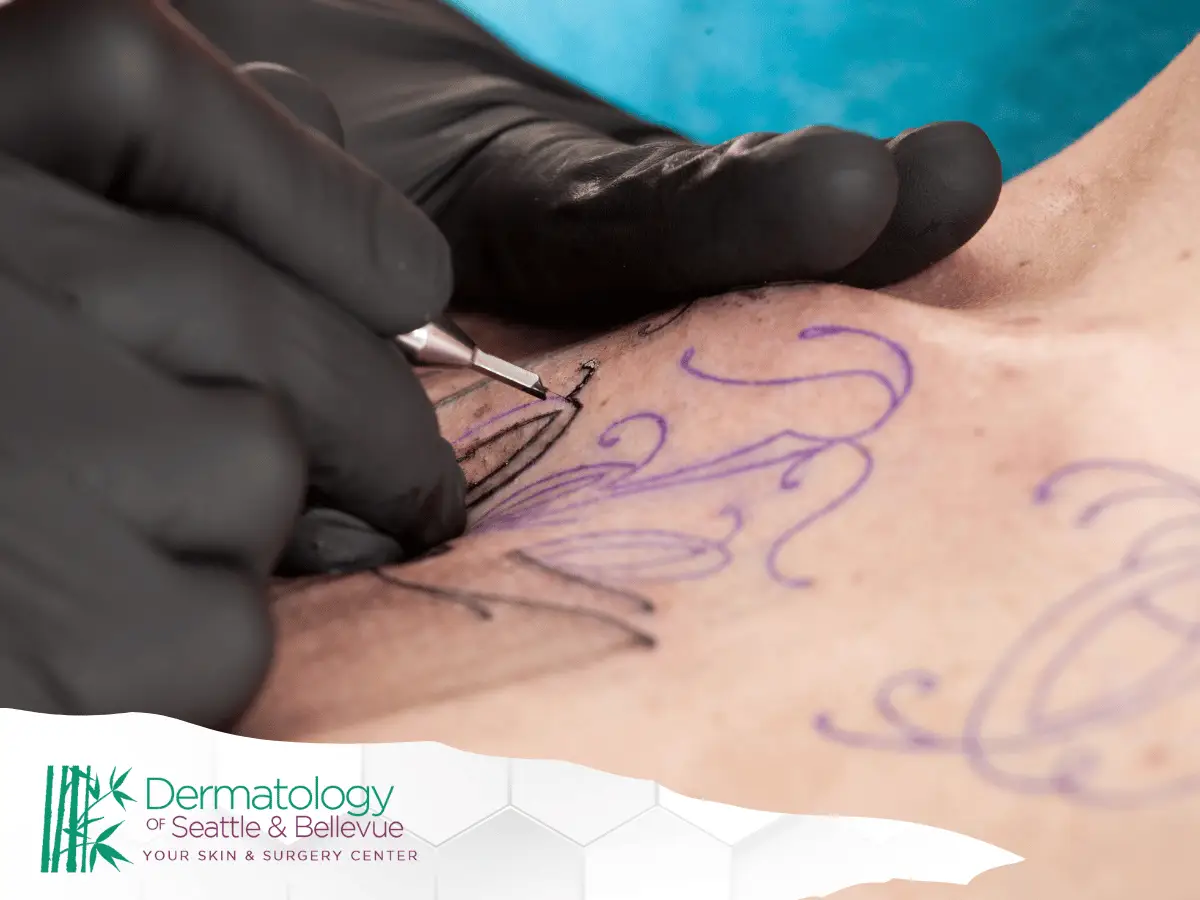
Tattoos have become a popular form of body art, but for those with tattoos, one concern that often arises is whether they can detect skin cancer early, especially when it develops under the ink. While tattoos do not cause skin cancer, they can make it more challenging to spot early-stage skin cancer.
Quick Summary
- Tattoos don’t cause skin cancer, but ink—especially dark colors—can make early skin cancer harder to spot by masking changes in skin color and texture.
- Early-stage melanoma may appear as a new or changing, irregular mole; under a tattoo, watch for raised areas, subtle bumps, or texture changes even if color changes are obscured.
- Basal cell carcinoma signs to watch for in or near tattoos include a shiny bump, a sore that won’t heal, a pale pink growth, a scar-like waxy patch, or a lesion that bleeds or crusts.
- Avoid tattooing over moles because it can hide changes in shape, color, or size that signal melanoma or other skin cancers.
- Do monthly self-exams and get annual dermatologist screenings; seek prompt evaluation (and possible biopsy) for any evolving spots, itching, bleeding, redness, or new growths in tattooed skin.
Recognizing the symptoms and signs is key to early detection and treatment. Here’s everything you need to know about skin cancer in and around tattoos.
Can you detect skin cancer with tattoos?
Skin cancer can develop on any part of the skin, even under tattoos. Since tattoo ink masks the skin’s natural color and texture, spotting early symptoms and signs of skin cancer, such as new skin lesions, may become more difficult.
The ink, especially darker shades, can obscure changes in the skin, making it essential to stay vigilant with regular self-exams and dermatologist visits.
What does stage 1 melanoma look like?
Stage 1 melanoma, the earliest stage of malignant melanoma, can often appear as a new or changing mole. Look for pigmented lesions that differ from your existing moles. Stage 1 melanoma may resemble a small, irregularly shaped brown, black, or multi-colored mole.
If it is developing under a tattoo, you may notice that the tattooed area looks raised, irregular, or changes in texture. While tattoo ink may obscure the color, changes in the tattoo’s surface, such as subtle bumps or raised spots, are warning signs.
How common is cancer from tattoos?
It is important to note that tattoos themselves do not cause skin cancer. However, extensive sleeve tattoos or large areas covered by ink may make it more challenging to spot early warning signs of skin cancer.
Research has not confirmed that tattoo inks increase the risk of developing skin cancer, but tattoos can potentially hide skin cancers like basal cell carcinoma, squamous cell carcinoma, and melanoma.
How to Spot the Most Common Skin Cancer
Basal cell carcinoma (BCC) is the most common type of skin cancer and can appear on areas with or without tattoos. Look for a shiny bump, a pale pink papule, or scaly patches that could develop under the ink. If you notice new skin lesions or changes in your tattoo, it’s essential to have them checked out by a healthcare professional.
How to spot a BCC: five warning signs
- Shiny Bump: A small, smooth bump with a shiny surface that persists.
- Open Sore: A sore that doesn’t heal or keeps coming back.
- Pale Pink Growth: A raised pink or red growth with a rolled edge.
- Scar-Like Area: A flat, firm, flesh-colored, or scar-like patch that feels waxy.
- Lesions: A lesion that bleeds easily or becomes crusted over.
If any of these signs appear on your tattoo or surrounding skin, consult a dermatologist immediately.
Common Concerns About Tattoos and Cancer
One common concern about tattoos is whether the ink or tattoo pigment increases the risk of skin cancer. Studies have not found conclusive evidence linking tattoo inks to an increased risk of skin cancer.
However, tattoo pigments can sometimes interfere with skin cancer detection, especially if the pigment is placed over a mole or pre-cancerous area.
Monitoring any subtle changes in tattooed skin is crucial to detect potential problems early.
Avoid Tattooing Over Moles
Getting a tattoo over moles is not advisable. Moles are one of the primary places where melanoma or other skin cancers can develop. Tattooing over moles may mask changes in their shape, color, or size, making it difficult to detect early warning signs of skin cancer.
Always avoid tattooing over or near moles and ask your tattoo artist to work around them.
Important Signs
It’s essential to recognize signs of skin cancer, even on tattooed skin, as tattoos can sometimes obscure visible changes. Additionally, regular skin checks and consultations with a dermatologist are critical for early detection. It’s important to understand how scar tissue relates to cancer, as previous injuries or surgeries can increase the risk of developing skin malignancies in those areas. Being vigilant about any alterations in moles or skin patterns, regardless of tattoos present, can significantly aid in maintaining skin health.
Here are five key warning signs to look for when examining your tattooed skin for potential skin cancer: Look for any changes in the shape, color, or size of your tattoos, as these can indicate underlying issues. Additionally, be aware of new growths or bumps that may appear, learning how to identify skin tags can be particularly useful in distinguishing harmless skin irregularities from more serious concerns. It’s crucial to consult with a dermatologist if you notice any suspicious changes in your tattooed skin.
- Asymmetry: One half of a mole or pigmented lesion doesn’t match the other. This lack of symmetry can indicate early stage skin cancer, as cancerous cells grow unevenly.
- Border: The edges of a suspicious mole or lesion are irregular, ragged, or blurred. Unlike benign moles, cancerous spots may have poorly defined or scalloped edges, making them stand out.
- Color: Skin cancer can cause uneven coloration, with shades of brown, black, red, or even white appearing in a single lesion. In tattooed skin, this can be harder to detect but is still crucial to monitor.
- Diameter: If a lesion or mole is larger than a pencil eraser (about 6mm), it could be a sign of melanoma or other skin cancers. Regularly check any growing spots in or around your tattoo.
- Evolving: Changes in size, shape, color, or symptoms like itching or bleeding are common warning signs of skin cancer. Any changes should prompt an immediate consultation with a healthcare provider.
- Next Steps: If you observe any of these signs in or around your tattoo, it’s crucial to consult a dermatologist immediately for a proper diagnosis. Early detection can be life-saving, as skin cancer is much easier to treat when caught early.
Can tattoos affect skin cancer detection?
Yes, tattoos can affect the detection of skin cancer, especially if the ink obscures important features of the skin, such as changes in moles or lesions. Pigmented lesions may blend in with tattoo pigments, making early detection of skin cancers like malignant melanoma or squamous cell carcinoma more difficult. This is why regular skin cancer screenings are essential for tattooed individuals.
Consult Dermatologist
Regular visits to a dermatologist are pivotal in maintaining skin health, especially if you have tattoos covering large portions of your body.
Dermatologists use advanced techniques like total body photography and dermoscopy to examine the skin at both the macroscopic and microscopic levels. This helps them detect subtle changes under tattoos.
Skin cancer screenings are a critical part of early detection and prevention.
Watch for Symptoms
Symptoms of skin cancer on tattoos can include raised or rough patches, new lesions, or changes in texture or appearance.
Watch out for unusual redness, a shiny bump, or keratotic lesions that look different from the surrounding skin. If the tattooed skin becomes sore or bleeds easily, consult a healthcare provider promptly.
What should I do if I notice changes in my tattooed skin?
If you notice any changes in your tattooed skin, such as unusual growths, raised areas, or discoloration, seek advice from a healthcare provider or dermatologist. They may recommend a skin biopsy to analyze any suspicious spots and rule out potential cancerous growths.
Is it safe to get a tattoo if I have a history of skin cancer?
If you have a history of skin cancer, you should consult your dermatologist before getting a tattoo. Individuals with a personal or family history of skin cancer are at higher risk of developing future skin cancers, and it is important to avoid areas of the skin that have been previously affected. Additionally, it’s essential to take precautions, such as wearing sun protection and avoiding tattooing over moles or scars.
How often should I check my skin for cancer signs after getting a tattoo?
Perform regular self-exams to monitor your skin and tattoos for any changes. Aim to check your skin at least once a month, paying close attention to any new lesions, moles, or changes in the tattoo’s texture. Additionally, consult a dermatologist annually for a professional skin check, especially if you have extensive sleeve tattoos or a history of skin cancer.
Final Words
This blog post serves informational purposes only. For a tailored and accurate assessment of your skin and tattoos, please consult a qualified healthcare provider or dermatologist. Regular check-ups are essential for early skin cancer detection and treatment.