
Best Skin Tightening Treatment Options
Quick Summary
- Best skin tightening depends on laxity, skin type, and area; results are gradual, peaking 2–6 months.
- Lasers heat targeted layers to tighten and improve texture; downtime ranges from redness to peeling, with multiple sessions common.
- Radiofrequency heats deeper tissue without light absorption; external RF has minimal downtime, while RF microneedling boosts texture improvement.
- Ultrasound delivers focused energy at specific depths for lower face and neck lift goals; best for mild to moderate laxity.
- After weight loss, RF, ultrasound, and some lasers can improve firmness, but cannot remove large excess skin.
Introduction
Overview of Skin Tightening Treatments
The best skin tightening treatment is the one that matches your level of laxity, your skin type, and the area you want to improve. Most non-surgical options work by delivering controlled heat or micro-injury below the surface so your body rebuilds collagen over the next several months. Expect gradual firming and smoother texture, not an instant lift.
Most people need a series or a staged plan. Some notice a small change within a few weeks, but peak improvement commonly takes 2 to 6 months because collagen turnover is slow. Face and neck tightening typically looks more noticeable than body tightening, especially when laxity is mild to moderate.
Importance of Skin Tightening Procedures
Laxity shows up as softer contours, crepey texture, and less “snap” in the skin. It can be driven by aging, UV exposure, pregnancy, and weight changes. Skin tightening procedures aim to improve structural support so the skin looks more supported and less wrinkled. Collagen remodeling is slow, which is why the best results often appear after multiple weeks.
Non-surgical treatments are best for mild to moderate laxity. If there is significant skin overhang, a device can improve quality, but surgery may be the only option for dramatic change. The safest results also come from matching the technology to your skin tone and medical history, which is why a medical consultation is not just a formality.
Best Skin Tightening Treatments
Laser Treatments
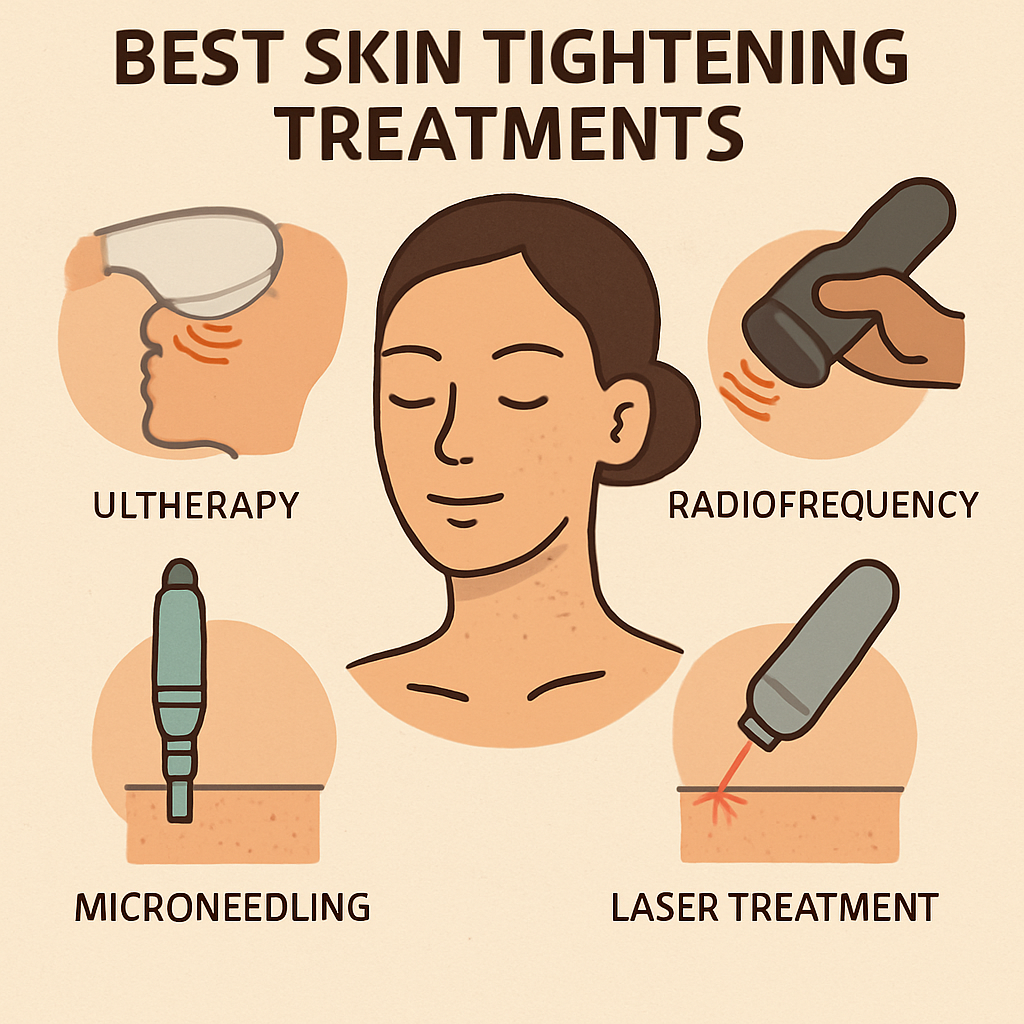
Lasers use light energy to heat targeted skin layers. Some focus on surface texture, while others deliver deeper heating for tightening. Lasers are often used for face and neck laxity when fine lines, sun damage, or uneven tone are part of the picture. Resurfacing-style lasers can create more visible texture improvement but may require more downtime.
In general, non-ablative options tend to have less downtime and subtler tightening, while more aggressive resurfacing can improve texture more clearly but needs careful aftercare and sun avoidance.
How They Work
Laser energy converts to heat in the skin, which triggers collagen contraction and a longer remodeling phase. Depending on the device, treatment may be fractional (tiny treatment zones with quicker healing) or more uniform.
Aftercare affects outcomes. It usually includes gentle cleansing, moisturizing, and sun protection, plus avoiding harsh exfoliation while skin is healing. Common short-term effects include redness and swelling; stronger resurfacing can involve peeling.
Pros and Cons
Pros:
- Can tighten and improve texture in the same plan
- Often improves fine lines and uneven tone
Cons:
- Downtime varies from mild redness to peeling
- Device choice and technique matter for different skin tones
- Multiple sessions are common
Radiofrequency Treatments
Radiofrequency (RF) is widely used for facial and neck tightening because it heats deeper tissue without relying on light absorption. It can be delivered externally or through RF microneedling, which is often chosen when laxity and texture changes happen together.
RF microneedling is more targeted and can be helpful when pores, fine lines, or acne-scar texture are also part of the concern.
Mechanism of Action
RF energy becomes heat as it moves through the skin. The goal is controlled dermal heating that stimulates new collagen while protecting the surface. With external RF, the surface is typically cooled while deeper tissue warms. With RF microneedling, needles deliver energy below the surface for stronger remodeling and more texture improvement.
Benefits and Limitations
Benefits:
- Versatile for cheeks, jawline, and “non surgical neck lift” goals
- Often minimal downtime with external RF
- Can pair well with other treatments
Limitations:
- Gradual results, commonly over 2 to 6 months
- Series and maintenance are typical
- Not enough for severe laxity or heavy excess skin
Ultrasound Therapy
Ultrasound-based tightening delivers focused energy at specific depths, including deeper supportive layers. It is often used for the lower face and neck when someone wants a neck lift without surgery and prefers minimal downtime. Improvements typically build over several months. Results tend to be most noticeable in mild to moderate laxity.
Ultrasound is often chosen for under-chin and neck areas when the goal is lifting rather than resurfacing. If your main issue is very crepey surface texture, another modality may be needed.
Microneedling
Microneedling triggers collagen by creating controlled micro-channels. It can improve firmness modestly and support smoother texture. RF microneedling increases tightening potential and is often considered for crepey texture along the jawline or neck. Mild redness is common for a few days.
Combination Treatments
Many people get the best results from a combination plan rather than one device. A common approach is to use one modality for tightening (RF or ultrasound) and another for texture or tone (select laser options), spaced out to manage downtime. Combination plans can also help when you want how to tighten facial skin and the neck in the same overall plan.
How to Tighten the Skin After Weight Loss
Challenges Faced
After weight loss, skin may have less elasticity and may not fully retract, especially on the abdomen, arms, thighs, and lower face. Age, genetics, and the amount of weight lost all influence how much tightening is possible. Non-surgical tightening can improve firmness, but it cannot remove large amounts of extra skin.
Recommended Treatments
For mild to moderate laxity, RF and ultrasound are commonly used for body areas, and some laser approaches can help when texture is a major issue. RF microneedling may be useful for crepey skin.
A clinician should assess whether you are dealing with true excess skin versus laxity that can respond to treatment, and build a realistic plan for how to tighten the skin after weight loss. Many people do best after weight has been stable for several months. Between sessions, focus on basics that support results:
- Consistent moisturizing to reduce dryness and crepiness
- Strength training for overall tone
- Adequate protein and hydration
How to Tighten Facial Skin
Non-Surgical Options
For how to tighten facial skin, RF, ultrasound, and tightening-focused lasers are typical first-line options. RF microneedling is often chosen when pores, fine lines, or uneven texture accompany laxity. For neck lift non surgical goals, ask about expected lift versus firming, and whether a series is needed.
Skincare Products
Skincare cannot duplicate device-based tightening, but it supports results and improves surface quality. Prioritize daily sunscreen, a retinoid at night if tolerated, and a moisturizer that prevents dryness and irritation. A gentle cleanser and an antioxidant serum can support a brighter, smoother look, especially if sun damage contributes to the overall “loose” appearance.
Lifestyle Changes
Lifestyle cannot replace procedures, but it can slow collagen breakdown. Consistent sun protection is the biggest daily factor. Strength training, adequate protein, and stable weight support skin appearance. Avoiding smoking is one of the most meaningful choices for long-term collagen health.
How to Tighten Skin on Face Without Surgery
h3 At-Home Remedies
At-home steps mainly improve hydration and texture rather than true tightening. A practical plan includes sunscreen every morning, gentle cleansing, moisturizing, and consistent retinoid use if your skin tolerates it. Avoid harsh scrubs and frequent strong exfoliation, which can worsen irritation and make laxity look more obvious.
h3 Professional Treatment Options
Professional treatments create the controlled stimulus needed for lasting tightening. When choosing among skin tightening procedures, ask about technology fit for your laxity level, session count, downtime, and safety for your skin tone.
For “non surgical neck lift” goals, RF and ultrasound are common starting points, with laser or RF microneedling added when texture is a priority. A strong consultation should include a discussion of limits, so you know whether tightening is likely to sharpen contours or mainly improve firmness. Practical green flags include clear aftercare instructions, conservative treatment planning, and a willingness to say when a device is unlikely to meet your goal.
Conclusion
Recap of Best Options
Lasers are strong when tightening and texture need attention together. RF is versatile for face and neck and is often discussed as a best skin tightening treatment approach for non-surgical contouring. Ultrasound targets deeper layers for gradual lift. Microneedling, especially with RF, can help when crepey texture and laxity overlap. Combination plans often produce the most balanced improvement.
Choosing the Right Treatment for You
In the Seattle area, start with a consultation that sets clear expectations and maps a staged plan. The “best” option is the one that matches your anatomy, timeline, tolerance for downtime, and long-term maintenance strategy. Bring a list of medications and relevant health history, and mention pregnancy, implanted devices, or a tendency to scar abnormally, since these can affect which options are appropriate.
Disclaimer
This article is for general educational purposes only and does not provide medical advice, diagnosis, or treatment. Outcomes and risks vary by individual factors and device settings. Consult a qualified medical professional to determine the most appropriate treatment and to understand possible side effects and recovery needs.