Quick Summary
- Actinic keratosis (AK) is a precancerous patch caused by sun damage — it is not skin cancer, but a small percentage of untreated AKs progress to squamous cell carcinoma.
- AKs typically feel rough or sandpaper-like and are often easier to feel than to see.
- Skin cancer (most commonly basal cell or squamous cell carcinoma in sun-exposed areas) tends to be a more defined growth — a pearly bump, a persistent sore, or a firm nodule.
- Both AKs and early skin cancers can look similar to the naked eye, which is why a dermatologist exam matters more than self-assessment here.
- AKs are straightforward to treat in-office; catching a true skin cancer early dramatically improves outcomes.
Actinic keratosis is one of the most common reasons people end up in a dermatologist's office, and one of the most misunderstood — it's a warning sign, not a diagnosis of cancer, but ignoring it isn't a safe bet either.
What Actinic Keratosis Is
Actinic keratosis (AK) is a rough, scaly patch that forms on skin with years of cumulative sun exposure — most often the face, ears, scalp (especially with thinning hair), forearms, and the backs of the hands. AKs are considered precancerous: they're made of abnormal skin cells caused by UV damage, and while most never progress further, a small percentage (estimates range roughly 5-10% over years) can develop into squamous cell carcinoma if left untreated. Because of that, dermatologists generally treat AKs proactively rather than watching and waiting.
AKs are often easier to feel than see — many patients describe noticing a rough, sandpapery spot before they ever really "see" a lesion. They can be pink, red, or skin-colored, and sometimes have a slightly crusty or scaly surface.
What Skin Cancer Looks Like
Basal cell carcinoma (the most common skin cancer) often looks like a pearly or waxy bump, sometimes with visible small blood vessels, or a sore that doesn't heal. Squamous cell carcinoma can look like a firm red nodule, a scaly patch that grows and thickens, or a sore that crusts and bleeds. Both are most common on chronically sun-exposed skin — the same areas AKs show up.
Key Differences at a Glance
| Feature | Actinic Keratosis | Skin Cancer (BCC/SCC) |
|---|---|---|
| What it is | Precancerous, sun-damaged skin cells | Cancerous growth |
| Feel | Rough, sandpaper-like | Firm bump, nodule, or non-healing sore |
| Growth pattern | Usually stable or slow-changing | Persistent growth or non-healing over weeks |
| Risk if untreated | Small chance of progressing to SCC | Requires treatment; can grow/spread locally |
| Typical in-office treatment | Cryotherapy, topical medication, or light therapy | Excision, Mohs surgery, or other definitive treatment |
Why This Distinction Matters
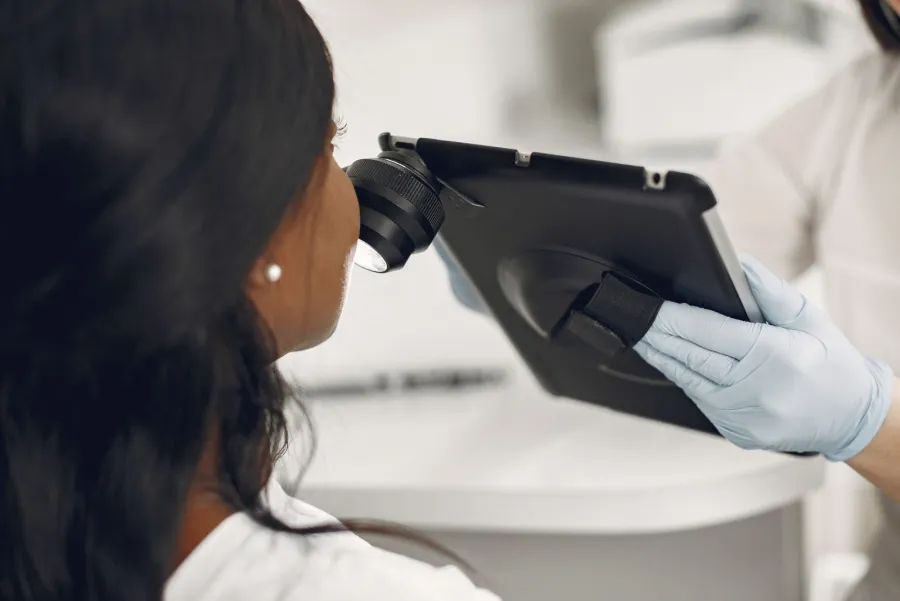
Because AKs and early skin cancers can genuinely look alike, the honest answer is that visual self-diagnosis isn't reliable for either one — this is exactly the kind of spot where a trained eye (and sometimes a dermatoscope or biopsy) makes the real difference. The good news is that both are highly treatable when caught, and an AK check is a quick, low-stakes visit compared to the alternative of letting something worsen unaddressed.
Notice a rough or unusual spot on sun-exposed skin?
Our board-certified dermatologists see patients at our Burien and Bellevue offices — same-week appointments are often available.
Schedule a Skin CheckWhen to See a Dermatologist
Any rough, scaly, or non-healing spot on chronically sun-exposed skin is worth a look — especially if you're fair-skinned, have a history of sunburns, or spend significant time outdoors. If a spot is growing, bleeding, or hasn't healed in a few weeks, don't wait for your next annual skin check.