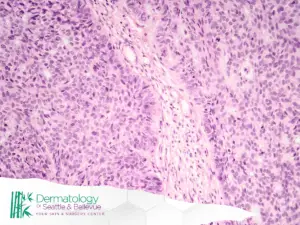

Quick Summary
- The author performed a routine full skin exam on Bob, whose daughter the author had diagnosed a decade earlier with Morphea.
- The exam found a few suspicious moles but no skin cancers.
- Bob requested removal of a painful, growing fatty skin deposit, and the nurse scheduled the procedure.
- Before leaving, Bob became emotional and cried, thanking the author again for the accurate diagnosis and referral to Seattle Children’s Dermatology.
- The referral led to weekly methotrexate shots for his daughter, which worked better than pills due to reflux-related vomiting, reminding the staff of the long-term impact of thorough care.
One routine Monday morning, I came into Examination Room 5 to perform a full skin exam on Bob, the father of a young former patient I treated a decade ago for Morphea – a skin hardening condition. Prior to beginning, Bob thanked me for diagnosing his daughter’s condition, and I expressed my appreciation for his gratitude.
During the exam, we discovered a few suspicious moles, but thankfully, no skin cancers were detected. Nevertheless, he did request the removal of a fatty skin deposit that had grown and become more painful, so my nurse scheduled him for that procedure.
At the conclusion of the appointment, I intended to rush out to see the next patient. However, before I could leave the examination room, Bob became noticeably emotional and began to cry, reiterating his thankfulness over my accurate diagnosis of his daughter’s condition. He also appreciated my referral to have his daughter treated at the Department of Dermatology at Seattle Children’s Hospital where she was put on methotrexate shots weekly (instead of pills, which she threw back up due to a reflux issue).
This appointment was a reminder to me and my staff that we must always do our best for our clients because of the possible long-term impact we can make in their lives.