

If you’re paying out of pocket, telehealth dermatology cost usually comes down to one thing: what kind of visit you’re doing and what’s included after the diagnosis. Teledermatology (dermatology care done remotely) can be a video visit (live appointment) or an asynchronous photo review (you upload skin photos and get an answer later). In this guide, you’ll get a clear price-range picture, what the fee typically covers, and how to avoid surprise add-ons like labs or extra follow-ups.
Best for: People with a clear skin problem who want a quick plan and don’t need an in-office procedure.
Not ideal when: You have severe pain, fast-spreading rash, bleeding, fever, or a rapidly changing mole that needs hands-on care.
Good first step if: You can take sharp skin photos, answer a medical history intake form, and describe timing, triggers, and symptoms.
Call a pro if: The provider recommends urgent care referral, you can’t get usable photos, or symptoms worsen despite treatment.
Quick Summary
-
Most online dermatology pricing is either a one-time physician visit fee or a subscription plan that bundles multiple contacts.
-
Self-pay costs are often simpler than insurance because you know the price before you submit anything.
-
Your total cost can rise if you need labs, an in-person biopsy, or prescription products not covered by your pharmacy plan.
-
Photo-based visits can be cheaper than a live video visit, but they depend on good lighting and clear images.
-
Insurance coverage depends on whether the dermatology provider is in-network and how your deductible and copay work.
Average Telehealth Dermatology Cost Ranges
Telehealth dermatology can cost less than in-person, but pricing depends on the model and follow-ups. Common options include a flat fee per issue, a membership covering multiple concerns and messaging, or charges for new photo reviews later. Confirm whether return visits cost less.
Typical Self-pay Prices (Flat-fee Visits)
Telehealth self-pay commonly uses a one-time visit fee covering review and a treatment plan. Some services price per concern, so two issues, like acne plus eczema, may cost more than one.
Typical Costs With Insurance (Copays/coinsurance)
With coverage, you may pay a copay (set fee) or coinsurance (percentage). But if you haven’t met your deductible, you may pay most of the allowed charge, so a “covered” telederm visit can resemble self-pay.
What’s Included in the Price (and What’s Not)
Most fees cover intake, photo upload or video, and a diagnosis with a treatment plan. Some include brief portal messaging. Usually excluded: procedures and testing. If you need a swab, biopsy, or exam, it’s triage. See warning signs in moles.
Prescriptions, Labs, and Follow-ups
Providers can often e-prescribe to your pharmacy, but you still pay the pharmacy’s price. Labs and imaging are separate and require in-person services. “Free follow-up” often means portal messaging, not another live visit.
Photo-based vs Video Visits: How Pricing Differs
Photo review is often cheaper: you upload images, answer questions, and wait within a response window. Video visits commonly cost more because they require real-time scheduling. Video can be better for larger areas, texture, or movement.

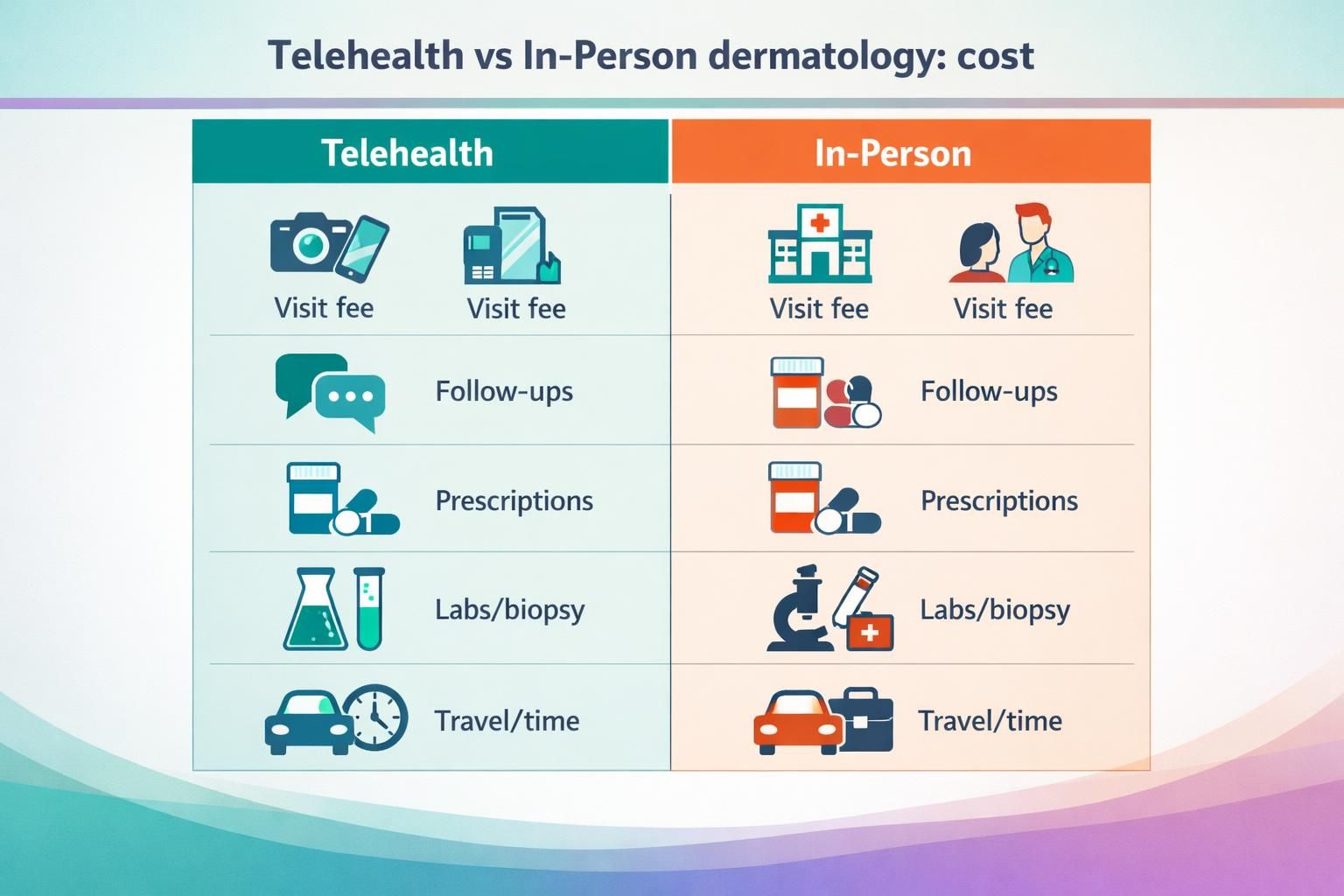
Telehealth vs In-person Dermatology: Cost Comparison
Telehealth is often cheaper because you’re paying for evaluation and planning, not clinic overhead and in-office procedures. It’s a bit like getting a mechanic’s diagnostic check versus replacing parts the same day. A virtual dermatology visit can handle common skin conditions like acne, eczema, psoriasis, rosacea, rashes, and some hair or scalp issues, especially when photos show the pattern clearly.
Here’s a simple way to compare what you’re actually buying:
Visit typeBest forLimitsTypical outcomePhoto reviewClear, visible issuesDepends on photo qualityPlan delivered via portalVideo visitInteractive questionsNo hands-on examReal-time plan and guidanceIn-person visitFull exam and proceduresTravel and schedulingExams, biopsies, in-office treatment
If you’re dealing with hair shedding, telehealth can still be a good starting point for history and pattern review. And you can learn the basics of what’s normal with common hair loss patterns.
Factors That Change Your Teledermatology Cost
Teledermatology costs rise with more clinician time or back-and-forth. Prices vary by complexity (multiple concerns, unclear photos, many medications), logistics (faster turnaround), and state licensure limits by location. Some services bundle dermatology into memberships, shifting pricing from per-visit to subscription.
Condition Complexity and Number of Concerns
One straightforward issue is usually cheaper than multiple concerns. Submitting acne, scalp itching, and a new dark spot may mean more photos, questions, or separate visits. If serious problems can’t be ruled out, expect an in-person referral. For eczema, use how eczema creams differ.
Provider Type, State Rules, and Turnaround Time
Board-certified dermatologists may cost more, depending on the platform. Faster turnaround can raise prices because scheduling is tighter. Your location on the visit day matters, since state rules may limit who can legally treat you.
Insurance Coverage Basics for Online Dermatology
Teledermatology may be covered depending on network status and plan rules. In-network visits use contracted rates; out-of-network may cost more and require claim submission. Even when covered, deductibles, copays, and coinsurance determine your bill. Compare self-pay against what you owe before meeting your deductible.
When It’s Covered and How to Check Your Benefit
Coverage is most predictable when a provider lists accepted plans and confirms in-network status. Before booking, verify teledermatology coverage, your copay, and any prior authorization requirement. Also confirm it’s billed as dermatology, not urgent care.
HSA/FSA and Superbills (Cash-pay Options)
Cash-pay patients may use HSA/FSA funds, depending on account rules. Some platforms provide a superbill, an itemized receipt you can submit for possible out-of-network reimbursement. Payment isn’t guaranteed, but the paperwork can help.
How to Lower Your Cost (Without Cutting Corners)
The cheapest telehealth no insurance option may backfire if a limited first visit leads to paid follow-ups. Pick the right format: photo review for stable, visible issues; video for complex symptoms. Submit clear photos, a product list, and a brief timeline. Note red flags. For new spots, review how fast skin cancer changes.
Questions to Ask Before You Pay
Ask: Is pricing per issue or per visit? How long is messaging included, and what’s the response time? Can they prescribe, and are pharmacy costs separate? If in-person care is recommended, is there a credit or refund? Will you receive a superbill?
Conclusion
A fair telehealth dermatology cost depends less on “cheap vs expensive” and more on what’s included: evaluation, follow-up messaging, and whether prescriptions or labs are extra. If you’re uninsured, start by picking the right visit type and sending great photos. If you have insurance, confirm in-network status and how your deductible applies, so your online visit doesn’t surprise you later.