
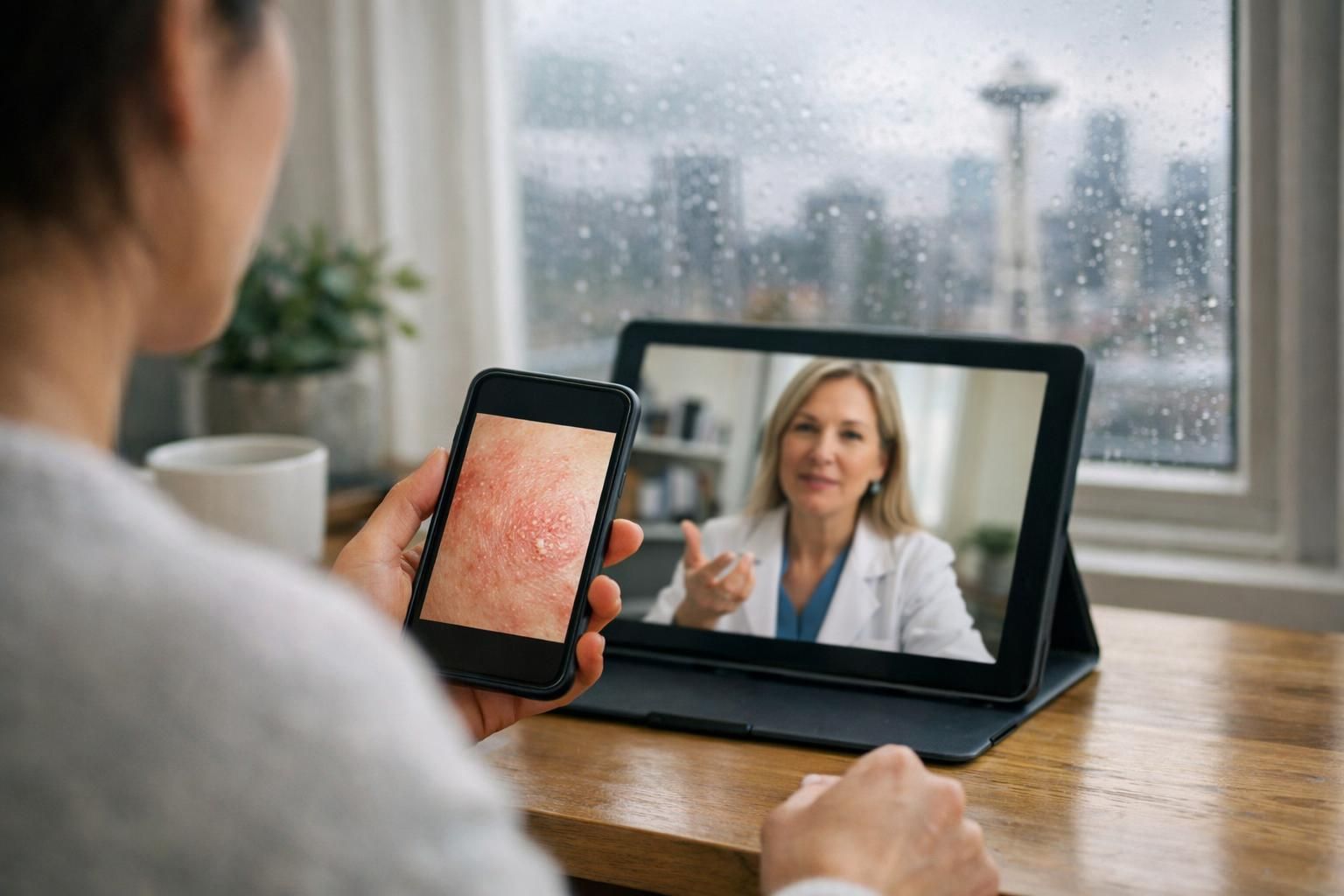
Telehealth is still a big part of dermatology care, but the rules that decide when it’s covered and how it’s billed can shift from year to year. If you’re in Seattle and you use video visits for acne, eczema, psoriasis, hair loss, or a changing mole, the telehealth extension 2026 conversation matters because it affects what you can schedule and what you might pay. This post breaks down the most relevant telehealth updates 2026 in plain English. You’ll learn what Medicare telehealth 2026 changes can mean, what to ask your clinic before your appointment, and when an in-person skin exam is the safer call.
Best for: Patients using video visits for routine follow-ups, medication refills, stable chronic rashes, and simple photo-based skin checks.
Not ideal when: You have a fast-changing spot, bleeding lesion, severe infection signs, or symptoms that need hands-on testing.
Good first step if: You want to confirm whether your concern fits telehealth and what photos or lighting will help your dermatologist.
Call a pro if: Your coverage is unclear, your visit gets denied, or you’re told you must switch to in-person without explanation.
Quick Summary
-
Telehealth rules can affect where you can be, what platform is used, and how your visit is coded for insurance.
-
For dermatology, telehealth works best when good photos and a clear history can answer the question.
-
Medicare rules often influence how clinics set workflows, even for patients with other insurance.
-
Expect more screening questions before booking, especially for new problems or changing spots.
-
You’ll get better outcomes if you prep lighting, focus, and a simple symptom timeline before the visit.
What “Telehealth Extension 2026” Actually Means for Your Dermatology Visit
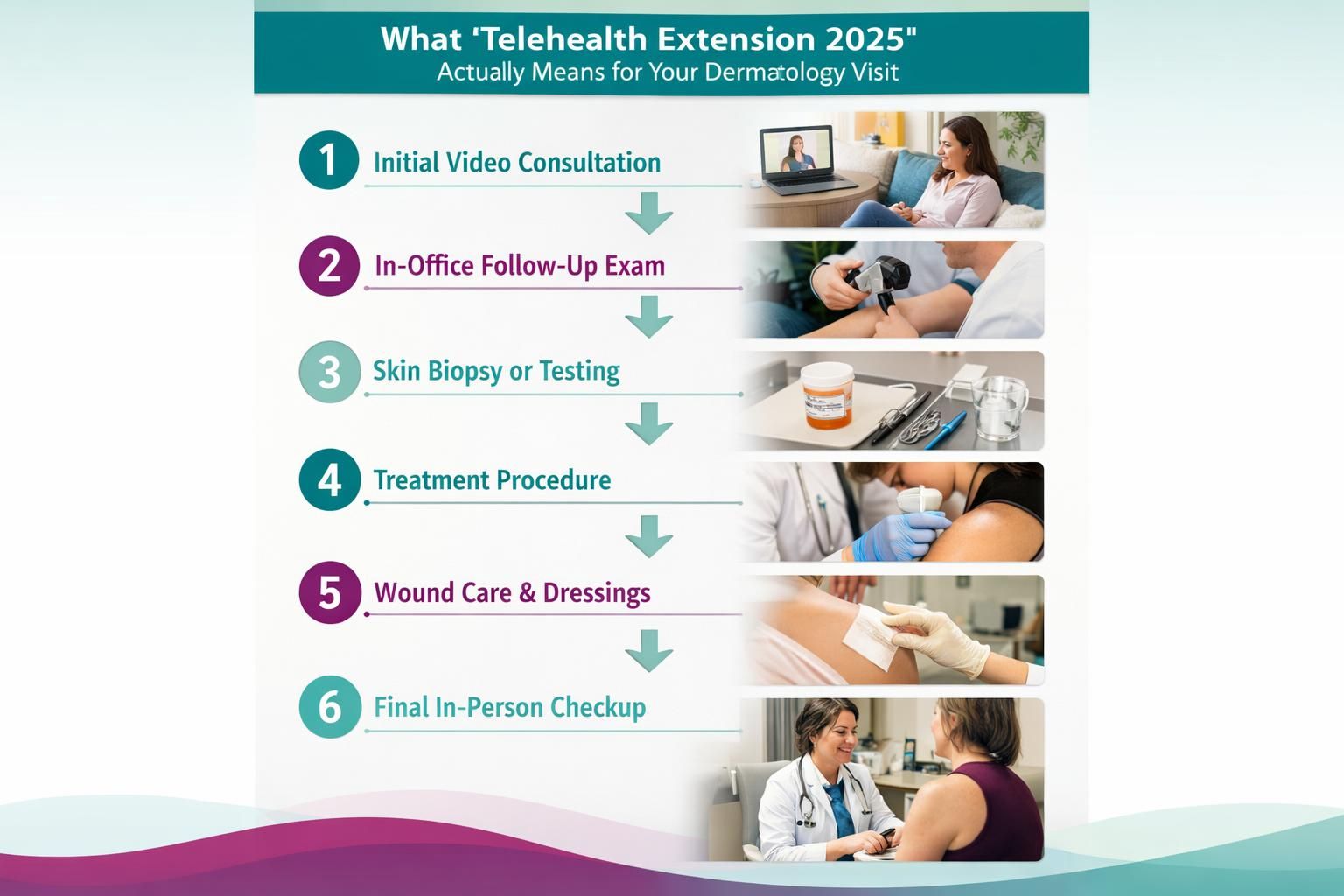
A telehealth extension 2026 usually means temporary telehealth flexibilities were continued into 2026 rather than ending. For you, that can affect whether video visits are treated like standard appointments and what steps clinics must follow to offer them.
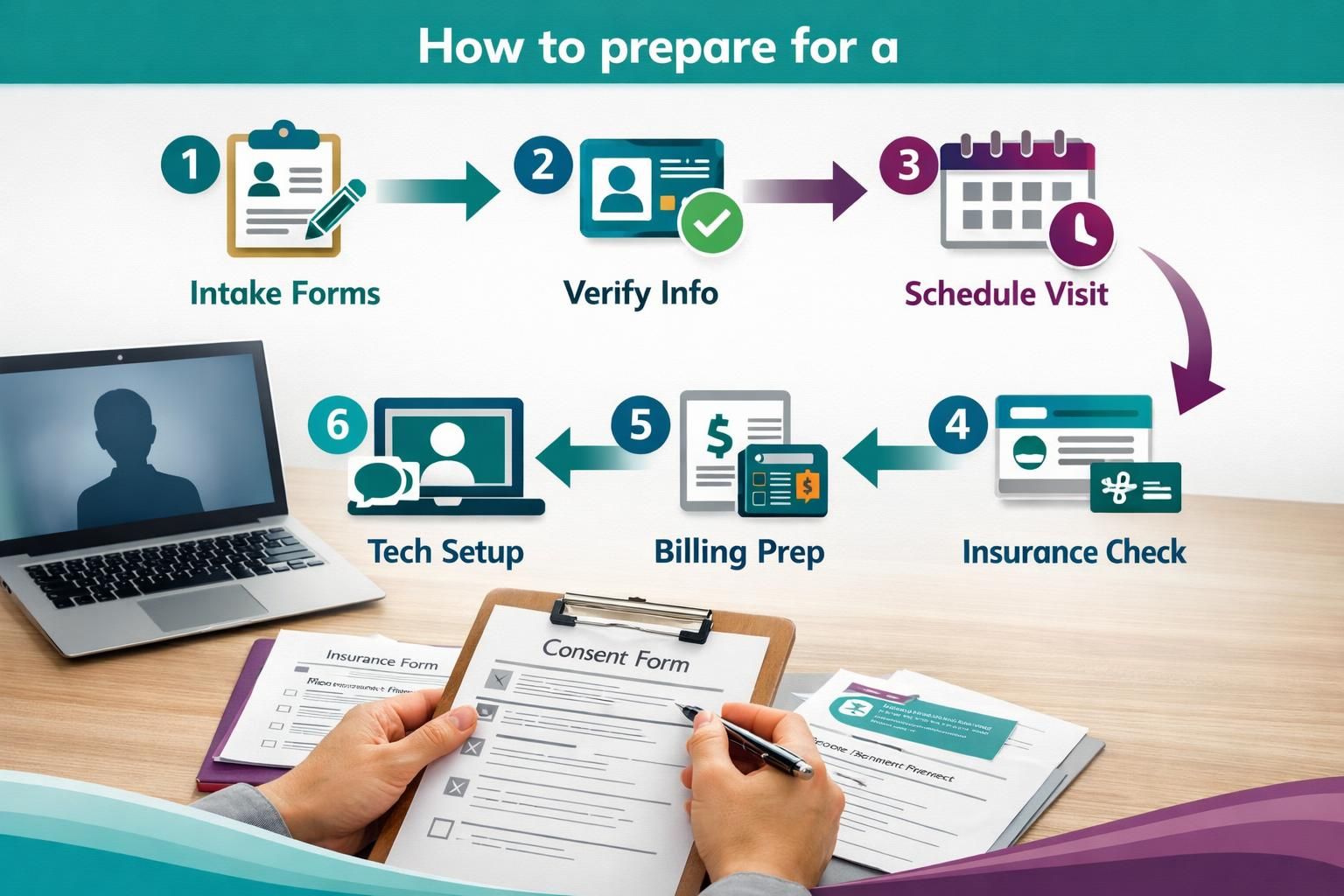
When the policy rulebook changes, clinics may update consent language, intake forms, and which visit types they schedule as telehealth.
In practice, Seattle dermatology patients mainly notice changes in scheduling (what can be seen virtually), documentation (required photos or questionnaires), and billing (how the visit is categorized for insurance).
Also, “telehealth” and “virtual check-in” may differ. A full video visit is billed like an appointment, while a brief call or message exchange may be classified differently and covered differently.
The Biggest Telehealth Changes 2026 That Patients Will Notice First
The biggest telehealth changes in 2026 are usually tighter guardrails on visit type, patient location, and documentation. The medical advice may be similar, but the process may feel stricter.
You’ll likely see clearer sorting between new problems and follow-ups. Known conditions, like stable acne or medication checks, often fit video well. New rashes with pain, fever, or rapidly spreading redness are more likely to be directed to urgent in-person care.
Clinics may also ask where you are physically located during the visit, tied to state licensing and coverage rules.
Photo quality expectations are rising. Dermatology depends on sharp images; if photos aren’t clear, the clinician may not be able to advise safely. If you’re tracking a concerning spot, spot warning signs helps you know what to capture.
Prep: bright front lighting, clean lens, one close-up plus one wider shot, include a coin/ruler for scale, and note start date and what you tried.
How CMS Telehealth 2026 and Medicare Telehealth 2026 Can Affect Seattle Clinics
CMS telehealth 2026 matters because CMS sets detailed Medicare rules that many clinics copy for scheduling, documentation, and billing, even for non-Medicare patients.
Medicare telehealth 2026 policies can affect which visit types are allowed by video, when phone-only is acceptable, and what documentation must be in the chart. When those rules shift, clinics often update EMR templates and intake workflows.
What you may notice: extra screening questions to confirm the visit qualifies, a push toward video instead of phone (or the reverse), and statements that some services require an in-person baseline visit before telehealth follow-ups.
This doesn’t mean telehealth is disappearing. It usually means clinics are trying to prevent denied claims.
For a changing mole or new dark spot, video has limits: color can shift with lighting, and texture can’t be felt. For quick context on common look-alikes, see mole look-alike basics.
When Telehealth is a Good Fit in Dermatology, and When It’s Not
Telehealth works in dermatology when decisions can be made safely from your history and clear photos, often with a medication plan. It’s most useful for follow-ups and known conditions.
Good telehealth uses include acne check-ins and medication tweaks, eczema flares you’ve had before, psoriasis management, rosacea follow-ups, hair loss discussions with lab review, and refills or side effect questions.
Telehealth is a poor fit when the cost of missing something is high: a fast-changing lesion, possible skin cancer, severe infection, or widespread blistering. For spots on palms or soles, where patterns can differ, read why acral spots matter.
Choose in-person or urgent care for bleeding or crusting that won’t heal, rapid change in a spot’s size/shape/color, spreading hot redness with fever or severe pain, eye involvement, lip swelling, trouble breathing, or a new rash after a high-risk medication. If unsure, book telehealth but confirm they can switch you to in-person quickly.
How to Prepare for a Telehealth Dermatology Appointment so You Don’t Waste it
Make a telehealth dermatology visit useful by supplying clear photos and a short timeline. Aim for enough context to make a safe plan.
Take photos before the visit. Still photos are usually sharper than live video, which often blurs and struggles to focus.
Write a simple timeline: when you first noticed it, how it changed, what you tried and whether it helped, triggers (heat, shaving, new products, stress), and your current meds and skin products.
If the visit is for eczema, remember moisturizers seal in water while prescription anti-inflammatories reduce immune-driven irritation. For basics, choosing an eczema cream is a good start.
Set up the visit: stable internet, clothing that exposes the area, a flashlight for awkward angles, and your pharmacy name. During the call, ask the clinician to repeat instructions if anything is unclear.
Telehealth Policy 2026 Questions to Ask Before You Book (and What Answers to Listen For)
Telehealth policy in 2026 can affect what a clinic can offer and what insurance will cover, so ask a few questions before you schedule.
When booking, ask: Is this a full video visit or a brief virtual check-in? Do you need photos uploaded first? If I need in-person, how fast can I switch? Will I see a dermatologist or another team clinician? Are there conditions you won’t evaluate by telehealth?
Be cautious if staff can’t explain what they need from you, or if they claim they can diagnose anything by video. Good clinics set limits.
If your goal is a prescription, ask whether the medication requires labs, monitoring, or an in-person exam. For hair loss questions, what’s normal with age can help you describe patterns and triggers.
If you use Medicare, ask them to confirm they can bill your specific visit type under Medicare telehealth 2026 rules.
Conclusion
If you’re trying to make sense of telehealth extension 2026, focus on what it changes for you: scheduling rules, photo requirements, and which issues are safe to manage on video. For Seattle dermatology patients, telehealth still works well for routine follow-ups and chronic conditions. Your next step is simple: call the clinic, ask the booking questions, and choose video or in-person based on risk, not convenience.