
Introduction
Eczema can feel unpredictable: some days your skin is calm, and other days the itching keeps you awake and makes it hard not to scratch. That’s why many people wonder, does benadryl help eczema, or does it mainly make you drowsy so you notice the itch less? In this article, you’ll learn what Benadryl is, how it works, and when it may or may not be useful for eczema-related symptoms. We’ll also cover practical strategies for how to stop scratching eczema, common side effects to consider, and alternatives that more directly target inflammation and skin barrier damage.
- Benadryl may help some people sleep through nighttime itching, but it does not treat the underlying eczema inflammation.
- Oral antihistamines can reduce itch in certain situations, especially when allergies or hives are involved.
- Topical Benadryl products are often not the best choice for eczema-prone skin.
- Breaking the itch-scratch cycle usually requires a skin-barrier routine plus targeted anti-inflammatory treatment.
- If itching is severe, persistent, or affecting sleep, discuss a plan with a clinician rather than relying on one medication.
Overview of Eczema
Eczema, often used interchangeably with atopic dermatitis, is a chronic condition linked to a weakened skin barrier and an overactive inflammatory response. When the barrier is compromised, the skin loses moisture and becomes more reactive to irritants like soaps, fragrances, rough fabrics, and environmental changes. This can lead to dry, inflamed, itchy patches that may crack, ooze, or thicken over time.
Itch is one of the most disruptive symptoms and often worsens at night. Flares come in cycles, and triggers vary by person. Identifying triggers and calming inflammation is usually more effective than focusing only on itch suppression.
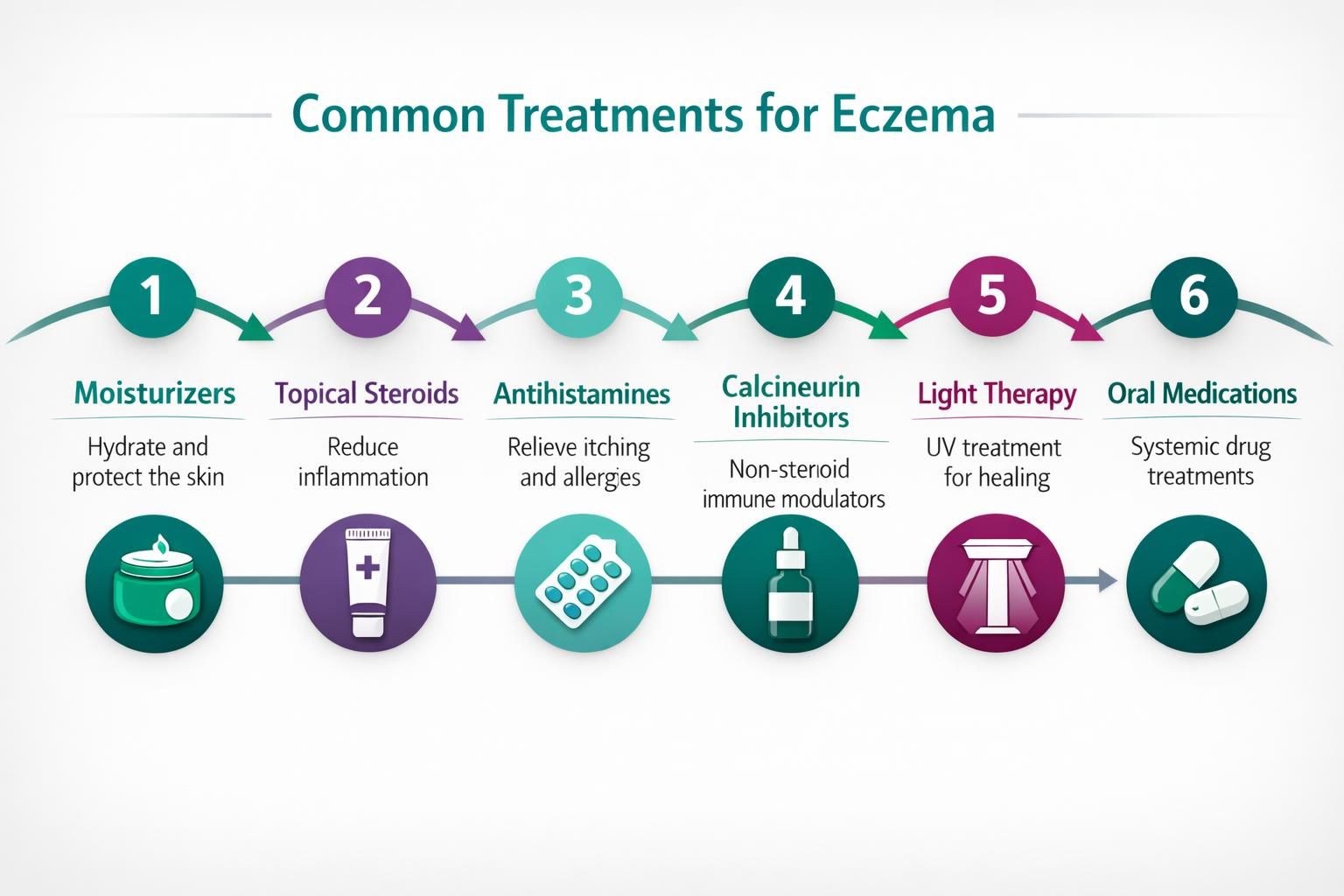
Common Treatments for Eczema
Most eczema plans combine daily maintenance with flare management. Maintenance focuses on restoring the skin barrier and preventing dryness to reduce sensitivity and flare frequency. Flare management aims to calm inflammation and itching quickly to limit skin damage and lower infection risk.
Common approaches include gentle bathing, consistent moisturizing, and topical anti-inflammatory medications when needed. Many people also benefit from avoiding triggers such as harsh cleansers, fragrances, frequent washing without moisturization, and irritating fabrics. For moderate to severe eczema, clinicians may consider stronger topical or systemic therapies, especially when sleep and quality of life are affected.
Understanding Benadryl
Benadryl is known as an allergy medication, but it’s also used at night because it can cause drowsiness. That leads many people to try benadryl for eczema during itchy flares when they’re desperate for sleep. Knowing what Benadryl does and does not do helps set realistic expectations.
Eczema itching is complex and not always driven mainly by histamine, the chemical most associated with allergy symptoms. Antihistamines can help when allergic triggers or hives overlap with eczema, but they typically do not address the inflammation that causes eczema patches to persist.
What is Benadryl?
Benadryl is a brand name commonly associated with diphenhydramine, an older, first-generation antihistamine. Antihistamines block histamine receptors in the body. Histamine plays a major role in classic allergy symptoms like sneezing, runny nose, watery eyes, and itchy hives.
Diphenhydramine also crosses into the brain, which is why it can cause sedation. Benadryl comes in oral and topical forms, which can create confusion about what is safest for eczema-prone skin.
How Benadryl Works
Diphenhydramine blocks H1 histamine receptors. When histamine is a key driver of symptoms, blocking it can reduce itching, redness, and swelling. But eczema itch is often not histamine-dominant. Eczema involves multiple inflammatory pathways, skin barrier breakdown, and nerve sensitivity, so itch can persist even with histamine blockade.
Sedation may still be relevant. Taking an oral dose at night may help some people fall asleep and wake less often. In that sense, Benadryl may help with sleep, but it does not treat the eczema rash like anti-inflammatory therapies do.
Types of Benadryl (oral vs. topical)
Oral Benadryl affects the whole body and is the form most people mean when they ask, will benadryl help with eczema. The main potential benefit is short-term nighttime relief, especially if itching is partly allergy-related or if sedation reduces nighttime scratching.
Topical diphenhydramine is applied directly to the skin, but eczema skin is already reactive. Topical antihistamines can irritate skin or trigger contact reactions and may mask symptoms without addressing inflammation or barrier repair. For many eczema routines, bland moisturizers and appropriate anti-inflammatory treatments are preferred over topical Benadryl.
Does Benadryl Help Eczema?
It depends on what “help” means. If the goal is to treat eczema itself, Benadryl is not a primary treatment because it does not repair the barrier or directly reduce eczema inflammation. If the goal is to get through a miserable night, oral Benadryl may offer short-term relief for some people, mainly by making them sleepy.
If you are asking can benadryl help eczema, it may sometimes help with itch perception or sleep during a flare. But relying on it alone can allow ongoing inflammation, continued scratching, and skin damage. A complete plan is usually more effective than any single medication.
Examining Scientific Evidence
Antihistamines are most clearly effective for histamine-driven itching, such as urticaria (hives). Eczema itch can overlap with allergy symptoms, but it is frequently driven by inflammatory pathways not fully controlled by histamine blockade.
Because of that, sedating antihistamines are often used for sleep support rather than as direct eczema therapy. A clinician might suggest short-term nighttime use for someone who scratches in their sleep. Core eczema management still focuses on moisturizing, trigger reduction, and anti-inflammatory treatment.
Efficacy for Eczema Symptoms
When people say Benadryl works, they may be noticing that they fall asleep faster, wake less, or scratch less because they are drowsy. For someone with seasonal allergies or pet exposure, an oral antihistamine may reduce part of the itch burden.
However, Benadryl does not moisturize the skin, rebuild the barrier, or reliably improve the eczema rash. If your main symptoms are dryness, redness, and thickened or cracked skin, a targeted skincare routine and anti-inflammatory treatment are usually more effective. Benadryl is best viewed as occasional support, not the foundation of care.
How to Stop Scratching Eczema
Learning how to stop scratching eczema can be as important as choosing the right medication. Scratching brings short-term relief but worsens inflammation and damages the skin barrier, leading to more itch and longer flares. Because scratching can become automatic, especially at night or during stress, it helps to use strategies that reduce itch intensity, protect the skin, and change habits.
The goal is not just willpower. It’s reducing itch signals and making scratching harder, especially during sleep.
The Itch-Scratch Cycle
The itch-scratch cycle is a loop: eczema causes itch, scratching damages the skin, and that damage increases inflammation and nerve sensitivity, causing more itch. Over time, repeated scratching can lead to thickened skin and more persistent symptoms.
Breaking the cycle usually requires reducing inflammation and dryness so the itch signal is weaker, and reducing opportunities to scratch, especially at night or during stress.
Behavioral Techniques to Reduce Scratching
Behavioral strategies work best when paired with good skincare and appropriate medication. The goal is to reduce automatic scratching and replace it with soothing actions.
- Keep nails short and filed smooth
- Wear cotton gloves or soft mittens at night if you scratch in your sleep
- Moisturize before bed and reapply if you wake up itchy
- Use a cool compress on itchy spots instead of scratching
- Press the itch with the palm rather than raking with nails
- Identify high-risk times (stress, heat, bedtime) and keep soothing tools nearby
Heat and sweating can intensify itch, so a cooler bedroom and breathable clothing may reduce nighttime flare-ups.
Role of Antihistamines in Itch Relief
Antihistamines can help certain people, but the benefit depends on the cause of itch. If itching is partly allergy-related, an antihistamine may reduce that trigger. If itching is mainly eczema-driven, the biggest benefit of a sedating antihistamine may be improved sleep and less nighttime scratching, not a major change in the rash.
If you find yourself thinking, does benadryl help eczema every night, it may be a sign that key pieces are missing: frequent moisturization, appropriate anti-inflammatory treatment during flares, and trigger control. If sleep disruption continues, discuss longer-term options with a clinician.
Potential Side Effects of Benadryl
Side effects matter because eczema can be chronic, and repeated use should be weighed for risk. Sedation may help at bedtime but can carry into the next day. Some people have the opposite reaction and feel restless.
Sedation can also hide the need for better eczema control. If underlying inflammation is not treated, the skin can continue to worsen even if you sleep through the itch. Topical diphenhydramine can irritate sensitive skin, complicating eczema management.
Common Side Effects
Common diphenhydramine side effects include sleepiness, grogginess, slowed reaction time, and next-day mental fog that can affect school, work, or driving.
Other effects can include dry mouth, constipation, and difficulty urinating. Dryness can worsen itch for eczema-prone people. If Benadryl seems to increase dryness or discomfort, it may not be a good fit.
Risks of Long-Term Use
Frequent Benadryl use for sleep or itch can create problems beyond short-term side effects. Some people develop tolerance to sedation, making it less effective over time.
Regular reliance can also delay a plan that controls eczema inflammation and prevents flares. If you need something nightly, it may signal that eczema is undertreated or triggers aren’t controlled. A clinician can help identify safer long-term strategies and evaluate whether another condition is contributing to persistent itch.
Alternative Treatments for Eczema

If you’re unsure about benadryl for eczema, focus on what treats eczema itself: restoring the skin barrier, reducing inflammation, and limiting triggers. The most effective routines are consistent and simple.
Alternatives may be topical, oral, or lifestyle-based depending on severity. Many people improve with a solid moisturizer routine plus an anti-inflammatory topical during flares. If symptoms are frequent or severe, a clinician may recommend options that target inflammation more directly than antihistamines.
Moisturizers and Topical Steroids
Moisturizers are the foundation of eczema care because they support barrier repair and reduce dryness-driven itch. Thicker, fragrance-free products are often best tolerated. Apply after bathing and handwashing; very dry areas may need more frequent application.
Topical steroids are commonly used during flares to reduce inflammation and calm redness and itch. They are usually used for a defined period and adjusted as the flare improves. Used appropriately under guidance, they can be effective at breaking the itch-scratch cycle. For sensitive areas or frequent flares, clinicians may suggest nonsteroidal prescription anti-inflammatory topicals as part of a longer-term plan.
Other Oral Medications
For moderate to severe eczema, oral medications may be considered when topical treatments are not enough. Options are individualized based on symptoms, flare patterns, and overall health. Some aim to reduce immune-driven inflammation, while others target itch pathways or sleep disruption related to discomfort.
If itching is severe, consider whether another issue is adding to symptoms, such as infection, irritant exposure, or an allergic component that needs direct treatment. A clinician can help determine whether oral therapy is appropriate. Oral Benadryl is only one tool and is not the central treatment for chronic eczema control.
Conclusion
Benadryl can be tempting when eczema itching keeps you up at night, but its most common benefit is sedation rather than treating eczema itself. If you’re asking does benadryl help eczema, the practical answer is that it may help some people sleep and scratch less in the short term, especially when allergy symptoms overlap, but it does not repair the skin barrier or reliably reduce eczema inflammation. A better next step is to build a consistent routine: gentle cleansing, regular moisturization, and appropriate anti-inflammatory treatment during flares, with habit changes to protect skin from scratching. If itching persists or sleep is regularly disrupted, talk with a clinician about a safer long-term plan.
Summary of Findings
Benadryl is a first-generation antihistamine that can reduce histamine-driven itching and often causes drowsiness. Because eczema itch is not always driven by histamine, results are inconsistent. Some people experience relief mainly because they sleep through nighttime itching, while others see little change in itch or rash. Topical Benadryl products can be irritating for sensitive skin and may not be a good match for eczema routines. The most reliable eczema management focuses on barrier repair, trigger control, and anti-inflammatory treatment during flares.
Final Thoughts on Using Benadryl for Eczema
If you’re considering whether will benadryl help with eczema, treat it as an occasional support rather than your main strategy. It may be reasonable for short-term nighttime use when itching is intense, but it shouldn’t replace a routine that targets the cause of eczema symptoms. Focus first on moisturizing consistently, using proven anti-inflammatory treatments for flares, and implementing practical methods for how to stop scratching eczema. If you find yourself needing Benadryl often, that’s a cue to reassess triggers and treatment options with a professional.
Disclaimer
This article is for general educational purposes only and does not provide medical advice, diagnosis, or treatment. Eczema can vary widely in severity and causes, and medications like antihistamines may be unsafe for some people or interact with other drugs and health conditions. Always follow product labels and consult a qualified healthcare professional for personalized guidance, especially for children, pregnancy, chronic symptoms, or severe itching, swelling, pain, or signs of infection.