Choosing the Right Eczema Cream
Quick Summary
- Match eczema cream to skin barrier needs, flare pattern, location, dryness level, and triggers like fragrance, detergents, sweat, stress.
- Favor barrier-supporting ingredients: ceramides, glycerin, petrolatum, dimethicone, colloidal oatmeal; avoid fragrance, essential oils, harsh acids, burning products.
- OTC care may help mild flares; persistent itch, sleep disruption, cracking, or relapses may require clinician-guided prescription options.
- Apply moisturizer within minutes after bathing on damp skin, reapply at least twice daily; hands after each wash, especially colder months.
- For best results, use thick fragrance-free creams or ointments; lighter lotions need frequent reapplication, richer cream often suits nighttime.
Finding the right eczema cream is less about hype and more about matching the formula to your skin barrier and flare pattern. In Bellevue, cooler months and indoor heating can make eczema-prone skin feel extra dry, tight, and reactive.
Understanding Eczema
Eczema is a chronic, flare-prone condition where the skin barrier is weaker and inflammation drives itching and irritation.
What is Eczema?
Eczema is inflammation of the skin that can cause itch, redness, scaling, and cracked patches, often cycling between flares and calmer periods.
Types of Eczema
Common types include atopic dermatitis, contact dermatitis, dyshidrotic eczema, nummular eczema, and seborrheic dermatitis.
Identifying Skin Needs
The best eczema cream depends on where your eczema shows up, how dry your skin is, and what triggers your flares.
Assessing Your Skin Type
Notice whether your skin is dry, sensitive, oily-but-dehydrated, or easily stings, and consider that face skin often needs a different texture than body skin.
Understanding Your Eczema Symptoms
Track if your main issue is itch, roughness, cracking, oozing, or thickened patches, and note any common eczema triggers like fragrance, detergents, sweat, or stress.
Ingredients Matter
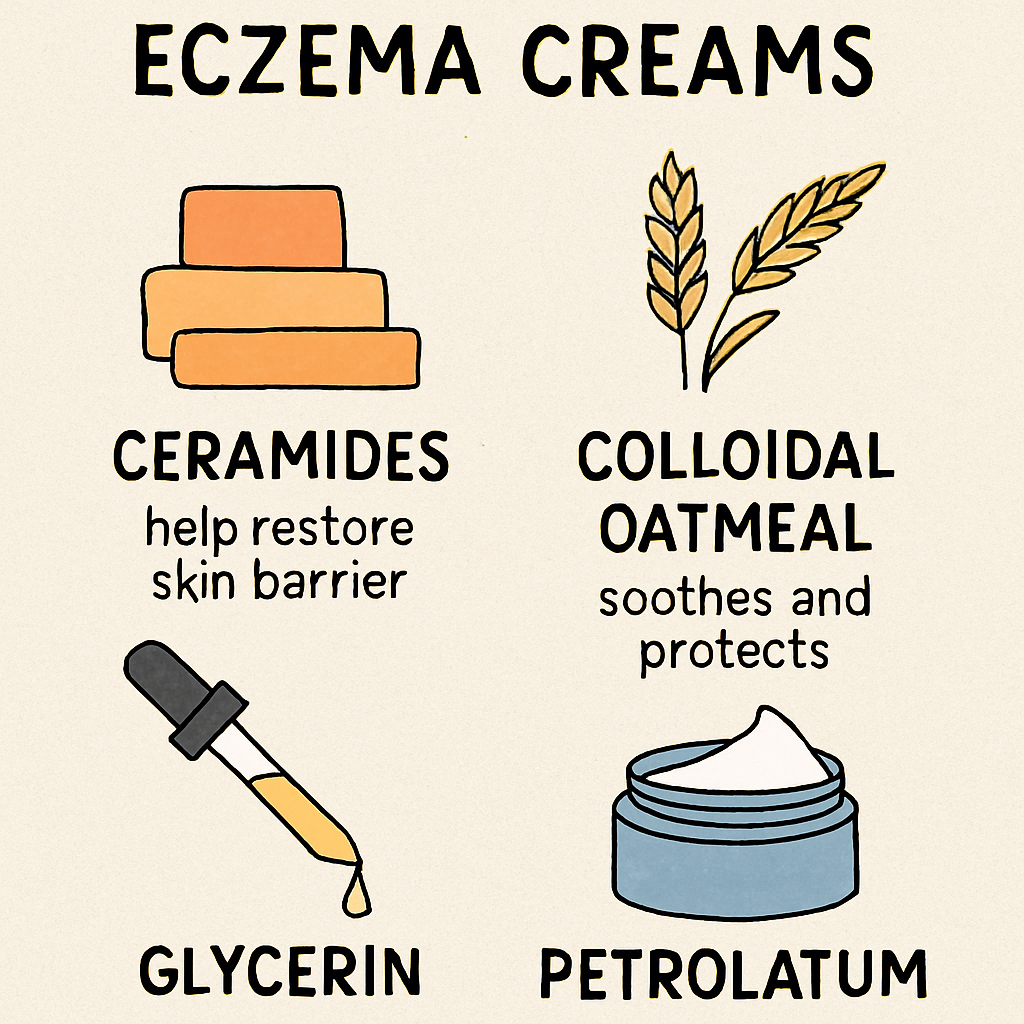
Eczema creams and lotions work best when they reinforce barrier lipids and reduce water loss, without adding irritants.
Key Ingredients in Eczema Creams
Look for barrier-supporting ingredients like ceramides, glycerin, petrolatum, dimethicone, colloidal oatmeal, and soothing humectants. If you see “aqueous cream” or “emollients for eczema,” think of these as moisturizers designed to lock in water; some people also benefit from an emollient soap substitute to reduce dryness from cleansing.
Ingredients to Avoid
Avoid fragrance, essential oils, harsh exfoliating acids, and products that burn on application. If you have frequent flares, be cautious with heavily scented “natural” balms and consider patch testing, since contact irritation can mimic worsening eczema.
Over-the-Counter vs. Prescription
Over-the-counter care can be enough for mild flares, but persistent inflammation may need prescription support.
When to Consider Prescription Creams
If OTC products are not controlling itch, sleep disruption, cracking, or frequent relapses, it is time to talk with a clinician. Prescription options may include stronger anti-inflammatory topicals or non-steroid alternatives, especially for sensitive areas like the face and eyelids.
Evaluating Efficacy of Over-the-Counter Options
Give a consistent routine at least 1 to 2 weeks, applying moisturizer multiple times daily, and watch for less itch and less redness. If you use OTC hydrocortisone briefly, pair it with a true moisturizer, since steroid alone does not rebuild the barrier.
Best Eczema Creams on the Market
There is no single best eczema cream for everyone, but certain product types tend to perform well for eczema-prone skin.
Top Recommendations
- Thick, fragrance-free cream or ointment for flares
- Ceramide-rich moisturizer for daily barrier support
- Colloidal oatmeal cream for itch-prone patches
- Petrolatum-based ointment for cracked or very dry areas
- Emollient cleanser or emollient as soap substitute if washing triggers dryness
Comparing Best Lotion of Eczema
The “best lotion of eczema” is often a cream or ointment, not a thin lotion, because thicker textures reduce water loss better. A lighter lotion for eczema skin can work during the day if you reapply often, but most people do better using a richer cream at night.
Applying Eczema Cream Effectively
Even the best products underperform if they are applied too little or too late.
How to Use Eczema Cream
Apply eczema cream within a few minutes after bathing or washing while skin is still slightly damp, and reapply at least twice daily. For hands, reapply after each wash, especially in colder Bellevue months.
Tips for Maximizing Absorption
- Use lukewarm water and pat dry, do not scrub
- Warm the product between palms before applying
- For stubborn patches, consider short-term occlusion (like cotton gloves at night) if your clinician agrees
Skin Care Routine Integration
Long-term control comes from daily barrier care, not only flare rescue.
Moisturizing Daily
Moisturize consistently, even when skin looks “fine,” to prevent the next flare. Keep cleansing gentle, avoid long hot showers, and consider an emollient cleanser if soap leaves you tight or itchy.
Best Face Moisturizer for Eczema
A best face moisturizer for eczema is typically fragrance-free, non-stinging, and barrier-focused, often with ceramides and glycerin. If you are acne-prone, choose a non-greasy cream and avoid stacking strong actives until the barrier is calm.
Conclusion
Choosing the right eczema cream is about barrier repair, low-irritant formulas, and consistent application, not chasing the strongest product. If your eczema is persistent, spreading, or repeatedly disrupting sleep, a dermatology visit can help you step up treatment safely.
Disclaimer
This article is for general educational purposes only and does not provide medical advice, diagnosis, or treatment.