Introduction
Sun-related marks on the skin are common, especially as you get older or spend more time outdoors. If you have ever wondered what does sun spots look like, you are usually thinking about flat, discolored patches on areas that get frequent sun exposure. The confusing part is that some early skin cancers can also start as a new spot or a changing patch, which makes it important to understand what is typical and what is not. This guide explains how sun spots usually appear, how melanoma and other skin cancers may look on the skin, and how to tell sun spots vs skin cancer using practical visual and behavior clues. You will also learn when to get a dermatologist involved.
- Sun spots are typically flat, evenly colored patches that develop slowly in sun-exposed areas.
- Skin cancer can mimic a spot but often changes, grows, bleeds, or looks irregular.
- Melanoma sun spots on skin may show multiple colors, uneven borders, and rapid evolution.
- Use self-checks to track new or changing spots, especially on the face, hands, shoulders, and back.
- When in doubt, get a professional skin exam rather than trying to self-diagnose.
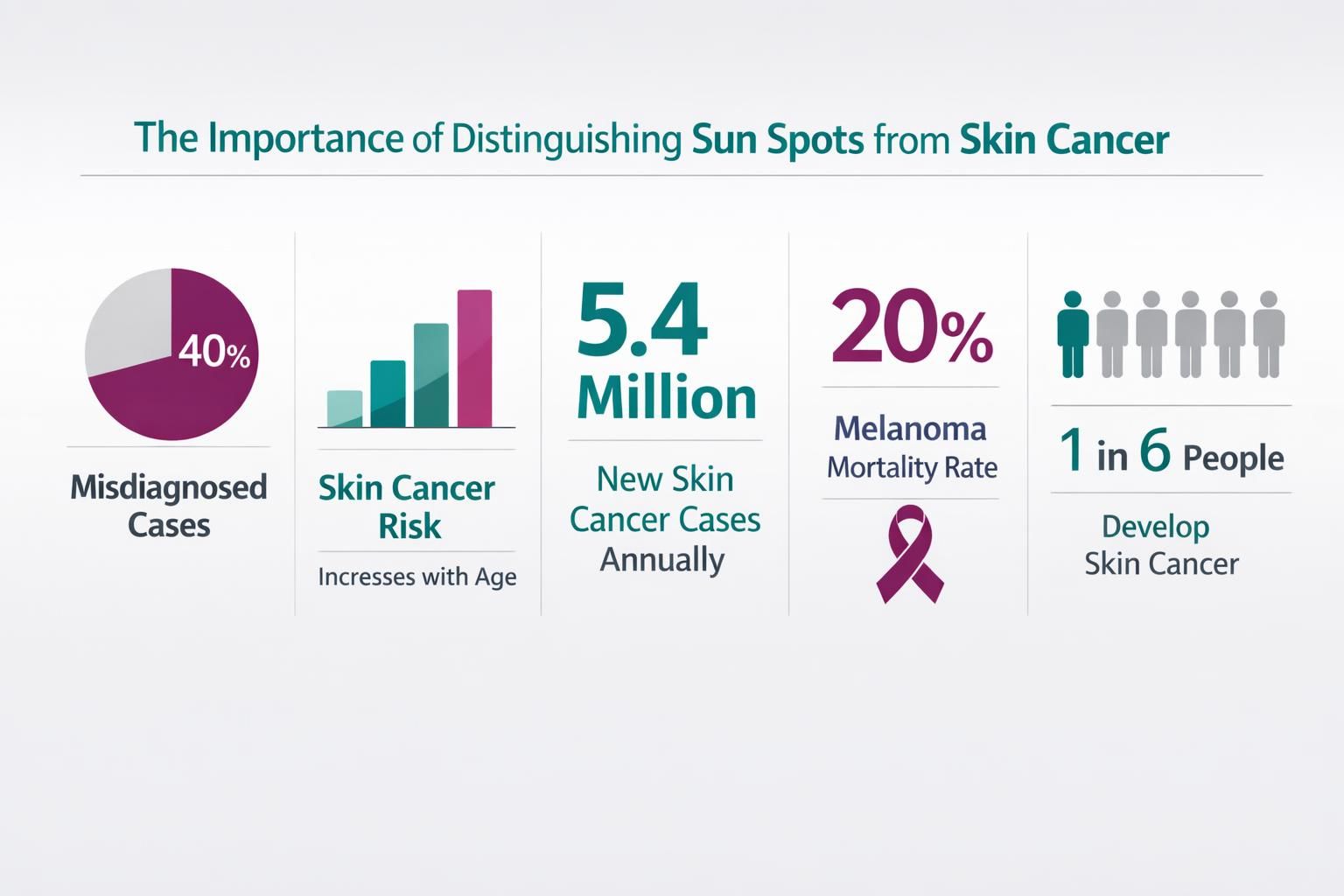
The Importance of Distinguishing Sun Spots from Skin Cancer
Sun spots are usually harmless, but dismissing a suspicious lesion as an age spot can delay diagnosis. Sun damage exists on a spectrum, from benign discoloration to precancerous changes and cancer, and appearances can overlap.
Instead of guessing sunspot or skin cancer from one detail, look for stability versus change, red flags like irregular borders or bleeding, and whether a spot looks different from your other marks. When you are unsure, timely evaluation is safest.
Understanding Sun Spots
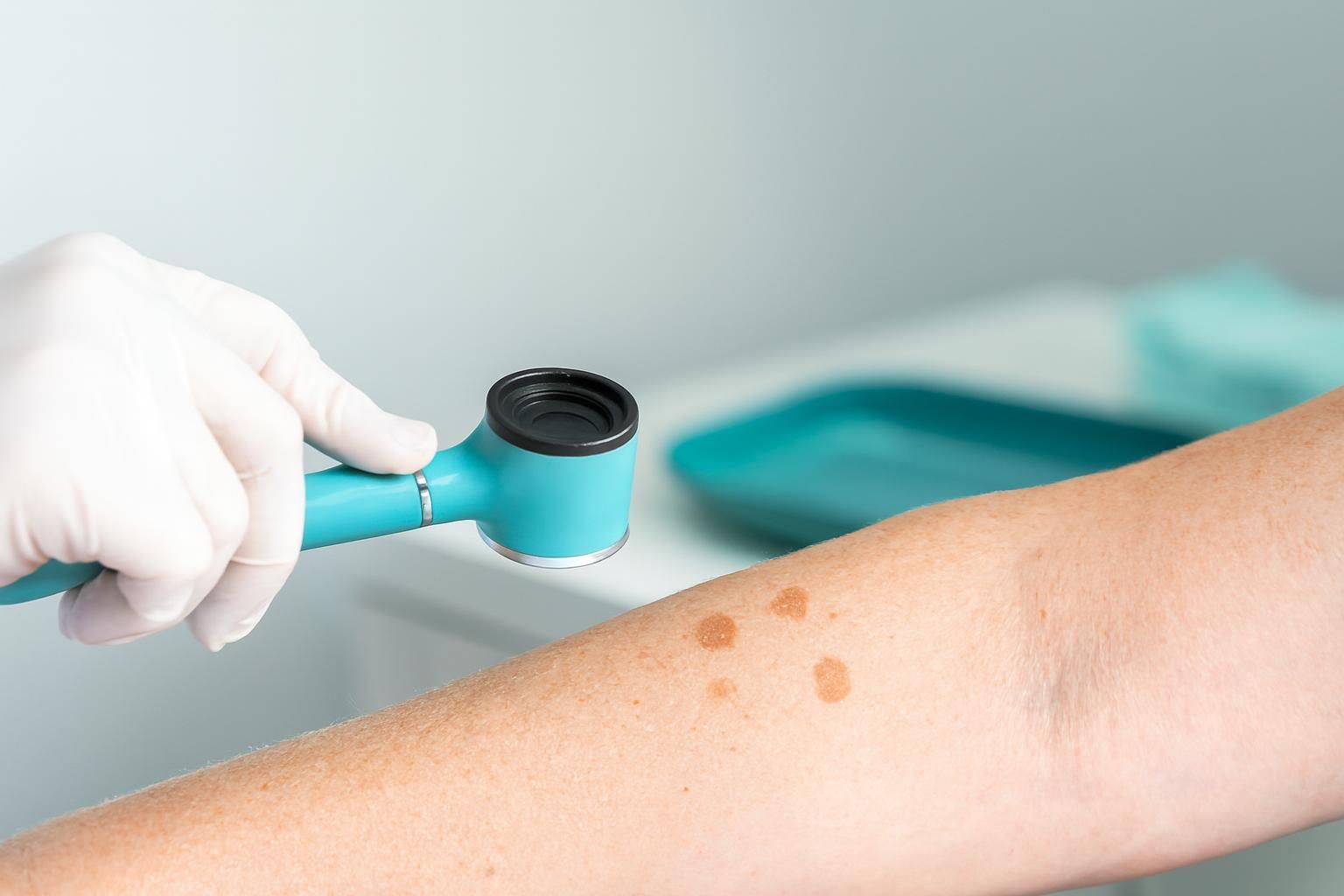
Sun spots are often called age spots or liver spots, though they are not caused by the liver. They form when the skin produces extra pigment after repeated ultraviolet exposure and often appear gradually after years of sun on the same areas.
Most sun spots are cosmetic, but they also reflect cumulative sun exposure. Knowing their typical features helps you spot changes that do not fit the usual pattern.
Definition and Characteristics
A classic sun spot is a flat area of increased pigment. It is usually smooth to the touch, without crusting, ulceration, or a raised edge. Sun spots typically do not itch, hurt, or bleed, and they may appear in groups on the same sun-exposed region.
Color commonly ranges from light brown to dark brown and is often uniform. They develop slowly and tend to stay fairly stable, unlike cancer sun spots skin concerns where noticeable change over weeks to months matters.
Appearance: Color, Size, and Shape
Sun spots are often round or oval, with borders that are usually clear and consistent. Size varies from small dots to larger patches, and spots may merge on heavily sun-exposed skin.
Common appearance traits include:
- Flat surface with no lump, ulcer, or scab
- Even pigmentation or mild variation
- Symmetry or near-symmetry
- Little change over time
A spot that quickly darkens, shows multiple colors, or develops an uneven border is less typical and may raise a sun spots vs skin cancer concern.
Common Locations on the Body
Sun spots usually appear on areas that get frequent sun: face (cheeks, forehead, temples), backs of the hands, and forearms. Shoulders, upper chest, and upper back are also common.
Location alone cannot confirm or rule out anything. Skin cancers often occur on sun-exposed skin but can appear elsewhere, so consider location along with change, symptoms, and overall appearance.
Skin Cancer Overview
Skin cancer occurs when skin cells grow abnormally. Sun exposure is a major risk factor, and many cancers start subtly. Some resemble harmless pigmentation early on, with differences becoming clearer as the lesion evolves.
There is no single “cancer look.” Some patterns are more suspicious, but confirmation requires clinical evaluation and sometimes a biopsy.
What is Skin Cancer?
Skin cancer is an abnormal growth of skin cells that may show up as a new spot, a sore that does not heal, a scaly patch, or a changing mole-like lesion. Some types stay localized, while others can spread if untreated.
Not every suspicious mark is cancer, and not every cancer looks dramatic. When people describe melanoma sun spots on skin, they are often noticing a dark spot that changes, looks irregular, or stands out compared with nearby marks.
Types of Skin Cancer Relevant to Sun Spots
Several skin cancer types can be confused with sun-related pigment changes:
- Basal cell carcinoma: may look like a pearly bump, a pink patch, or a sore that crusts and returns.
- Squamous cell carcinoma: may appear as a rough, scaly, thickened patch or a persistent crusted area.
- Melanoma: often resembles a changing mole or a new dark spot with irregular features.
Melanoma is especially important to evaluate quickly because it can progress in ways benign sun spots do not.
Recognizing Cancerous Sun Spots
Cancer sun spots skin concerns usually come down to a spot behaving unlike a typical sun spot. Warning signs include rapid change in size, irregular borders, bleeding, persistent tenderness or itching, or a surface that becomes scaly or ulcerated.
Also watch for the “odd one out.” If your usual spots are light brown and flat, a new lesion that is very dark, mixed in color, raised, or changing deserves attention. These clues can guide you to seek care, but you cannot confirm cancerous sun spots by sight alone.
Differences Between Sun Spots and Skin Cancer

Sun spots typically stay flat and stable, while skin cancers are more likely to evolve. There is overlap, so the goal is not perfect self-diagnosis but recognizing red flags early.
If you feel stuck between sunspot or skin cancer, focus on the pattern on your skin overall. Benign sun spots often look similar to each other. A suspicious lesion often breaks the pattern by being darker, more irregular, or changing faster.
Visual Comparison: Sun Spots vs Skin Cancer
Sun spots are commonly:
- Flat and smooth
- Evenly colored tan to brown
- Similar in appearance to other spots on your body
- Stable over time
Skin cancer may appear as:
- Multiple colors (brown, black, red, pink, or bluish tones)
- Jagged, uneven, or blurred borders
- A bump, scaly patch, or a sore that does not heal
- A mark that changes faster than other spots
This is the heart of sun spots vs skin cancer: stability and uniformity are more reassuring, while irregularity and evolution are more concerning.
Key Indicators to Watch For
Monitor changes in appearance and sensation. Key concerns include asymmetry, border irregularity, color variation, increasing diameter, and evolution over time. Evolution is often the most useful, because benign pigment usually remains steady.
Also watch for surface changes. Sun spots generally do not crust, bleed, or form a persistent scab. If a spot becomes raised, rough, or bleeds with minor contact, it is not behaving like a typical sun spot and should be evaluated.
When to Seek Medical Attention
It is appropriate to seek medical care any time you are unsure about a lesion. Waiting for certainty can delay diagnosis, since some concerning lesions start small. A dermatologist can assess the spot and decide whether monitoring or biopsy is needed.
If you have many marks, photos can help you track change. Take clear pictures in consistent lighting and compare them monthly, including hard-to-see areas.
Signs That Warrant a Dermatologist Visit
Schedule an evaluation if you notice:
- A new spot that looks different from your other spots
- Rapid growth or visible change over weeks to months
- Irregular borders or multiple colors
- Bleeding, crusting, or a sore that does not heal
- Persistent itching, pain, or tenderness in a specific lesion
These signs do not confirm cancer, but they do justify an expert look. If you are worried about melanoma sun spots on skin, it is safer to be checked than to wait and watch on your own.