Quick Summary
- Try sunscreens before buying to check texture and scent so you’re more likely to use them consistently.
- Look for mineral/physical blockers like zinc oxide and/or titanium dioxide for broad-spectrum UVA/UVB protection.
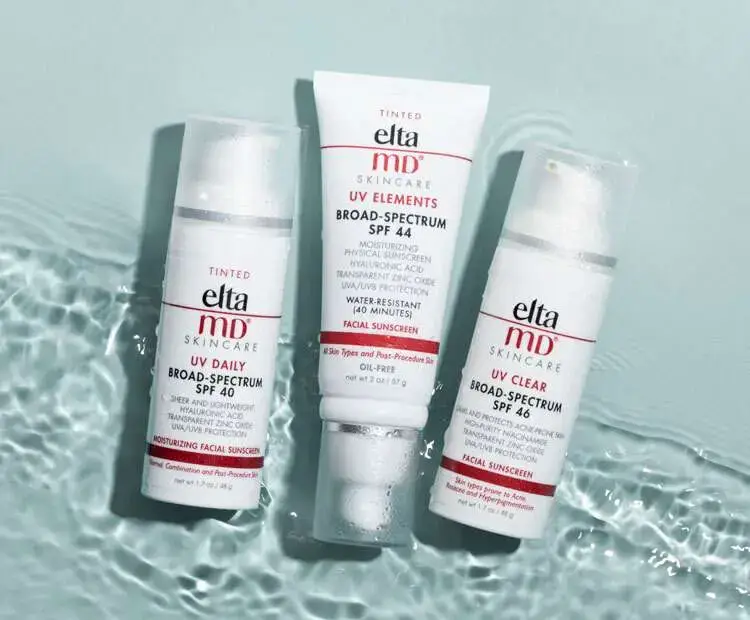
- Clinic brands are described as provider-tested; the post highlights Elta MD (medical-grade, paraben/gluten/sulfate-free, no fillers) and Epionce (dermatologist-created, focused on nurturing skin).
- Apply sunscreen daily as part of a morning routine, even when not in direct sun; a sample routine includes cleanser, moisturizer, then Elta MD UV Clear (tinted or non-tinted).
- Use at least SPF 30 and reapply every 2 hours, especially during outdoor activities; hats and protective clothing can add coverage.
Are you ready for Spring? Bring on the sun, shades and SUNSCREEN.
One of the common questions we get asked as Dermatologists is, what should I be looking for in a sunscreen? Well, we are going to recommend some tips that will help you decide which sunscreen is right for you and still approved by your dermatologist. After discussing with our Physician Assistant Gina Mower- she recommends you try the sunscreens before purchasing. Trying out the product allows you to feel the texture and get a sense of the smell. When you know the product feels great on your skin and has a smell you love, you are more likely to use it. Depending on how you feel about chemicals in your products you always want to look at the ingredients. You want to look for products containing the minerals zinc oxide and/or titanium dioxide. These physical blockers are the main ingredient to look for when shopping for sunscreens because they help block the sun’s UVA and UVB radiation from being absorbed into your skin which makes them broad-spectrum.
Besides cost what is the difference between drug store brands and the brands you find at a clinic? The products you find at a dermatologist or most clinics are always tested and researched by the providers to make sure their patients are getting the ingredients that are important for their skin. At Dermatology of Seattle and Bellevue we make sure to give patients and their skin what they deserve. We carry two different lines called Elta MD and Epionce. Elta MD products have medical–grade ingredients which are also paraben free, gluten free, and sulfate free. There are no filler ingredients that you typically find in drug store brands and online. Epionce is a product line created by a dermatologist based in Idaho containing ingredients with a focus on nurturing the skin in a positive way.
Sunscreens should be applied daily even if you aren’t sitting directly in the sun. A great way to get in the habit of using sunscreens is by adding them to your morning regimen. Brandon, our Bellevue office manager, starts his morning routine with the Epionce gentle foaming cleanser because he loves the smell, and it works great for is combination oily-dry skin. Then he applies a moisturizer that works with his skin type, Sente ultra-light defense moisturizer. After that, he finishes with ELTA MD- UV Clear to ensure his skin is protected from the damaging effects of the sun. This specific product comes in a non-tinted and a tinted finish for that added sun-kissed glow. If you haven’t established a skin care routine, come in and see our Master Aesthetician Holly for a complimentary appointment. She will be able to help you customize your routine and help you achieve the skin you want.
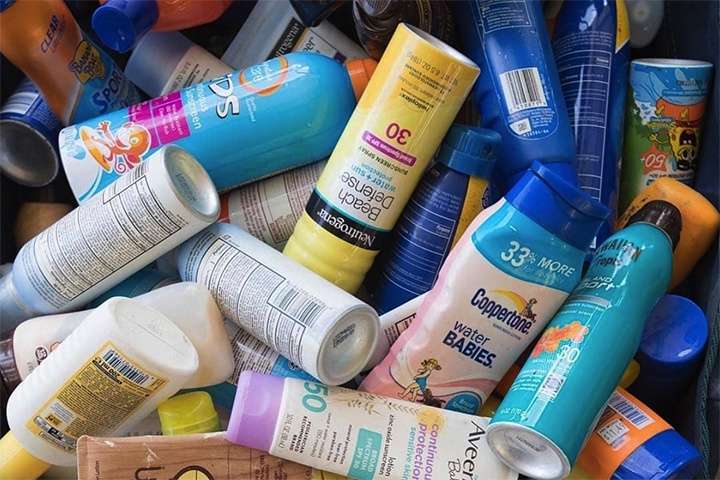
Another question we often get is the higher the SPF the better, right? Not necessarily, our physician assistants recommend you use a minimum SPF of 30. No matter how high the SPF is, you should be reapplying sunscreen every 2 hours. Especially during activities like swimming, hiking, and playing sports… basically any outdoor activities! You should be reapplying regularly to ensure you are indeed covering your skin. If you‘re a forgetful person like me, you can always wear a hat which can also help with sun protection.
SPF, or sun protection factor, is a measure of how much sunscreen will protect you from the harmful rays of the sun. To give you a better idea, if you start to burn after being in the sun for 10 minutes without sunscreen, using SPF 30 increases that time to 300 minutes (10 minutes x 30 SPF). You will notice the greater the SPF results in a higher price, so you can always start with a 30 SPF and wear additional protection like a hat or shirt to help ensure your skin is covered and protected.
Do you have your sunscreen? Mention this blog and receive 10% off your in-store purchase of either Elta-MD or Epionce sunscreen product.
Find us on social media and tell us what you think!