Quick Summary
- Menopause-related estrogen/progesterone decline can trigger gradual thinning and shedding, often female-pattern hair loss. Genetics, stress, and thyroid or nutrient issues can contribute too.
- HRT may help some women by stabilizing hormone swings and modestly improving shedding or hair quality, mainly when menopausal symptoms are significant. It’s a secondary benefit, not a cure.
- Estrogen is generally hair-supportive; some synthetic progestins may worsen thinning, and dose changes can trigger temporary telogen effluvium. Review formulation if shedding starts.
- Testosterone can worsen scalp thinning via DHT in susceptible women; excess may also increase facial hair. Careful dosing and follow-up are essential if included in HRT.
- Best results usually combine evaluation plus scalp treatments (minoxidil, procedures) and lifestyle changes. HRT risks (clots, stroke, breast cancer) must be weighed individually.
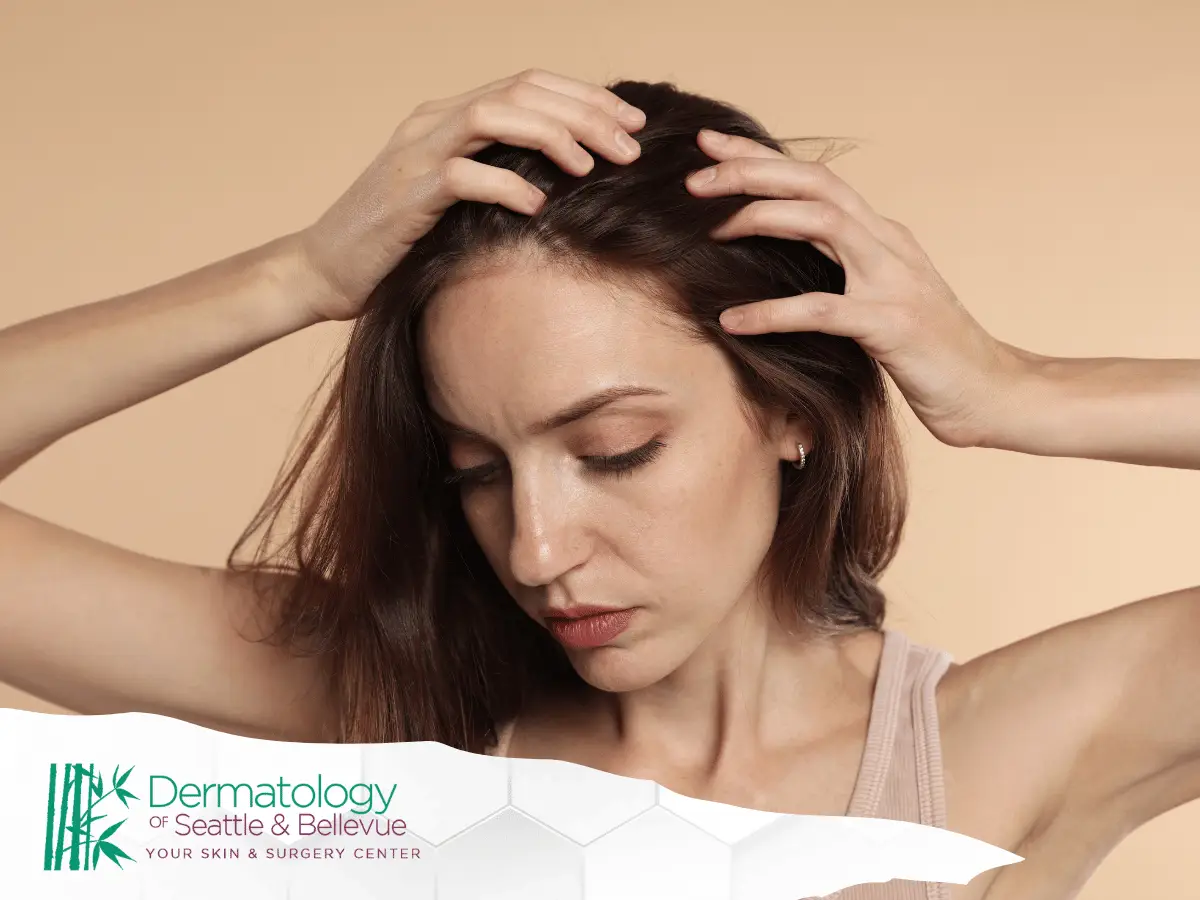
Thinning hair around perimenopause and menopause can feel especially unfair—you’re dealing with hot flashes, sleep changes, mood swings, and more hair in the shower drain. Many women in Bellevue ask whether hormone replacement therapy (HRT) can reverse that hair loss or at least stop it from getting worse.
The honest answer: hormones absolutely influence hair growth, but HRT isn’t a magic “hair pill.” For some women, it can be one helpful piece of a larger plan. For others, the risks, health history, or type of hair loss make different treatments a better fit. This article will walk you through how hormone therapy interacts with hair follicles, when it’s worth considering for hair loss, and what alternatives you still have if HRT isn’t right for you.
Hormone Replacement Therapy and Hair Loss
Menopause is essentially a long, uneven negotiation between your body and its changing hormone levels. As estrogen and progesterone drop, and the balance with androgens (like testosterone) shifts, many women notice:
- Thinner ponytails or widened part lines
- More hair shedding than usual
- Short, fine “baby hairs” that never seem to grow out
Hormone replacement therapy is sometimes considered when these changes happen alongside classic menopausal symptoms—hot flashes, night sweats, vaginal dryness, mood or sleep problems. But the goal of HRT is to treat the whole person, not just the scalp. When I talk with patients in Bellevue about HRT for hair loss, we always zoom out to your overall health, family history, and symptom burden first. Hair is important—but it’s one piece of the puzzle.
Introduction
Hormone-related hair loss around menopause is usually a gradual thinning, not sudden bald patches. Many women describe it as “my hair just doesn’t feel like mine anymore.” This pattern is often called female-pattern hair loss or androgenetic alopecia, and hormones absolutely play a role—but so do genetics, aging, stress, nutrition, and medical conditions like thyroid disease.
Hormone replacement therapy can sometimes help stabilize or improve this type of hair loss by smoothing out the sharp hormonal swings of perimenopause and early menopause. But it’s rarely the only tool we use. Most effective plans combine:
- Medical evaluation (thyroid, iron, vitamin D, medications, etc.)
- Scalp-directed treatments (topical minoxidil, in-office procedures)
- Lifestyle changes
- And in select cases, carefully chosen HRT
Understanding what hormone therapy actually is—and what it can realistically do for your hair—makes it much easier to decide if it’s worth exploring.
Understanding Hormone Replacement Therapy
What is Hormone Replacement Therapy?
Hormone replacement therapy typically means giving back some of the estrogen (and sometimes progesterone and/or testosterone) that your body is making less of during and after menopause. It can be delivered as:
- Pills
- Patches
- Gels or sprays
- Vaginal creams, rings, or tablets
- Occasionally, carefully monitored testosterone in specific situations
The main purpose is to relieve moderate to severe menopausal symptoms and, in some women, to help protect bone density. Any effect on hair is considered a secondary benefit, not the primary reason to prescribe HRT.
How Hormone Therapy Influences Hair Growth
Hair follicles are surprisingly sensitive to hormonal changes. Estrogen tends to support hairs staying in the growth phase (anagen) longer, while androgens (like DHT, a derivative of testosterone) can miniaturize follicles in genetically prone individuals. When estrogen drops at menopause, the balance tips and those “androgen signals” can have more impact.
HRT can influence hair by:
- Raising estrogen levels modestly, which may help some follicles stay in their growth phase longer
- Balancing symptoms so sleep, stress, and overall health improve—indirectly helping hair
- In certain regimens, shifting how your body processes androgens, which may help some types of hair thinning
But HRT won’t override strong genetic tendencies or completely stop age-related changes. That’s why we frame it as a potential helper, not a cure, and why it must be tailored to your medical history and risk profile—not just your hair goals.
Types of Hormones and Their Roles
Estrogen and Hair Health
Estrogen is generally hair-friendly. It helps keep more hairs in the growth (anagen) phase and may contribute to thicker, fuller strands. As estrogen levels fall around menopause, many women notice that their hair:
- Looks and feels finer
- Breaks more easily
- Doesn’t grow as long as it used to
For some women, bringing estrogen back into a healthier range with HRT can help stabilize shedding and improve overall hair quality. The goal is not to “flood” your body with estrogen, but to replace enough to relieve symptoms while staying within a safe range based on your age and health history.
Progesterone: Does It Cause Hair Loss?
“Does progesterone cause hair loss?” is a very common question. The nuance:
- Natural, body-identical progesterone (like micronized progesterone) is not typically a direct cause of hair loss.
- Certain synthetic progestins in older birth control pills or some HRT formulations can have androgen-like effects in susceptible women and may contribute to thinning.
- Rapid changes in hormone levels (starting, stopping, or changing doses) can sometimes trigger a temporary shedding phase called telogen effluvium.
If you notice hair loss after starting or changing a progesterone-containing medication, it’s worth reviewing the specific product and dose with your prescribing clinician. Switching formulations may help.
Testosterone’s Influence on Hair Follicles
Testosterone itself isn’t the villain; the issue is how your body converts and responds to it. In genetically predisposed women, the breakdown product dihydrotestosterone (DHT) can:
- Miniaturize hair follicles on the scalp
- Shorten the growth phase
- Gradually turn thick hairs into fine, wispy strands
Some women are prescribed low-dose testosterone as part of HRT for low libido or energy. In the right context and dose, this can be helpful—but too much androgen exposure can worsen scalp thinning or increase facial hair. This is why hormone testing, careful dosing, and close follow-up are essential anytime testosterone enters the picture.
Hormone Therapy for Hair Loss
Benefits of Hormone Replacement for Hair Loss
Hormone replacement therapy can be reasonable to consider for hair loss when:
- You’re in perimenopause or menopause with bothersome hot flashes, sleep disturbance, or vaginal symptoms
- Your hair loss appears to coincide with hormonal shifts
- You have no strong contraindications to HRT
In that context, potential hair-related benefits include:
- Stabilizing excessive shedding
- Improving hair texture and fullness modestly over time
- Supporting scalp health indirectly by improving sleep, mood, and overall well-being
Most patients who notice improvement describe it as “my hair feels more like it used to” rather than dramatic regrowth in completely bare areas.
Risks and Considerations
HRT is a systemic treatment—your whole body sees those hormones, not just your hair follicles. That means we must weigh hair benefits against broader health risks, which may include:
- Increased risk of blood clots or stroke in some women
- Changes in breast cancer risk depending on age, family history, and type/duration of HRT
- Gallbladder issues in certain cases
- Possible spotting, breast tenderness, or mood changes when therapy is started or adjusted
For hair specifically, it’s important to understand that:
- Some women see no meaningful change in hair despite good symptom relief elsewhere.
- Others may still need scalp-directed treatments (like minoxidil, PRP, or low-level laser therapy) even if they start HRT.
- If you cannot or prefer not to take HRT, there are still solid non-hormonal options for menopausal hair loss.
Before starting HRT primarily for hair, a thorough conversation with your gynecologist, primary care provider, and/or dermatologist is crucial.
Case Studies and Success Stories
Real experiences are often more helpful than theory. Here are a few anonymized examples similar to patients I see in Bellevue:
- Case 1: Perimenopause with symptoms + early thinning
- A woman in her late 40s had night sweats, irregular periods, and widening of her part line. After medical evaluation ruled out thyroid and iron issues, she started low-dose transdermal estrogen with micronized progesterone plus topical minoxidil. Over 6–12 months, her shedding slowed, her hair felt fuller, and her menopausal symptoms improved significantly. She still has mild thinning, but her hair loss stabilized.
- Case 2: Strong family history, no HRT
- A woman in her early 50s with a strong family pattern of hair loss preferred to avoid HRT due to personal and family breast cancer history. We focused on non-hormonal strategies: optimized scalp care, minoxidil, nutrition support, and in-office treatments. Her hair did not return to her 30s density, but she maintained a natural, healthy appearance without systemic hormones.
- Case 3: Testosterone-related shedding
- A postmenopausal woman on compounded estrogen–progesterone–testosterone therapy developed increased scalp shedding and chin hair. Adjusting her regimen to lower (and eventually eliminate) the testosterone component, along with adding topical treatments, helped her shedding normalize over several months.
What these stories have in common:
- Hair was always addressed as part of a larger health picture
- Expectations were set that improvement would be gradual, not overnight
- HRT, when used, was only one part of a multi-step plan
Conclusion
Hormone replacement therapy can sometimes help menopausal hair loss—but it’s not right, or necessary, for everyone. The best candidates are women whose hair changes are clearly linked to menopausal hormone shifts and who also have other moderate to severe menopausal symptoms that HRT can address. Even then, we combine hormone therapy with targeted scalp treatments and lifestyle changes rather than relying on hormones alone.
If you’re in the Bellevue area and concerned about thinning hair, the most important step is a proper evaluation: understanding your pattern of loss, your medical history, and your goals. From there, we can decide together whether HRT, non-hormonal treatments, or a mix of both makes the most sense for you.
Disclaimer
This article is for educational purposes only and does not replace personalized medical advice, diagnosis, or treatment. Hormone replacement therapy has important benefits and risks that must be evaluated individually. Never start, stop, or change prescription medications based solely on online information—always consult your own healthcare providers.