
Quick Summary
- True freckles are small, flat, and usually light to medium brown; they darken with sun exposure and may fade with less UV exposure.
- Freckles rarely appear jet black; a very dark “freckle” is often a mole, sun spot, seborrheic keratosis, or, less commonly, an early skin cancer such as melanoma.
- Color alone isn’t enough to judge a spot—dermatologists assess symmetry, border, color variation, size, and change over time, using tools like dermatoscopy and sometimes biopsy.
- Watch for melanoma warning signs (ABCDEs), plus “ugly duckling” lesions, new spots in adulthood, rapid changes, or symptoms like itching, bleeding, or crusting.
- New dark spots on the legs are common but deserve extra attention because legs are a frequent site for melanoma; new, solitary, very dark, or changing lesions should be examined.
Can Freckles Be Black?
If you’ve spotted a very dark or almost black “freckle,” it’s normal to wonder if that’s still a harmless spot or something more serious. Most classic freckles are light to medium brown and fade or darken with sun, but not every small dark spot on the skin is actually a freckle—some may be moles, sun spots, or, in rare cases, early skin cancer.
In this guide, I’ll walk you through what true freckles are, how freckle color works, when a dark spot is more suspicious, and when it’s time to see a dermatologist in Bellevue for a professional skin check.
Understanding Freckles
Freckles are one of the skin’s ways of responding to sunlight. They’re usually harmless, but because they’re tied closely to UV exposure, they also act as a reminder that your skin has seen a lot of sun—so they matter when we think about skin cancer risk overall.
Definition of Freckles
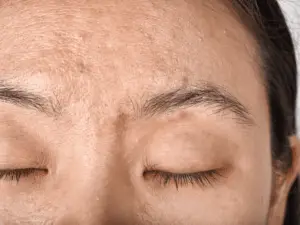
Freckles are small, flat spots on the skin caused by increased melanin (pigment), not by extra skin cells. Key features of typical freckles:
- They’re usually flat, not raised.
- They’re most common on sun-exposed areas: face, shoulders, arms, and upper back.
- They darken with sun exposure and often fade in the winter or when you’re careful with sunscreen.
- They tend to appear in childhood or teen years, especially in people with lighter skin and red or blond hair.
Freckles themselves are not cancer. However, the same UV exposure that creates freckles can damage DNA in skin cells over time—so people with many freckles often have a higher underlying risk of sun-related skin cancers and need regular skin checks.
Types of Freckles
When people say “freckles,” they usually mean one of two main categories of flat brown spots:
- Classic freckles (ephelides)
- Light to medium brown
- Show up in childhood
- Darken in summer, fade in winter
- Often scattered over the nose, cheeks, shoulders
- Sun spots / age spots (solar lentigines)
- Tan to dark brown patches, sometimes larger than typical freckles
- Develop in adulthood after years of sun exposure
- Don’t fade as much in winter
- Common on the face, hands, forearms, and upper chest
Both of these are usually benign, but they can sometimes be confused with early skin cancers or atypical moles. That’s why we look not just at color, but at shape, border, size, and change over time—we’ll get into that shortly.
Can Freckles Be Black?
When people ask “can freckles be black?” what they’re usually seeing is a very dark spot that may look like a freckle at first glance—but often isn’t a classic freckle at all.
True freckles are typically light to medium brown. They can appear darker on some skin tones or after intense sun exposure, but an isolated, jet-black spot deserves more attention. Many tiny dark dots turn out to be:
- Small moles
- Pigmented sun spots
- Seborrheic keratoses (a common benign growth)
- Or, less commonly, an early skin cancer such as melanoma
So the short answer is: freckles rarely appear truly black. Any new, very dark, or changing “freckle” should be treated with caution and checked by a dermatologist.
The Science Behind Freckle Color
Freckle color comes from melanin, the pigment your skin cells produce in response to UV light. The more melanin a freckle contains, the darker it appears. But:
- Freckles are made of increased pigment in existing cells, not a pile-up of extra cells.
- Moles and many skin cancers, by contrast, involve actual growth of pigment-producing cells (melanocytes) or other cell types.
This difference shows up visually: freckles are usually evenly colored and evenly flat, while moles or cancers can show mixed colors, thicker texture, or irregular shapes. As color gets very dark—deep brown, blue-black, or “ink spot” black—we get more suspicious that the spot might be something other than a simple freckle.
Factors That Influence Freckle Color
Several things affect how dark a freckle or freckle-like spot looks:
- Your natural skin tone – On lighter skin, freckles often appear light to medium brown; on deeper skin tones, they may look darker or more “ink-like.”
- Recent sun exposure – UV light stimulates pigment, so freckles darken after time outdoors and may look more intense in summer.
- Location on the body – Spots on the face, shoulders, and upper back see more sun and can appear darker than those on less exposed areas.
- Type of lesion – A “freckle” that is new in adulthood, very dark, or behaving differently than your other spots may not be a true freckle at all.
In dermatology, we don’t judge a spot by color alone. We look at pattern, border, symmetry, size, and change over time. A small, even, stable dark spot can be benign—but if you’re not sure what you’re looking at, it’s always safer to have it examined.
hFreckle vs Skin Cancer
Most freckles are harmless. The challenge is that early skin cancers—especially melanoma—can sometimes show up as small dark spots that people mistake for “just another freckle.” Knowing the differences helps you decide when a new or changing spot needs a professional exam.
Identifying Characteristics of Freckles
Typical freckles usually share these traits:
- Small and flat – They’re tiny, often a few millimeters or less, and not raised.
- Even in color – Tan to light/medium brown, the same shade from edge to center.
- Symmetrical – Round or oval, with smooth, regular borders.
- Grouped in patterns – Often appear in clusters rather than one lone, isolated spot.
- Sun-responsive – Darken with sun exposure and fade somewhat when you stay out of the sun.
- Stable over time – Your “freckle pattern” is fairly consistent year to year, especially after childhood.
If a spot fits the pattern of all your other freckles and hasn’t changed, it’s usually low concern. But remember: freckly skin overall is a sign of significant sun exposure, so regular full-skin exams with a dermatologist are still important.
Signs of Skin Cancer
Skin cancers, including melanoma, can sometimes look like a small brown or black dot at first. Warning signs we pay attention to include the ABCDEs of melanoma and beyond:
- A – Asymmetry – One half looks different from the other.
- B – Border – Edges are jagged, blurred, or irregular.
- C – Color – More than one color (tan, brown, black, red, white, or blue) in the same spot.
- D – Diameter – Larger than a pencil eraser (about 6 mm), although melanomas can be smaller.
- E – Evolving – Any change in size, shape, color, texture, or symptoms (itch, bleed, crust).
Other red flags:
- A very dark, almost ink-black spot that stands out from all your other freckles
- A “freckle” that suddenly appears in adulthood and keeps enlarging
- A flat spot that becomes raised, scaly, or starts to bleed easily
Melanoma absolutely can look like a tiny black freckle or dot, especially in early stages. That’s why, in my Bellevue practice, any new or changing dark spot gets our full attention.
Freckle or Cancer: When to Seek Help
You should have a dermatologist examine a “freckle” if:
- It’s new and very dark, especially if you’re over 30
- It looks different from your other freckles (“the ugly duckling”)
- It’s changing in size, shape, or color
- It starts to itch, bleed, crust, or feel tender
- You have a personal or family history of skin cancer
When in doubt, it’s always safer to get it checked. A quick dermatoscopic exam in clinic (using a handheld magnifier with light) often lets us tell harmless from suspicious lesions. If there’s any doubt, a small biopsy can give a clear answer. Early detection is key—catching a skin cancer while it’s still tiny is far easier to treat than waiting to “see what happens.”
New Freckles on Legs
People often notice new tiny brown or dark spots on their legs and wonder if they are just freckles, sun spots, or something more serious. Legs also happen to be a common site for melanoma, especially in women, so we pay close attention here.
What Causes New Freckles?
New flat brown spots on the legs can be:
- Sun-induced freckles or sun spots – From years of UV exposure, especially if you’ve had a lot of shorts or skirt weather without sunscreen.
- Post-inflammatory marks – Pigment left behind after shaving cuts, bug bites, or rashes.
- Moles – Some moles can appear or become more noticeable over time.
- Other benign growths – Like seborrheic keratoses in adults.
In younger people, new speckled spots after sun exposure are often just freckles or sun spots. In adults, especially if the spots are very dark, irregular, or solitary, we’re more cautious.
Are New Freckles a Cause for Concern?
Not every new brown spot is dangerous—but new “freckles” on the legs deserve extra attention when:
- You don’t usually freckle in that area, and now a single, very dark spot has appeared.
- The spot is darker or different in shape than your other spots.
- It’s getting bigger, changing shape, or changing color over weeks to months.
- It appears on skin that has had a lot of sun or tanning bed exposure in the past.
If a new freckle-like spot on your leg worries you—even if it’s small—it’s completely appropriate to schedule a skin exam. As dermatologists, we’d much rather tell you “this one is harmless” than meet a skin cancer later than we needed to.
Conclusion
Summary of Key Points
- True freckles are small, flat, and usually light to medium brown, darkening with sun and fading with protection.
- Freckles rarely appear truly jet black; a very dark or “ink spot” lesion is more likely to be a mole, sun spot, or something else.
- Melanoma can sometimes look like a tiny black freckle or dot, especially when it’s early.
- Any spot that is new, changing, very dark, or different from your other freckles should be examined by a dermatologist.
- New freckles or dark spots on the legs are common but, because the legs are a frequent site of melanoma, they should not be ignored if they look unusual.
When to Consult a Dermatologist
Consider seeing a dermatologist—especially if you’re in the Bellevue or greater Seattle area—if:
- You have a “freckle” that is black, growing, or changing
- You’ve noticed new dark spots on your legs or anywhere else that don’t match your usual freckle pattern
- You have many freckles, a history of sunburns, or tanning bed use
- You have a personal or family history of skin cancer
A full skin exam is quick, and for many patients we recommend repeating it yearly. Between visits, practice good sun protection and keep an eye on your own skin—if something worries you, trust your instincts and get it checked.
Disclaimer
This information is for educational purposes only and does not replace an in-person evaluation, diagnosis, or treatment by a qualified healthcare professional. If you’re concerned about a new or changing spot, especially a very dark freckle-like lesion, schedule a visit with a dermatologist rather than self-diagnosing.