
Psoriasis is more than a surface-level skin condition. It is driven by immune activity that creates ongoing inflammation, which is why many people look beyond topical creams and prescription options. If you are researching the best anti inflammatory supplements for psoriasis, it helps to know which nutrients have plausible anti-inflammatory effects, which ones may support skin-barrier function, and how to use them safely alongside medical care. This dermatologist-informed overview covers common supplement categories, what “anti-inflammatory” means here, how to evaluate quality, and how to build a practical routine. Supplements are not a cure, but they can be useful additions to a broader plan.
- Focus on supplements that support inflammation balance, skin barrier health, and overall nutrient status
- Start with one change at a time so you can tell what helps and what does not
- Prioritize food-first habits and use supplements to fill gaps, not replace care
- Watch for interactions with medications and avoid megadoses
- Choose third-party tested products and stay consistent for several weeks
Understanding inflammation in psoriasis (and what supplements can realistically do)
Psoriasis flares happen when immune signals accelerate skin-cell turnover and promote redness, scaling, and itch. “Anti-inflammatory” supplements may help by influencing inflammatory pathways, supporting antioxidant defenses, or strengthening the skin barrier.
Still, supplements rarely perform like prescription therapies. The realistic goal is support: helping skin resilience and possibly reducing flare severity for some people. Results vary by psoriasis type, baseline nutrient status, lifestyle factors, and consistency.
Omega-3 fatty acids: a cornerstone anti-inflammatory option
Omega-3 fatty acids are commonly used for chronic inflammation, usually from fish oil or algae oil. They help support inflammatory signaling balance and may improve skin comfort and hydration.
If you try omega-3s, consistency matters more than pushing the highest dose. Some people notice less dryness or irritation; others notice little change. Take them with meals to reduce stomach upset and assess over several weeks.
How to choose an omega-3 supplement
Quality varies, so look for products that list EPA and DHA amounts rather than only a total “fish oil” number. EPA and DHA are the most relevant omega-3s for anti-inflammatory effects; algae-based options work well for people avoiding fish.
Freshness affects tolerability; older oils can cause burps or nausea.
- Prefer labels that specify EPA and DHA amounts per serving
- Choose third-party tested options when possible
- Consider algae oil if you are vegetarian, vegan, or sensitive to fish products
- Store as directed and do not use past the expiration date
Vitamin D and psoriasis: correcting a common gap
Vitamin D is tied to skin biology and immune regulation, so it comes up often in psoriasis care. Many people with psoriasis have low vitamin D, and correcting a deficiency can be a sensible part of a broader plan. Interest is also higher because topical vitamin D analogs are used in dermatology.
Treat vitamin D as targeted correction, not a “more is better” supplement. If you suspect low levels, ask your clinician for a blood test so dosing is guided and excessive intake is avoided.
Safe dosing habits and monitoring
Vitamin D is fat-soluble and can accumulate. Long-term high dosing without monitoring increases risk, so take a conservative approach unless your clinician recommends otherwise, with re-checks if you supplement regularly.
Take vitamin D with a meal containing fat for better absorption. If you have kidney disease, a history of high calcium, or take medications that affect calcium balance, discuss supplementation with your clinician first.
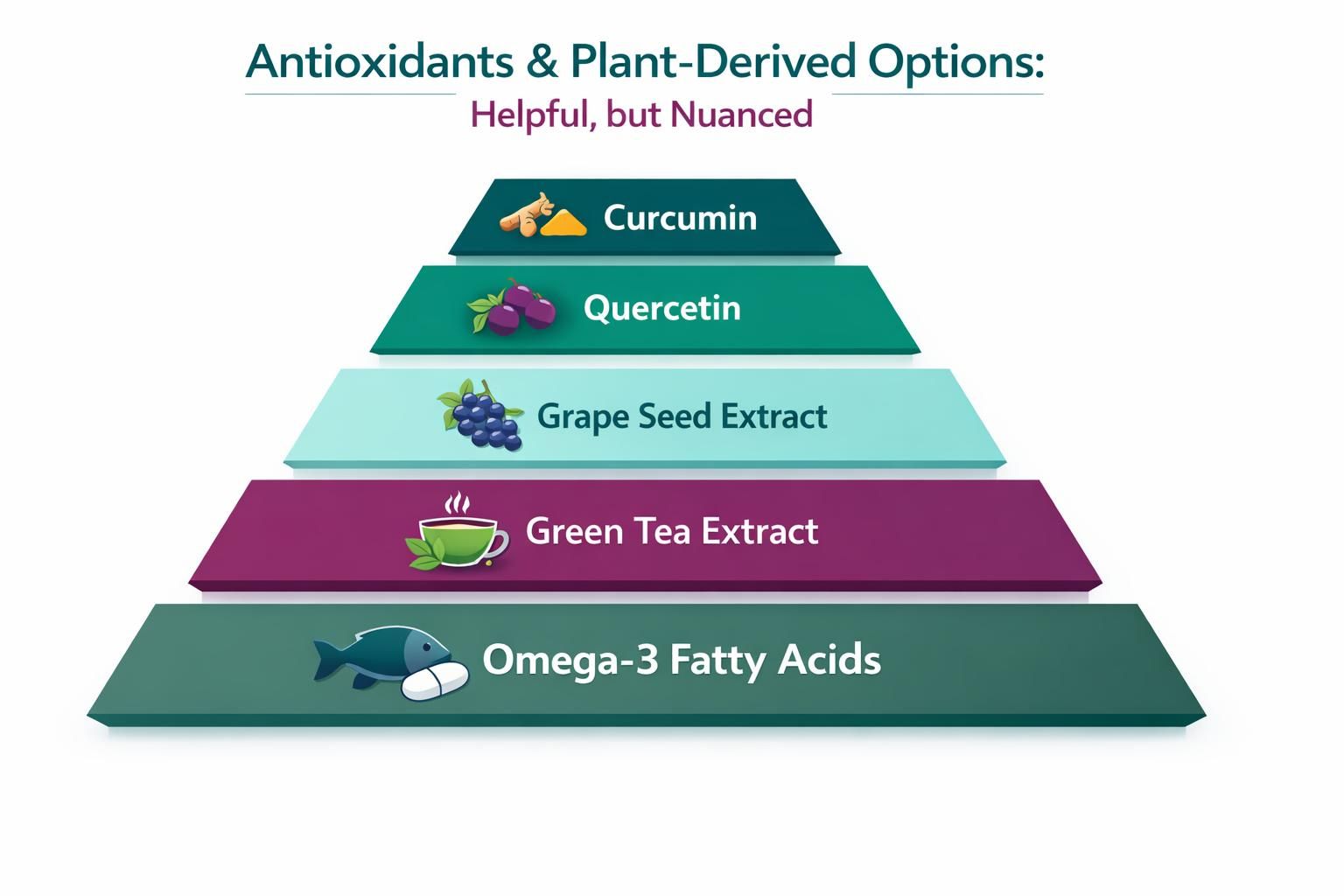
Antioxidants and plant-derived options: helpful, but nuanced
Oxidative stress and inflammation overlap, so antioxidant supplements are heavily marketed for skin issues. In psoriasis, results can be mixed, but some people find plant-derived options helpful as supportive additions, especially alongside improvements in diet, sleep, and stress.
Avoid stacking many products. Choose one option, track changes, and be cautious with concentrated extracts, particularly if you have liver concerns or take multiple medications. Common choices include curcumin (from turmeric) and green tea extracts.
Curcumin: what to know before you try it
Curcumin is popular because it shows anti-inflammatory activity in lab research and is widely available. The main limitation is absorption, so many formulas include absorption boosters that can affect how some medications are metabolized.
If you try curcumin, start low and take it with food to reduce stomach upset. Avoid starting multiple botanicals at once. If you take blood thinners or have gallbladder issues, check with a clinician before using curcumin.
Vitamins and minerals: targeted “support” rather than a cure

When people ask about vitamins to help psoriasis, they often want a simple fix. A more realistic view is that deficiencies can worsen skin health and immune balance, while correcting them can support resilience, especially if your diet is limited, you have digestive issues, or you avoid certain food groups.
A basic multivitamin can help some people, but it is not always necessary. When possible, base choices on testing or clear dietary gaps instead of high-dose single nutrients. The more supplements you add, the higher the chance of overlap and side effects.
Zinc, selenium, and B vitamins: when they may matter
Zinc supports skin integrity and wound healing and may be considered if intake is low or absorption is poor. Selenium supports antioxidant systems but has a narrow safety range, so avoid routine high-dose use. B vitamins support metabolism and skin health and may matter more for people with limited animal foods or known deficiencies.
If you supplement minerals, avoid doubling up across products. Check for overlap between a multivitamin, immune blends, and hair or skin formulas. Focused, moderate dosing reduces risk while addressing gaps.
Building a practical supplement routine and avoiding common mistakes
A common mistake in psoriasis is starting too many supplements at once. If you begin several new products together, you cannot tell what helps, what does nothing, or what triggers side effects. Choose one supplement category, use it consistently, and compare symptoms to your baseline.
Supplements work best with fundamentals: gentle skin care, consistent topical treatment if prescribed, trigger awareness, and habits that reduce inflammatory strain. Alcohol, smoking, poor sleep, and chronic stress can overwhelm any supplement plan.
A simple step-by-step approach
Use a structured approach:
- Step 1: Choose one supplement to trial (for example, omega-3s or vitamin D if deficient)
- Step 2: Keep everything else stable for several weeks, including skin care products
- Step 3: Track a few symptoms: redness, scale thickness, itch, and flare frequency
- Step 4: If helpful and well tolerated, continue; if not, stop and reassess
- Step 5: Add only one new supplement at a time if you want to build a stack
Conclusion
Finding the best anti inflammatory supplements for psoriasis is less about chasing a perfect list and more about choosing a few evidence-informed options that fit your body, medications, and lifestyle. Omega-3 fatty acids and vitamin D (especially when levels are low) are common starting points, while antioxidants and targeted minerals can be considered selectively. If you are exploring vitamins to help psoriasis, focus on correcting deficiencies and avoiding megadoses. The most practical next step is to pick one supplement, commit to a steady trial, and track changes alongside a consistent skin-care and medical plan. If you have complex health conditions or take multiple medications, loop in your clinician before starting.