
Introduction
Noticing changes in your hair at a young age can feel unsettling, especially when you are not sure what is normal and what could be the start of long-term hair loss. The signs of balding at 20 can be subtle and are often mistaken for stress shedding, a bad haircut, or seasonal changes. This guide covers what to look for, common reasons hair can thin early, and when it is time to see a dermatologist. You will also learn about realistic treatment options and lifestyle habits that support healthier hair over time.
- Early hair loss often shows up as changes in the hairline, crown density, or shedding patterns
- Genetics, hormones, stress, and nutrition can all contribute to premature hair thinning
- A dermatologist can help confirm the cause and rule out treatable scalp or medical issues
- Treatment is typically more effective when started early and used consistently
- Daily habits like gentle hair care and balanced nutrition can support results alongside medical care
Recognizing the Signs of Balding at 20
Hair loss does not always start with obvious bald spots. Often it begins as gradual changes in density, texture, or how hair sits. Look for trends over several months rather than judging after a single week.
Try to separate normal shedding from ongoing thinning. Shedding can spike after illness, major stress, or rapid diet changes, then settle. More concerning signs are progressive: a widening part, more scalp showing at the crown in similar lighting, or a hairline that continues to move back in a consistent shape.
Receding Hairline at 20
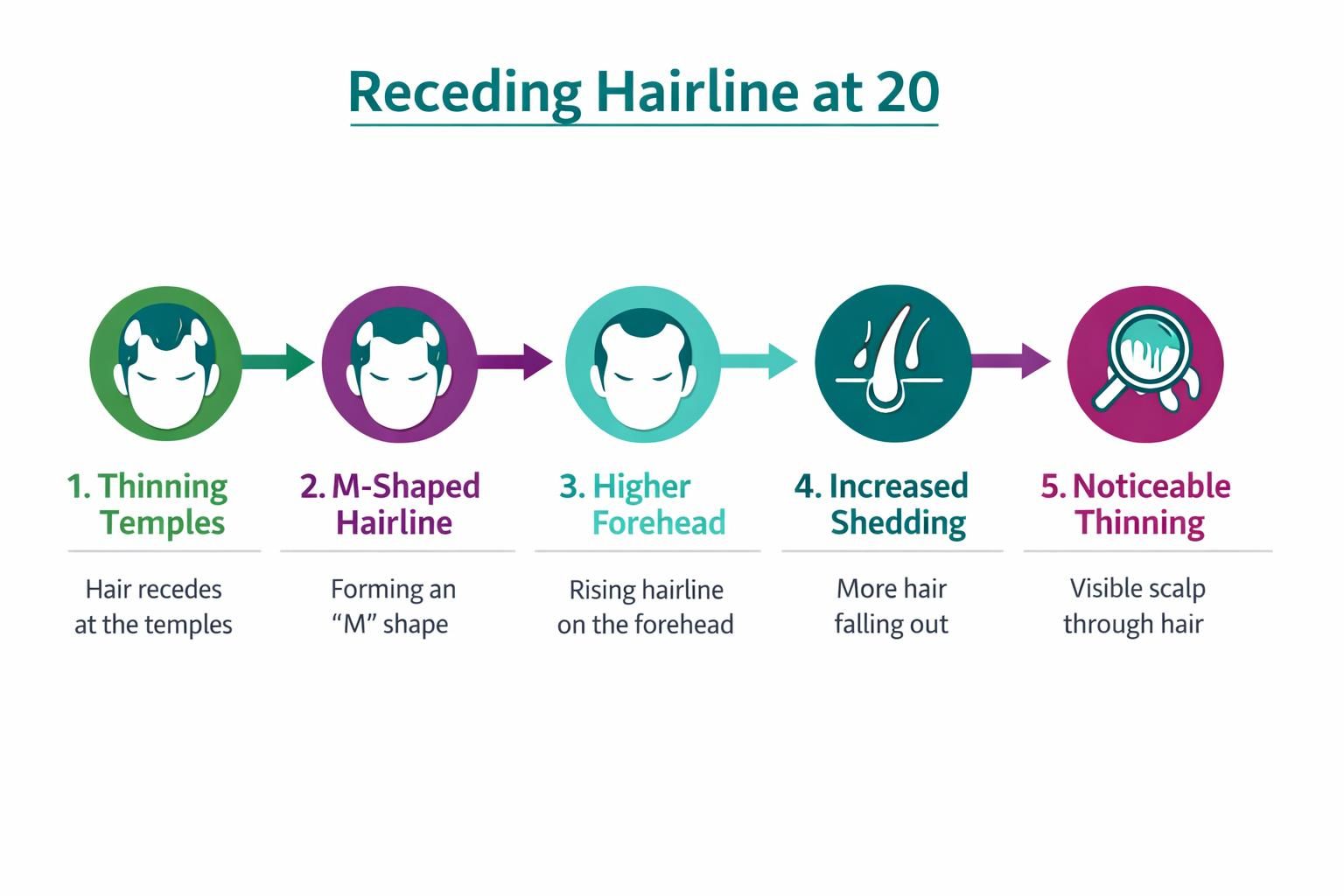
A receding hairline at 20 often starts at the temples, creating an M-shape. Because some people naturally have higher hairlines, focus on change over time. Compare older photos taken in similar lighting with a similar hairstyle.
Another sign is miniaturization, when hairs along the hairline become finer and shorter, making the edges look wispy. If temple recession continues, you see miniaturized hairs, or early thinning runs in your family, consider a professional evaluation.
Thinning Crown and Temples
Crown thinning can be easy to miss because it varies with lighting, hair length, and whether hair is wet or oily. A useful clue is that the swirl at the back shows more scalp than before under bright overhead light.
Temple thinning may happen with or before hairline recession. You might notice the sides of the forehead look more transparent or less framed by hair. Gradual, symmetrical thinning can fit early pattern hair loss. Patchy loss, redness, scaling, or itching should be checked sooner, since it may point to scalp conditions that need specific treatment.
Increased Shedding
Increased shedding is common and does not always mean balding. The key is whether shedding is paired with reduced density over time. If you notice more hair on your pillow, in the shower, or on your brush, track it for a few weeks and watch for an overall volume change.
More concerning signs include:
- Shedding shorter, finer hairs rather than mostly long hairs
- Ponytail circumference or braid thickness shrinking over time
- Part line widening in photos taken months apart
- Shedding that lasts for months without returning to baseline
If shedding follows a major stressor, illness, or rapid weight change, it may be temporary. If it persists or you also see hairline or crown pattern changes, a dermatologist can help identify the cause and next steps.
Common Causes of Premature Hair Thinning
Premature hair thinning can have multiple causes, and more than one factor can be present. Some are genetic and gradual; others are triggered by stress on the body or scalp and may be reversible. Understanding likely drivers helps you respond more strategically.
Hair loss is not always classic pattern baldness. Scalp inflammation, traction from tight styles, and some health issues can mimic early balding. The timing, the pattern, and symptoms like itching or flaking can help narrow what is going on.
Genetic Predisposition
Genetics are a leading reason people notice early changes at the hairline or crown. If close relatives had early pattern hair loss, you may be more likely to see similar changes in your 20s. Hereditary thinning typically follows recognizable patterns and progresses gradually as hairs become thinner and shorter.
Early detection matters because there may be an opportunity to slow progression and maintain thickness. If you suspect genetic thinning, take periodic photos and consider an assessment rather than waiting for changes to become pronounced.
Hormonal Changes
Hormones influence hair growth cycles and follicle sensitivity. In people prone to pattern hair loss, hormone-related miniaturization can make each new strand finer. Hormonal shifts can also occur with major changes in sleep, weight, intense training, or underlying endocrine issues.
Some hormone-related hair loss is diffuse, affecting the whole scalp. If thinning is sudden, widespread, or comes with other symptoms like acne flares, irregular cycles, or unusual fatigue, consult a dermatologist and consider coordination with primary care. The goal is to determine whether this is early pattern loss, a temporary shedding phase, or a treatable imbalance.
Stress Factors
Stress can push more hairs into the shedding phase and can worsen habits that affect hair and scalp health, such as poor sleep, inconsistent meals, or frequent pulling and twisting. Stress-related shedding often shows up a few months after the stressful period.
Stress can also overlap with genetic thinning, making mild hereditary loss look worse. If shedding continues well past the stressful event or you notice clear pattern changes at the temples or crown, get evaluated rather than assuming it will resolve.
Nutritional Deficiencies
Hair follicles are sensitive to nutrition and energy balance. Restrictive dieting, low protein intake, and inconsistent eating can contribute to shedding and weaker hair quality. Sometimes the issue is breakage rather than true shedding, but it can still make hair look thinner.
Common contributors include skipping meals, cutting major food groups, or relying on low-variety processed foods. If nutrition may be involved, prioritize steady, balanced eating rather than extreme changes. A dermatologist can help determine whether the pattern fits deficiency-related shedding and may suggest appropriate testing through standard medical care.
When to Consult a Dermatologist
If you are unsure whether your hair changes are normal, a dermatologist can provide clarity and save time. Consider an appointment if you see progressive thinning over three to six months, a clear hairline or crown pattern, or a widening part not explained by styling. Sudden shedding that is intense, lasts for months, or comes with scalp symptoms should also be evaluated.
Seek help sooner if you notice patchy hair loss, scalp pain, significant itching, redness, scaling, or scabbing. These can signal inflammatory or autoimmune causes that need targeted treatment. During a visit, the dermatologist may examine your scalp, review your health history and routines, and distinguish pattern loss from temporary shedding, breakage, or traction thinning. Bring photos and a list of products and supplements.
Treatment Options for Early Balding

Treatment depends on the cause, how early the changes are, and your goal, such as slowing loss, maintaining density, or regrowing some thickness. Many plans work best when they combine medical treatment with supportive habits, because hair changes take months to show.
Avoid treating every type of thinning the same way. What helps genetic pattern loss may not address scalp inflammation or traction. Starting with the right diagnosis prevents wasted time, irritation, and unnecessary spending.
Over-the-Counter Solutions
Over-the-counter approaches typically focus on scalp support and improving the hair environment. People often try topical options or shampoos designed to reduce buildup and improve comfort. These can help when thinning is mild or as a complement to a dermatologist-led plan.
Tips for using OTC products:
- Introduce one product at a time to spot irritation or benefit
- Use consistently long enough to assess results
- Avoid harsh scrubbing that can inflame the scalp
- Stop if you develop persistent burning, rash, or significant flaking
OTC options may improve appearance and reduce breakage, but significant pattern thinning often needs more targeted care.
Prescription Medications
Prescription treatments may be recommended when there is clear evidence of pattern hair loss or another condition that responds to medication. A dermatologist can explain how to use treatment, what it is meant to do, and possible side effects. Timelines matter, and progress is usually measured in months, not weeks.
Consistency is often the deciding factor. Many people stop too soon or use treatments sporadically and then see limited results. If you start a prescription plan, take monthly photos in similar lighting and keep follow-ups so your dermatologist can adjust as needed. Do not start or stop prescription medication without clinician guidance.
Alternative Treatments
Alternative and in-office treatments are sometimes used alongside standard therapy, especially for people who want a broader approach. Depending on your situation, a dermatologist may discuss procedures or devices that support follicle function or improve the cosmetic look of thinning areas.
Prioritize safety and legitimacy. Choose providers who evaluate your scalp and history rather than selling a one-size-fits-all package. Be cautious of guaranteed regrowth or instant-result claims. Ask what the treatment is meant to do, who it is best for, how it fits into a long-term plan, and what results are realistic. These options can support a plan, but they are not a substitute for diagnosing the root cause.
Lifestyle Changes to Combat Balding
Lifestyle changes do not replace medical treatment for genetic hair loss, but they can reduce avoidable stress on hair and support scalp health. Early thinning is often made worse by tight hairstyles, frequent heat styling, poor sleep, or crash dieting. Improving these can reduce breakage and make hair look fuller.
Keep the approach simple and sustainable. Hair growth cycles are slow, so think in months. Focus on protecting what you have, reducing irritation and breakage, and supporting any medical plan you choose.
Hair Care Tips
Gentle hair care matters more when hair is thinning because fragile strands break more easily and make density look worse. Minimize traction, heat damage, and scalp irritation. If you wear tight styles or extensions, rotate styles and avoid constant tension in the same areas, especially along the hairline.
A practical routine for thinning hair:
- Wash as needed to keep the scalp comfortable
- Condition lengths to reduce tangles and breakage
- Limit high-heat tools and use lower settings when possible
- Avoid aggressive towel drying and harsh brushing when wet
- Choose hairstyles that do not pull at the temples or edges
If you have dandruff, persistent itching, or scaling, addressing scalp health can improve comfort and how hair looks while you work on longer-term solutions.
Diet and Nutrition
A balanced diet supports the building blocks hair needs, including adequate protein and a variety of vitamins and minerals from whole foods. Instead of relying on a single hair vitamin, aim for regular meals and enough calories for your activity level. Extreme dieting can trigger shedding and make existing thinning more noticeable.
Helpful habits include protein with each meal, a variety of fruits and vegetables, and healthy fats. Hydration can affect hair texture and scalp comfort. If your eating has been inconsistent, start with regular meals and more variety. If you are considering supplements, discuss them with a healthcare professional, especially if you take medications or have underlying conditions.
Conclusion
Seeing changes in your hair can be stressful, but early action gives you more options and more control. The signs of balding at 20 often include gradual temple recession, crown or part widening, and shedding that comes with a noticeable drop in density. Start by documenting changes with consistent photos, tightening up hair-care habits, and supporting your health with steady nutrition and stress management. If thinning is progressive, patchy, or paired with scalp symptoms, see a dermatologist to confirm the cause and get a plan that fits your goals.