
Aging changes nearly every system in the body, and your hair is no exception. If you have noticed more shedding, less volume, or a widening part, you are not imagining it. Aging and hair loss can show up as gradual thinning, slower regrowth, and changes in texture, color, and density. The good news is that not every change is “just aging,” and many contributors are treatable. In this guide, you will learn which shifts are common over time, why they happen, how to spot signs that deserve attention, and what practical steps can support healthier growth at any age.
- Hair can thin with age due to shorter growth phases, smaller follicles, and hormonal shifts, but sudden or patchy loss is not typical.
- Many “age-related” hair issues overlap with treatable causes like nutrition gaps, thyroid problems, scalp conditions, and certain medications.
- Slower growth and finer strands are common, yet consistent hair care and scalp health can improve the look and feel of density.
- Female-pattern thinning often increases around midlife, but hair growth does not usually “stop” at a single age.
- A plan that combines gentle care, targeted topicals, and medical evaluation when needed tends to work best.
What happens to hair as we age
Hair grows in cycles: growth, transition, then rest and shedding. With age, the growth phase often shortens and more hairs spend time in the resting phase. This can mean more daily shedding, slower regrowth, and less ability to keep length.
Follicles may also produce finer strands, and some may stay inactive longer. These changes are usually gradual and often show up at the temples, part line, or crown. Texture can shift, too. With lower oil production plus cumulative sun, heat, and chemical wear, hair may become drier, rougher, and more prone to breakage.
Does hair thin as you age, and what “normal” looks like
Yes, mild to moderate thinning is common with age. “Normal” thinning is usually gradual and diffuse rather than sudden. You might notice more scalp showing under bright light, a slightly wider part, or less volume that improves with a supportive cut, gentler styling, and better conditioning.
Not all thinning is normal. Rapid shedding over weeks, bald patches, scalp pain or burning, heavy flaking, or loss of eyebrows and lashes suggests another cause. If you are unsure, track it. Take a clear photo of your part and hairline monthly in similar lighting, and note changes in shedding, stress, illness, and medications.
Common patterns in women and men
In many men, androgen-related thinning often affects the temples and crown, leading to recession or a thinner vertex. In many women, thinning often appears as a widened part and reduced crown density while the frontal hairline stays more intact, though temples can thin as well, especially around hormonal transitions.
Genetics and hormone sensitivity strongly influence these patterns. Pattern thinning is often treatable, even if not fully reversible. Acting earlier usually helps because follicles still producing miniaturized hairs tend to respond better than follicles that have been inactive for long periods.
The difference between shedding and thinning
Shedding is hair falling out, often seen in the shower, brush, or on pillows. Some shedding is normal because resting hairs are meant to release. Thinning is a reduction in density over time, often because hairs regrow finer, regrow more slowly, or do not reliably regrow.
You can shed more than usual and not thin if regrowth keeps pace. You can also thin without dramatic shedding if strands gradually miniaturize. Watching both shedding and density across months is more useful than day-to-day checking.
Why hair growth can slow down over time
Growth speed depends on how long hairs stay in the growth phase and how consistently follicles produce a strong fiber. With age, growth phases may shorten and some follicles become less active. Hair can seem to “stall” at a certain length, especially if the ends break before you retain new length.
Slower growth can also be indirect. If hair becomes drier and more fragile, it may feel like it is not growing even when it is. Treatable health factors also become more common with age, including thyroid imbalance, iron deficiency, chronic inflammation, and medication effects. These can compound normal aging changes and disrupt cycling.
Scalp, follicles, and strand quality
The scalp changes with age. Barrier function can weaken, irritation may become more likely, and product buildup can affect the follicle environment. Follicles may also produce a finer fiber that is easier to damage.
Strand quality matters because keeping hair is as important as growing it. Common shifts include dryness, frizz, and reduced elasticity. Gentle handling, consistent conditioning, and limiting high heat reduce breakage and help hair look fuller.
Hormones and life-stage transitions
Hormones can change hair cycling and follicle sensitivity. Pregnancy and postpartum shifts are well known, but midlife transitions can be just as influential. Changes in estrogen and androgens may shorten the growth phase and increase miniaturization in those who are genetically prone.
If hair changes coincide with new facial hair growth, acne, or irregular cycles, discuss hormonal evaluation with a clinician. Hormonal shifts often interact with genetics, which is why thinning can become more noticeable during transitions.
At what age hair growth stops in female, and what’s really happening
For most women, hair growth does not abruptly stop at a specific age. Follicles can continue producing hair throughout life, but cycling may become less efficient. Hair may grow more slowly, reach a shorter maximum length, or regrow finer, creating the impression that growth has ended.
What often changes is consistency. Some follicles may rest longer before restarting, and some hairs may become too fine to add much visible coverage. Midlife shifts can increase diffuse thinning or pattern thinning, but improvement is still possible when triggers are identified and addressed.
When “stopping” is actually breakage or styling damage
Hair that will not grow past a certain point is often a retention problem. If ends split and break, the length gained at the root is lost at the tips. This can become more noticeable with age as hair becomes drier and less elastic.
Signs of breakage include short, uneven pieces around the crown, rough ends, and hair that snaps easily when brushed. Helpful changes include reducing bleaching and frequent high heat, conditioning every wash, gentle detangling, and avoiding styles that pull at the hairline. Regular trims can remove weak ends so the rest of your length holds up.
When to suspect an underlying condition
If changes are sudden, intense, or paired with other symptoms, aging may not be the main driver. Consider evaluation for rapid shedding, new bald patches, a tender or burning scalp, or visible inflammation. Also note fatigue, cold intolerance, unexpected weight changes, or heavy periods, which can align with thyroid issues or iron deficiency.
Medications can matter, too. Some prescriptions can increase shedding or change texture. Do not stop medications on your own, but bring the timing and symptoms to a clinician so alternatives can be reviewed.
What’s treatable: options that can help at any age
Even when aging plays a role, many contributors to thinning are modifiable. The most effective approach is usually layered: protect the hair fiber, support the scalp environment, and address medical triggers that disrupt cycling. Treatable factors include nutrient deficits, hormonal imbalance, scalp inflammation, and hair practices that increase breakage.
Start simple and stay consistent. Frequent product switching often adds confusion without improving outcomes. If you use topical or medical treatments, expect gradual change over months because hair cycles move slowly.
Everyday habits that support healthier-looking hair
Small adjustments can improve retention and the look of density by reducing breakage, avoiding traction, and keeping the scalp comfortable.
- Wash often enough to prevent itch, oil, and buildup, based on your hair type and lifestyle
- Condition the lengths regularly; add a leave-in if hair tangles or feels dry
- Detangle gently, starting at the ends and working upward, especially when wet
- Avoid tight, pulling styles that stress the hairline, including heavy extensions and frequent slick looks
- Use heat thoughtfully: lower temperature, heat protectant, fewer passes
- Prioritize sleep, stress management, and adequate protein intake to support growth cycles
Topical and medical approaches to discuss with a professional
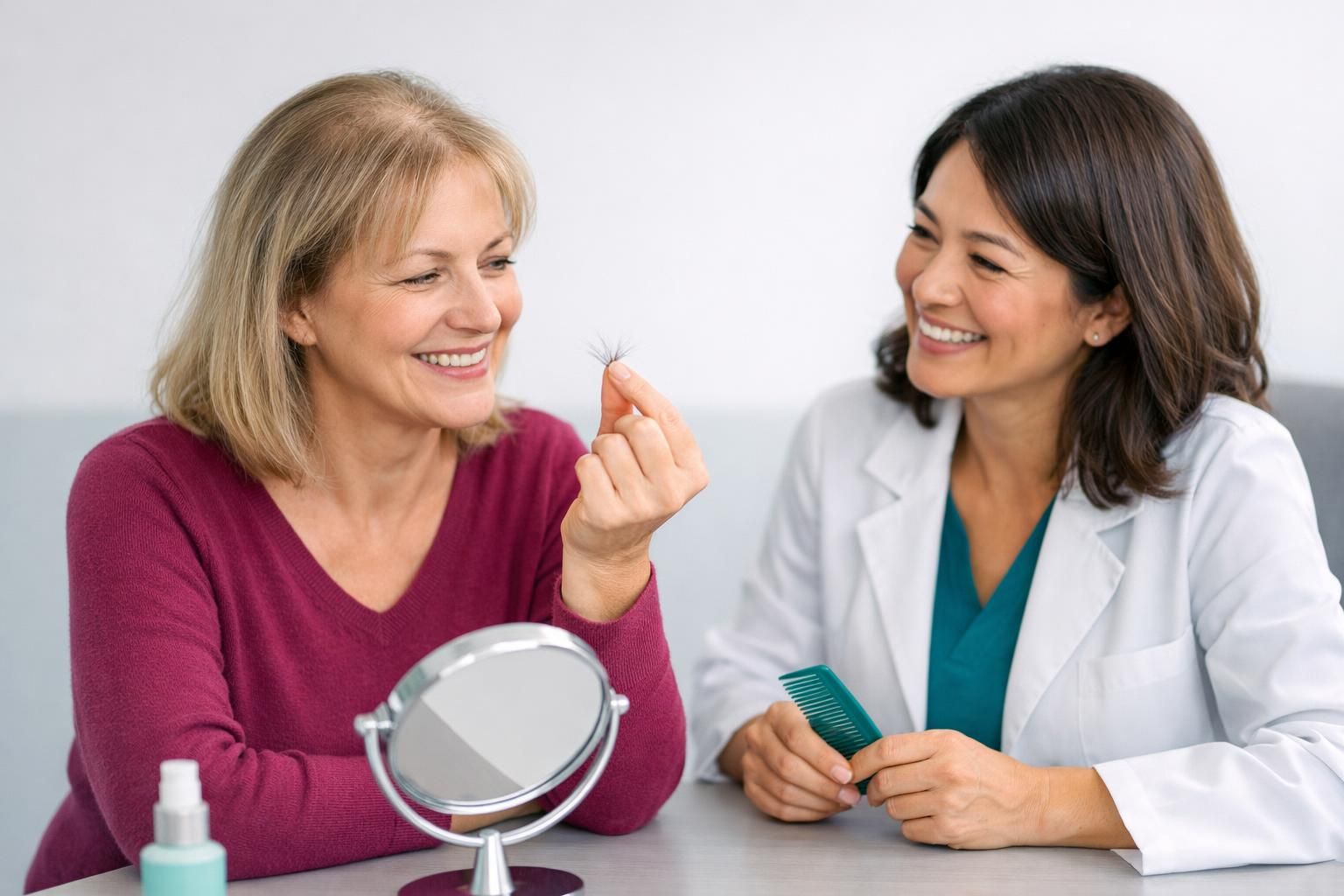
If thinning is progressing, consider an evaluation and targeted options. A clinician can help determine whether this is pattern thinning, stress-related shedding, inflammation, or another cause, and may recommend lab work when symptoms suggest deficiencies or endocrine issues.
Depending on the cause, options may include topical treatments that support cycling, oral medications for hormone-related thinning, or procedures that improve the scalp environment. Treating scalp conditions like dermatitis or psoriasis can also reduce shedding and discomfort. The goal is to match treatment to the pattern and trigger rather than treating every type of hair loss the same way.
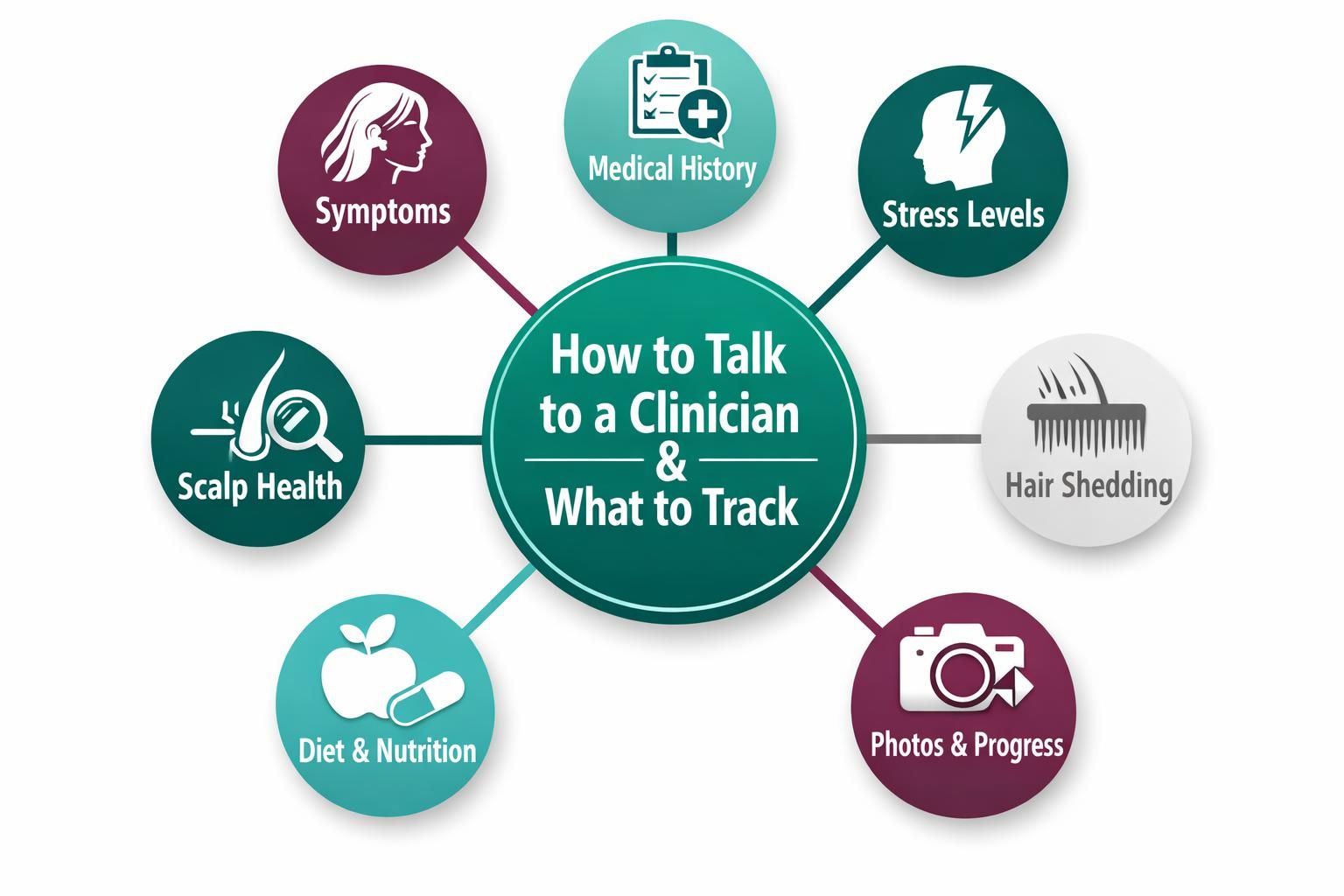
How to talk to a clinician and what to track
Visits are more productive with a clear timeline. Note when you first noticed changes, whether shedding is constant or cyclical, and whether the onset followed illness, major stress, diet changes, or medication adjustments.
Tracking can also reduce anxiety. Use monthly photos and brief notes instead of daily mirror checks. Bring your hair routine, including chemical services and styling habits, because breakage and traction can mimic true thinning.
Helpful details to bring to your appointment
A clinician will usually ask about pattern, duration, and related symptoms. Prepare the basics:
- Where thinning is most noticeable: part line, crown, temples, hairline, or diffuse all over
- Whether shedding increased, and when it started
- Scalp symptoms: itching, burning, flaking, tenderness, sores
- Recent changes: illness, surgery, major stress, dieting, new supplements, new prescriptions
- Menstrual or hormonal changes, including postpartum history and midlife transition symptoms
- Family history of thinning in close relatives
Realistic expectations and timelines
Hair improvement is slow because follicles need time to shift into growth and produce a visible hair fiber. Early progress may look like less shedding before you see thicker coverage. Density changes usually build gradually as more hairs re-enter growth and average strand diameter improves.
Aim for practical wins: slowing progression, improving coverage, and expanding styling options. Lighting, contrast between hair and scalp, and styling can also change how thinness appears. The best plans combine biology with smart cosmetic choices so you can feel better now while longer-term changes develop.
Conclusion
Aging and hair loss often go together, but the story is rarely as simple as “nothing can be done.” Some changes are expected, like slightly slower growth, finer strands, and gradual density shifts. Others, such as sudden shedding, scalp inflammation, or rapid thinning, deserve a closer look because they may reflect treatable triggers. Start by protecting the hair you have with gentle habits, then track your pattern and symptoms so you can make informed choices. If changes are persistent or concerning, bring your timeline and photos to a clinician to discuss options and build a plan you can stick with for the long term.