The erbium laser healing process can feel intimidating if you have never experienced laser resurfacing before. Knowing what typically happens each day can help you plan time off, adjust your skincare routine, and stay calm as your skin changes. In this guide, you will learn what erbium laser resurfacing is, how it works on the skin, what an erbium laser day by day recovery often looks like, and practical ways to handle erbium laser downtime. You will also find guidance on the best makeup after laser resurfacing, including when it is usually safe to apply and how to avoid irritating freshly renewed skin.
- Expect redness, warmth, and swelling first, followed by dryness and flaking
- Keep the skin moisturized and protected while it heals
- Avoid picking at scabs or peeling skin to reduce irritation and uneven texture
- Plan for downtime, especially in the first week, and keep your schedule flexible
- Reintroduce makeup only when the skin is closed and no longer actively peeling
Understanding the Erbium Laser Healing Process
Erbium laser recovery depends on treatment depth, your skin sensitivity, and aftercare. Some people have a mild sunburn-like phase and peel quickly, while others have more swelling and visible shedding. The goal is the same: protect the rebuilding skin barrier and avoid triggers that prolong irritation.
Healing often follows three phases: initial reaction (redness, heat, swelling), repair (tightness, dryness, crusting), and renewal (peeling, smoother texture, lingering pinkness). Understanding these phases helps you recognize what is typical and when to check in with your provider.
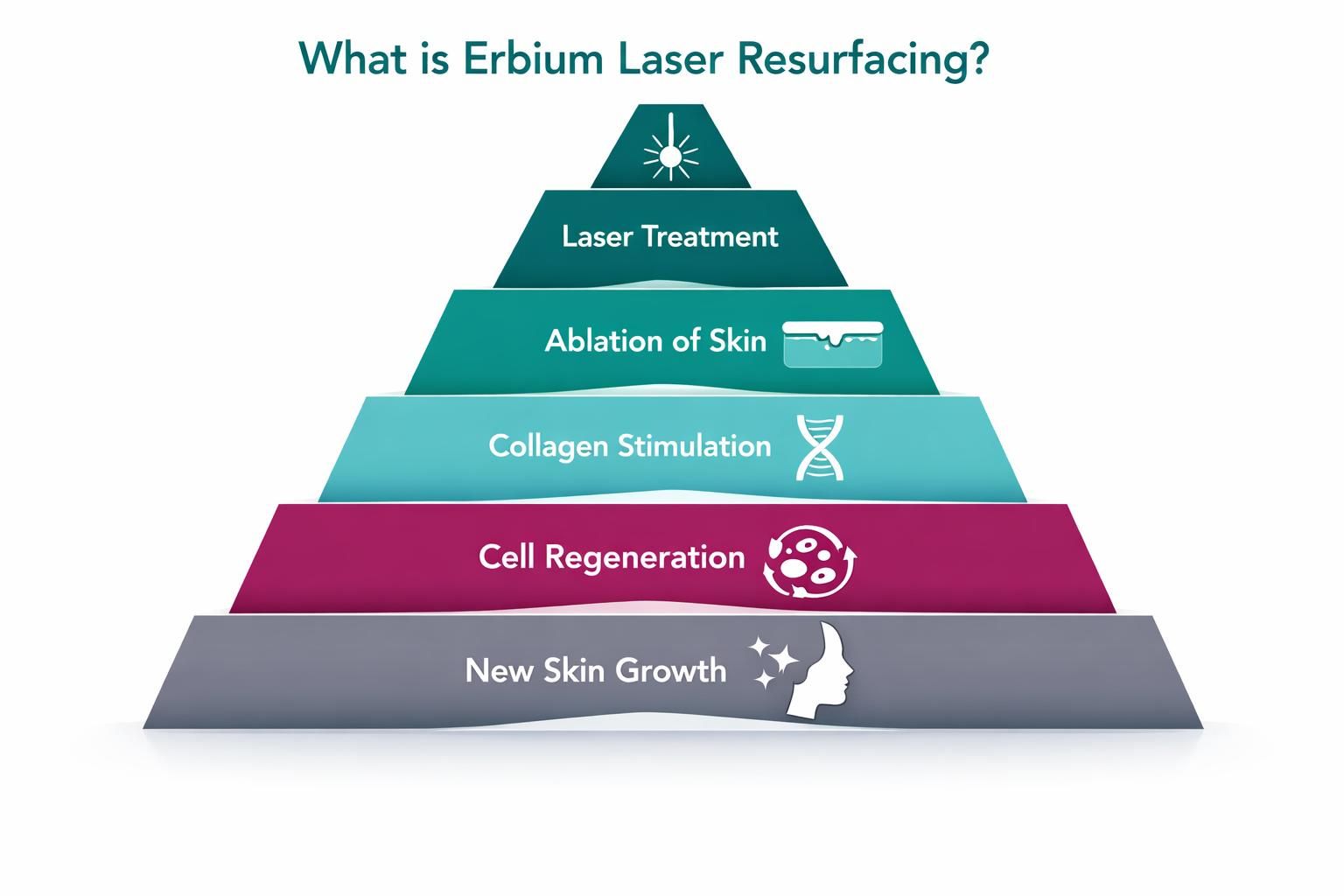
What is Erbium Laser Resurfacing?
Erbium laser resurfacing improves tone and texture by removing thin layers of skin in a controlled way. It is often used for uneven texture, fine lines, dullness, and some sun damage. Treatments can be superficial or deeper resurfacing, which affects recovery time and how noticeable peeling is.
Because erbium lasers are precise, intensity can be adjusted for specific areas like around the mouth or eyes. Aftercare matters because newly treated skin is more vulnerable to dryness, friction, and sun exposure.
How Does Erbium Laser Work on the Skin?
An erbium laser targets water in the skin. The energy is absorbed by water, vaporizing tiny amounts of tissue and triggering repair. As skin regenerates, collagen remodeling can gradually improve firmness and evenness.
Right after treatment, the skin barrier is compromised, which is why gentle cleansing, frequent moisturizing, and strict sun avoidance are emphasized. Products you normally tolerate, such as fragranced cleansers or strong actives, may sting and can prolong redness.
Day-by-Day Recovery Timeline
A day-by-day guide helps, but healing varies by person and by facial area. Deeper treatments typically cause more swelling, more shedding, and longer-lasting pinkness. The first week is usually the most visible recovery period, followed by a slower phase where sensitivity and flushing can linger.
Day 1: Immediate Post-Procedure
Day 1 is often the most intense for heat and redness, similar to a strong sunburn with tightness or stinging. Swelling can start quickly, especially around the eyes. Your provider may advise frequent application of an occlusive ointment or post-procedure balm to prevent drying.
Keep everything simple: avoid touching, hot showers, and anything that increases facial heat. If cleansing is allowed, use cool to lukewarm water and a light touch, then reapply the recommended ointment or moisturizer.
Day 2-3: Initial Healing Phase
Days 2 and 3 may bring peak swelling and continued redness, though burning often eases. Skin can look shiny from ointment and feel tight. You may notice a bronze or darker cast as superficial layers prepare to shed.
Itching is common, but scratching can disrupt healing. Moisturize consistently and cleanse only as directed. If you go outside, use physical sun protection (hat, shade) and avoid direct sun. For many, this is the most noticeable part of erbium laser downtime.
Day 4-5: Scabbing and Shedding Begins
By days 4 and 5, flaking, crusting, or small scabs may appear depending on depth. Peeling is often uneven, with some areas shedding sooner than others. Let skin shed naturally; picking can increase irritation and uneven texture.
Keep your routine minimal. If your provider approves, you may switch from heavy ointment to a gentle moisturizer once skin is no longer raw. Avoid scrubs, exfoliating tools, acids, and any attempt to speed up peeling.
Day 6-7: Skin Rejuvenation and Peeling
Days 6 and 7 are often a turning point as peeling slows and newer skin is revealed. The skin may look smoother but still pink, with lingering dryness. Areas with more movement, like around the mouth, can flake longer.
Even if you look better, barrier repair is still in progress. Continue hydration and sun protection. If you resume exercise, start light and watch for flushing, which can temporarily intensify redness. This is also when many people consider makeup, but only if the surface is fully closed.
Tips for Managing Downtime
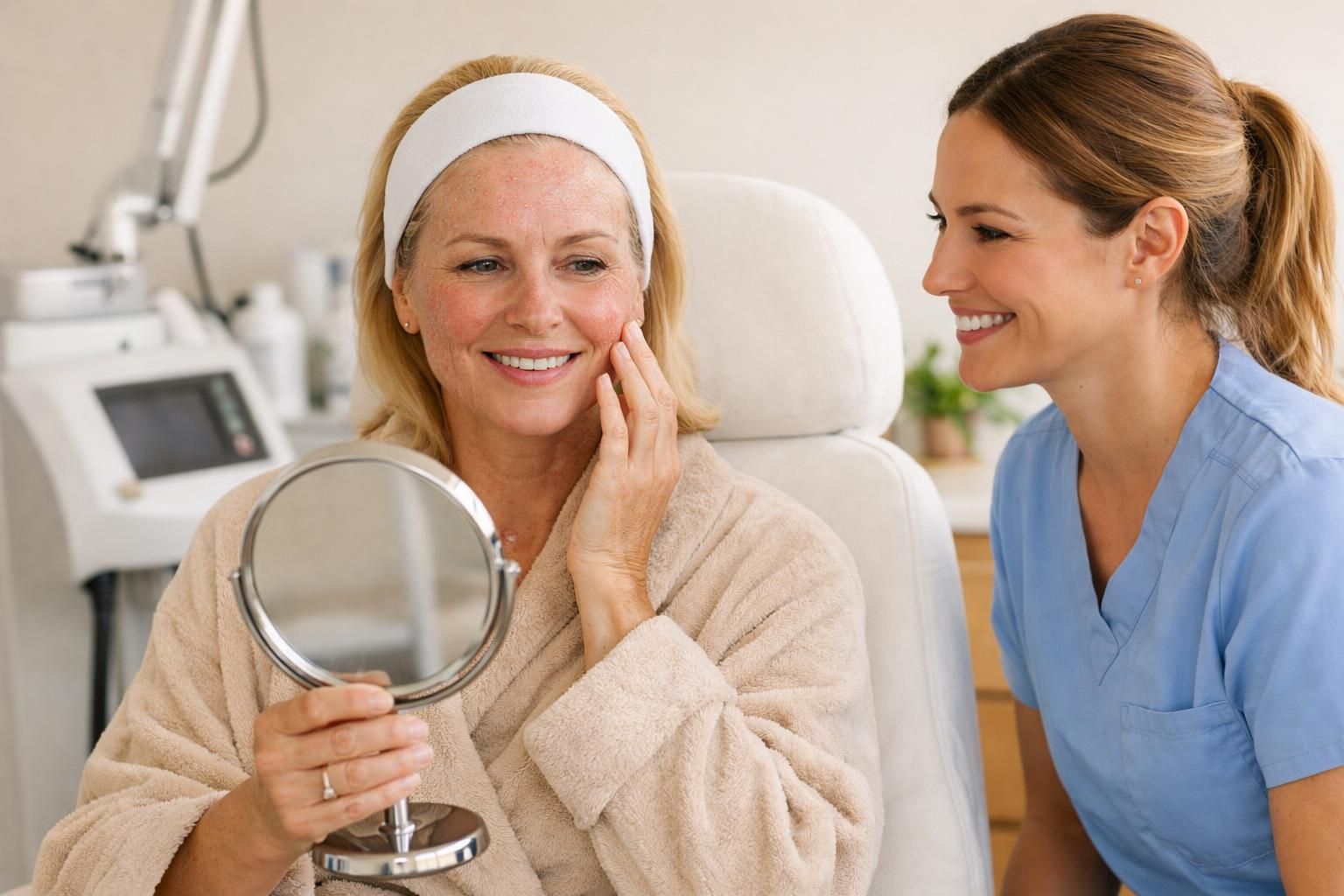
Planning ahead helps. Have gentle products ready, reduce commitments for the first week, and set up basics like clean pillowcases and a way to sleep slightly elevated. Avoid triggers that prolong irritation, especially heat and friction. Keep showers lukewarm, skip steam rooms and hot yoga, and avoid anything that rubs (tight masks, helmets, rough towels). When unsure, choose the gentlest option.
Managing Discomfort and Swelling
Discomfort is typically managed with rest, cool compresses, and your provider’s aftercare plan. Swelling often improves with head elevation during sleep. Some people also do better avoiding alcohol and salty meals.
Helpful habits during early recovery include:
- Use cool to lukewarm water when cleansing if permitted
- Apply approved moisturizer or ointment as instructed
- Sleep on your back with your head slightly elevated
- Avoid strenuous exercise until cleared
- Keep hands, pets, and phone screens away from healing skin
If pain is severe, swelling worsens quickly, or you notice unusual drainage, contact your provider.
Recommended Skincare Products During Recovery
Choose products that support the skin barrier and avoid irritants. For many, the simplest routine is a gentle cleanser, a bland moisturizer or healing ointment, and sunscreen once your provider approves. Fragrance-free, minimal-ingredient formulas are often best during this period.
Avoid active ingredients until cleared, including retinoids, exfoliating acids, strong vitamin C, and acne treatments that sting. Prioritize moisture and protection while your skin is vulnerable.
Best Makeup After Laser Resurfacing
Makeup can help you feel more comfortable in public, but applying it too soon can irritate healing skin, trap bacteria, and make peeling more obvious. Waiting until the surface is intact usually gives a smoother finish and reduces sensitivity.
When you return to makeup, keep it simple. Choose hydrating formulas and remove them gently without rubbing. Use clean brushes and sponges, since freshly treated skin can be more reactive.
When Can You Start Wearing Makeup?
Most people should wait until the skin is fully re-epithelialized, meaning it has formed a new, continuous surface with no open areas and minimal active peeling. For some, this may be around the end of the first week; for others, it can take longer depending on treatment depth and individual healing. Your provider’s guidance should determine the timing.