The erbium laser healing process can feel unpredictable if you do not know what is normal and what is not. Right after treatment, your skin may look intensely pink or red, feel warm, and react strongly to even gentle products. Over the next week, you will typically move through stages like swelling, dryness, light crusting, and peeling as fresh skin replaces the treated surface. This guide walks you through an erbium laser day by day recovery timeline, explains what the laser does to the skin, and shares practical ways to handle erbium laser downtime. You will also learn how to choose the best makeup after laser resurfacing, including when it is usually safer to start and how to apply it without irritating healing skin.
- Expect a progression from redness and swelling to dryness, shedding, and smoother-looking skin
- Keeping the skin moist and protected is often more helpful than using many active products
- Sun protection and gentle cleansing are key during erbium laser downtime
- Picking fragrance-free, non-irritating makeup can reduce setbacks once you are cleared to wear it
- Plan your schedule around visible peeling and the need for extra hydration
Understanding the Erbium Laser Healing Process
Erbium laser resurfacing is commonly chosen to improve texture concerns such as fine lines, uneven tone, and roughness. Because it targets water in the skin, it can remove thin layers with precision, which is why many people experience a defined healing pattern over several days. Still, the exact recovery can vary depending on treatment depth, the area treated, and individual sensitivity.
A useful way to think about the erbium laser healing process is as controlled injury followed by controlled repair. The goal is to encourage fresh skin turnover and remodeling while minimizing unnecessary irritation. Knowing the “why” behind each stage makes it easier to follow aftercare instructions and avoid choices that slow healing.
What is Erbium Laser Resurfacing?
Erbium laser resurfacing is a procedure that uses a laser to resurface the skin by removing very thin layers in a targeted way. It can be performed in more superficial or deeper settings, which influences how long redness and peeling last. Some treatments focus on a lighter refresh, while others are designed to address more noticeable texture changes.
During healing, you may see redness, swelling, crusting, and peeling, followed by gradually improving smoothness. Even when the surface looks better, the skin can remain more reactive for a while. That is why gentle care and sun protection are typically emphasized well beyond the first week.
How Does Erbium Laser Work on the Skin?
Erbium lasers are often described as water-targeting lasers, meaning the energy is absorbed by water within the skin. This absorption allows the laser to vaporize or remove controlled layers while also delivering heat that can stimulate repair responses. The balance of removal and heat is one reason the recovery has both visible peeling and longer-term calming.
After treatment, the skin barrier is temporarily compromised. Your body responds by forming a protective layer, shedding damaged surface cells, and rebuilding a healthier barrier. This is why the same product that felt fine before can sting after treatment, and why simple routines are usually recommended until the barrier feels stable again.
Day-by-Day Recovery Timeline
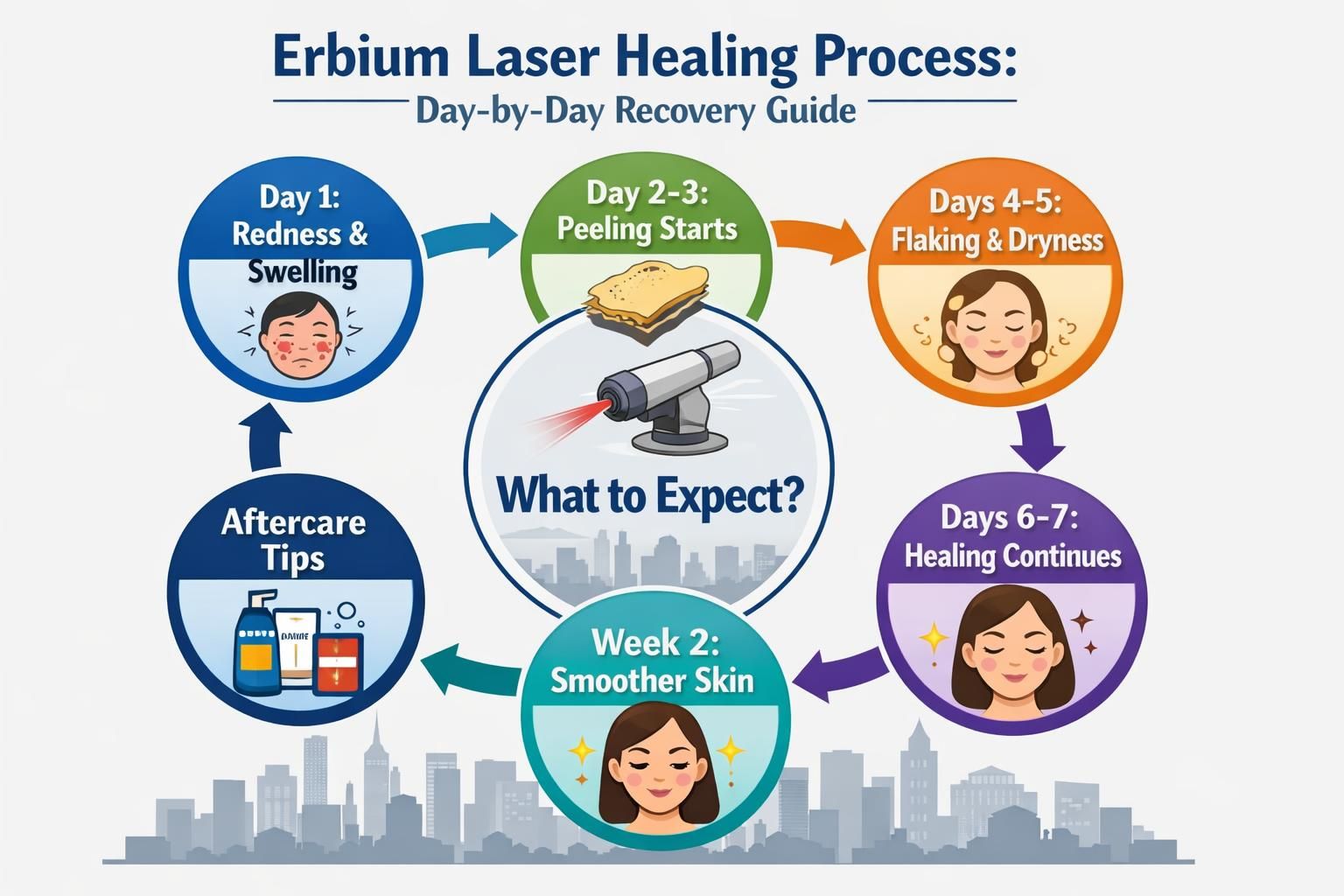
An erbium laser day by day recovery can help you plan social downtime and set expectations for what your skin may look and feel like. The early days tend to be the most noticeable, with redness and swelling, followed by dryness and shedding. Many people find the middle of the first week is when texture looks the roughest, right before it starts to smooth out.
Your clinician’s instructions should always come first, especially regarding cleansing frequency, ointments, and when you can restart specific ingredients. The outline below reflects common stages, not a guarantee. If symptoms feel extreme or worsen quickly, it is important to check in with your provider.
Day 1: Immediate Post-Procedure
On the first day, the skin often appears bright pink to red and feels warm, tight, or burning, similar to a strong sunburn. Swelling is common, especially around the eyes and in areas where skin is thinner. Your provider may recommend gentle cooling, specific ointments, or a protective dressing depending on how the procedure was done.
Focus on supporting the skin barrier. Cleanse only as directed, avoid rubbing, and keep the skin consistently hydrated with the products you were told to use. Avoid heat exposure such as hot showers, steam, and intense exercise, since these can increase flushing and swelling.
Day 2-3: Initial Healing Phase
Days two and three often bring peak swelling and increased tightness, followed by noticeable dryness. Redness may stay strong, but some people see it shift from bright red to a deeper pink. The skin can feel itchy as it begins to repair, and it may look shiny if you are using an occlusive ointment.
This is a key period for gentle cleansing and keeping the surface protected. Try not to pick at any dry edges. Instead, let them soften with the recommended moisturizer or ointment. If you are unsure whether you should be using a richer layer or a lighter moisturizer, follow the plan given for your specific erbium laser downtime profile.
Day 4-5: Scabbing and Shedding Begins
Around days four and five, many people notice small areas of crusting, bronzing, or tiny scabs, particularly in spots treated more aggressively. Flaking and shedding often begins, and texture may look worse before it looks better. This is typically the stage when people are most tempted to exfoliate or “help” the peeling along.
Avoid manual exfoliation and harsh washcloths. Peeling is part of the process, and pulling skin off early can increase irritation and prolong redness. Keep the skin moisturized, cleanse gently, and continue strict sun avoidance. If your provider allows it, a bland, fragrance-free moisturizer can help reduce visible flaking without disrupting the shedding process.
Day 6-7: Skin Rejuvenation and Peeling
By days six and seven, peeling often tapers off, and the skin may start to look smoother with a fresh, pink tone. Some dryness can linger, and sensitivity may still be present, especially with temperature changes or products that contain fragrance or strong actives. Even if you feel “back to normal,” the skin barrier is still rebuilding.
This is a good time to stay consistent rather than introduce new products quickly. Continue moisturizing and using sun protection. If you are eager to return to makeup, do so only when your provider says the surface is intact and there are no open or crusted areas. Rushing can lead to stinging, patchiness, or longer-lasting redness.
Tips for Managing Downtime
Planning for erbium laser downtime is as much about logistics as it is skincare. Expect that you may want to work from home or avoid events during the most visible peeling days. Stock your recovery essentials in advance so you are not scrambling for products when your skin is tender.
A simple approach usually works best: cleanse, hydrate, protect. During the first week, the goal is comfort and barrier support, not aggressive correction. Keep your routine consistent, avoid new actives, and follow your clinician’s guidance about when to resume products like retinoids, exfoliating acids, or vitamin C.
Managing Discomfort and Swelling
Discomfort is often manageable with gentle measures, but it helps to have a plan. Swelling can be reduced by sleeping slightly elevated and avoiding hot environments. If itching shows up, resist scratching and focus on moisture and cool compresses if permitted.
Helpful habits during recovery may include:
- Use cool, clean compresses if approved by your provider
- Sleep on a clean pillowcase and keep hair off the face
- Avoid heavy sweating, saunas, and very hot showers early on
- Do not pick at peeling skin or scabs
- Use sun protection exactly as directed and minimize direct sun exposure
Recommended Skincare Products During Recovery
Most recovery routines emphasize gentle, fragrance-free basics. Your provider may recommend specific post-procedure products, but the general idea is to avoid anything that stings, foams aggressively, or contains strong actives until healing is well underway.
Typically well-tolerated categories include a gentle cleanser, a bland moisturizer, and a protective ointment if instructed. Once you are cleared for sunscreen, choose one designed for sensitive skin and apply it gently without rubbing. If a product causes burning that does not fade quickly, stop and ask your provider what to use instead.
Best Makeup After Laser Resurfacing
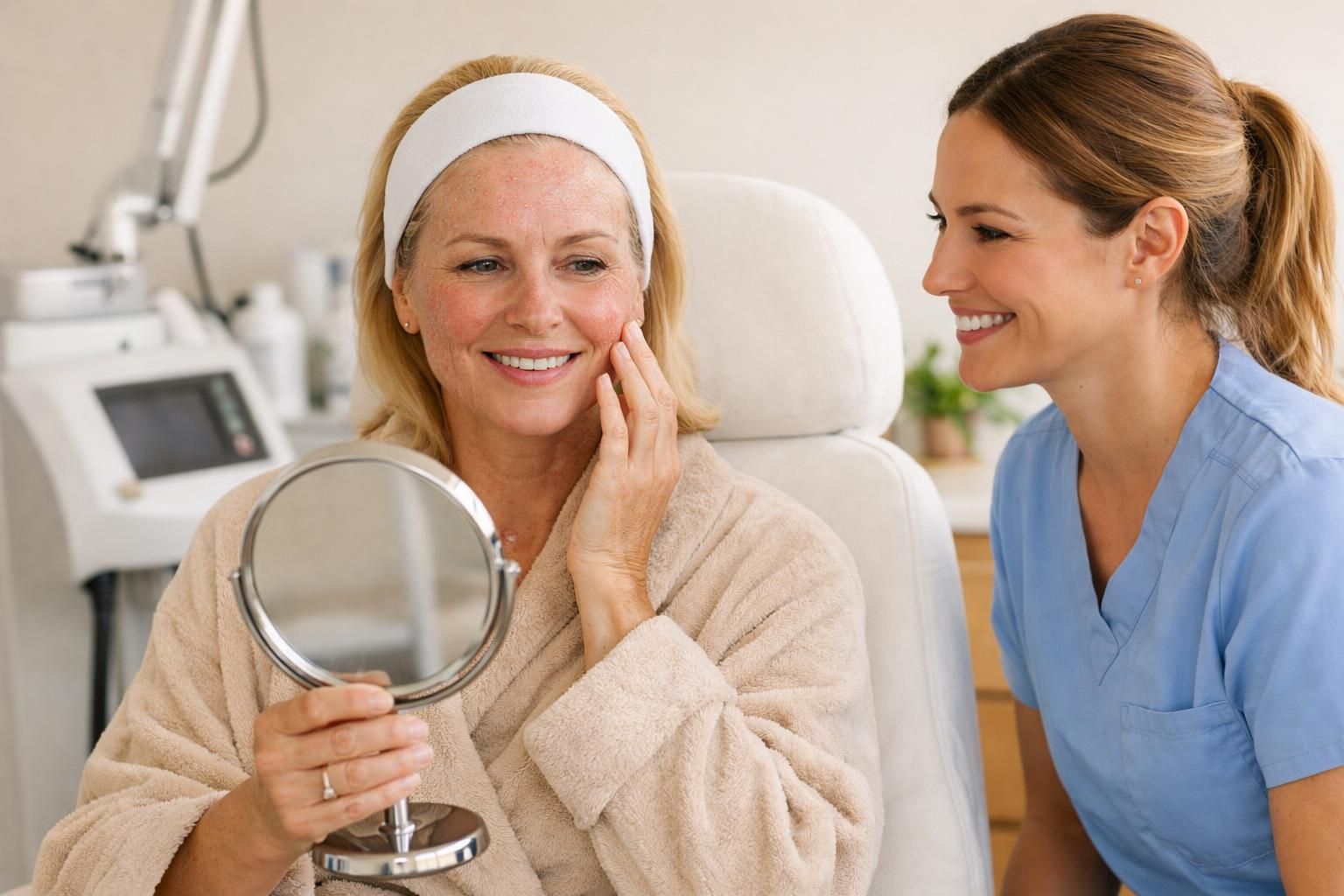
Choosing the best makeup after laser resurfacing is less about coverage and more about compatibility with healing skin. Freshly resurfaced skin can be dry, reactive, and prone to patchy application, especially while flaking is still present. The wrong formula can sting, cling to texture, or trigger redness.
When you return to makeup, prioritize breathability, minimal ingredients, and easy removal. Heavy layers can look cakey on recovering skin, and vigorous cleansing to remove long-wear products can create irritation. A lighter routine often looks better and feels better during the transition back to your normal look.
When Can You Start Wearing Makeup?
The right time depends on how quickly your skin has re-epithelialized, meaning the surface has fully closed and there are no raw or crusted areas. Many people wait until peeling has mostly stopped and the skin feels less tender, but your provider’s clearance matters most. If makeup stings on contact, it is a sign you may need more time.
Even after you start, consider wearing makeup for shorter periods at first and removing it gently. Avoid applying makeup over areas that are still actively shedding. If you have an event, plan a trial run at home to see how your skin tolerates the products and removal process.
Recommended Makeup Products for Sensitive Skin
During recovery, aim for simple, fragrance-free formulas that do not emphasize dryness. Lightweight complexion products often look more natural than full-coverage, matte foundations, which can grip flaky patches.
Look for options that tend to be easier on sensitive skin:
- Tinted moisturizer or light coverage foundation with a hydrating finish
- Cream concealer used sparingly only where needed
- Cream blush or balm-like formulas that blend without tugging
- Gentle, non-drying setting spray if you need longevity, used lightly
- Avoid strong exfoliating primers or alcohol-heavy products if they sting
Application Tips for a Flawless Finish
Technique matters as much as product choice. The goal is to minimize friction and avoid lifting any peeling edges. Start with clean, moisturized skin and give your moisturizer time to absorb before applying anything on top.
Use clean hands or a soft damp sponge rather than stiff brushes, and press product in instead of buffing. Apply thin layers and build only where needed. If your base looks patchy, add a small amount of moisturizer and re-press rather than piling on more foundation. At the end of the day, remove makeup with a gentle cleanser and lukewarm water, pat dry, and reapply your recovery moisturizer.
Conclusion: Preparing for the Best Results
The erbium laser healing process is usually a predictable sequence of redness, swelling, dryness, and peeling that gradually reveals smoother, fresher-looking skin. Planning your schedule around the most visible days, keeping your routine gentle, and protecting your skin from the sun can make erbium laser downtime feel far more manageable. When you are cleared to wear makeup, choose hydrating, fragrance-free options and use low-friction application methods to avoid setbacks. Your best next step is to follow your provider’s aftercare plan closely, ask what milestones signal safe product changes, and reintroduce actives only when your skin feels calm and fully intact.
Disclaimer
This article is for general informational purposes only and does not replace medical advice. Recovery can vary based on treatment depth, skin type, medical history, and aftercare. Always follow the instructions given by your qualified clinician, and contact them promptly if you experience worsening pain, spreading redness, unusual discharge, or any symptoms that concern you.