Dry Skin and Spots: Causes and Treatments
Quick Summary
- Dry skin occurs when the outer layer can’t retain moisture, weakening the barrier and increasing irritation and water loss.
- Symptoms include tightness after washing, flaking, rough texture, itching, redness, sensitivity, and fine cracks in colder months.
- Dry skin can indirectly cause spots by inflammation and uneven shedding, making clogged pores, bumps, and patchy redness more noticeable.
- Common triggers include low humidity, hot showers, harsh cleansers, over-exfoliation, frequent handwashing, and drying acne products like retinoids.
- Best approach: stabilize the barrier with gentle cleansing, thick fragrance-free moisturizer, sunscreen, then introduce acne actives slowly if needed.
Understanding Dry Skin
Dry skin is one of the most common skin complaints, but it is also one of the most misunderstood. When the barrier is stressed, your skin can feel tight and flaky while also developing red spots, bumps, or patchy areas that look like a separate problem.
In Bellevue, cooler weather, indoor heating, and frequent handwashing can intensify dryness and make “spots” more noticeable.
What is dry skin?
Dry skin happens when the outer layer of skin cannot hold onto moisture effectively. Instead of staying smooth and flexible, the surface becomes rough and reactive. This is often described as a weakened skin barrier, meaning your skin loses water more easily and lets irritants in more easily.
Common symptoms of dry skin
Dry skin can show up as:
- Tightness after washing
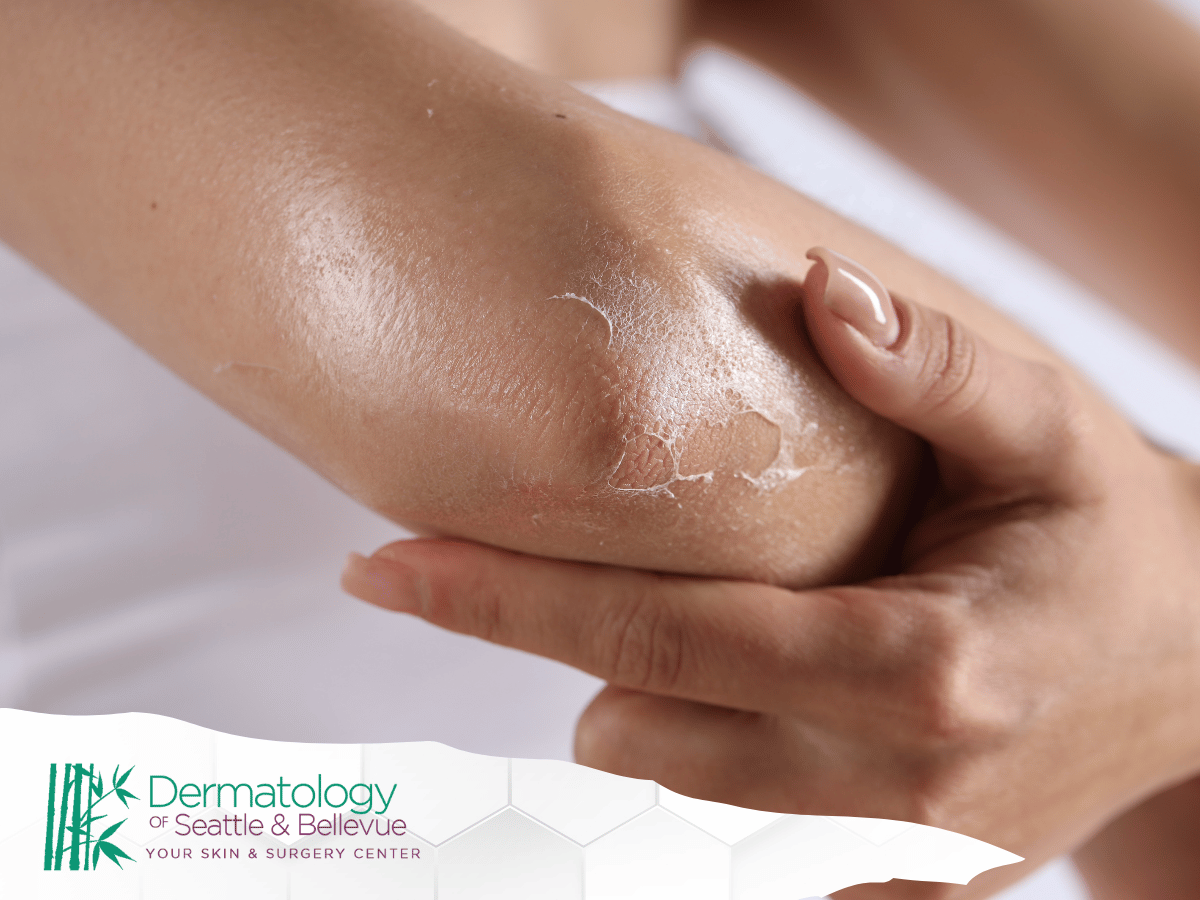
- Flaking or scaling
- Rough texture or “sandpaper” feel
- Itching, especially at night
- Redness or sensitivity
- Fine cracks, particularly on hands and around the mouth in colder months
When dryness is significant, even gentle products can sting, and small blemishes can look redder than usual.
Why does dry skin occur?
Dryness is usually triggered by a mix of environment, routine, and skin type. Common causes include low humidity, hot showers, harsh cleansers, over-exfoliation, and frequent use of drying acne products. Some people are also more prone to dryness due to genetics or underlying conditions like eczema or psoriasis.
Relationship Between Dry Skin and Spots
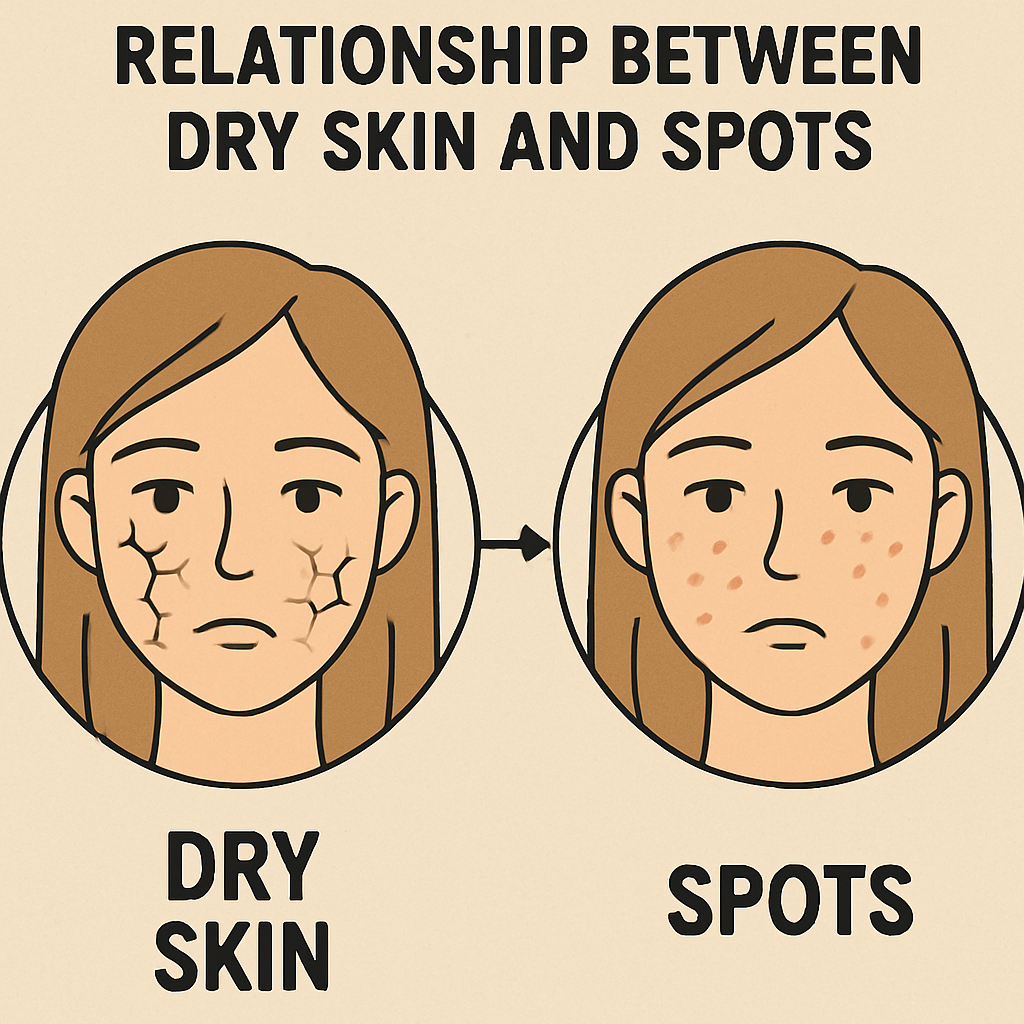
Dry skin and spots often appear together because the barrier is struggling. When your skin is dry, it does not shed evenly and it gets irritated more easily, which can create redness, bumps, and patchy texture.
This overlap is why people ask whether dryness is causing the spots or simply making another issue worse.
Can dry skin cause spots?
Can dry skin cause spots? Yes, but usually indirectly. Dry skin can create inflammation and uneven shedding that leads to clogged pores, rough patches, or irritated red areas that look like spots.
Dryness can also make existing issues look more dramatic, such as small pimples, follicle irritation, or mild dermatitis that becomes visibly patchy when the surface is dehydrated.
Does dry skin lead to acne?
Does dry skin cause acne? Dryness does not directly create acne the way excess oil and clogged pores do, but it can contribute to acne-like breakouts. This is why people ask can dry skin cause acne, does dry skin cause acne, and will dry skin cause pimples.
When skin gets over-dried, it may:
- Produce more oil to compensate
- Shed dead skin unevenly, which can trap oil in pores
- Become inflamed and reactive, which makes bumps more noticeable
The result is often dry skin breakouts that feel stubborn because the skin is irritated and clogged at the same time.
Understanding dry skin pimples
Dry skin pimples can mean different things:
- True acne lesions that appear worse because the surface is dehydrated
- Irritant bumps from harsh products, often mistaken for acne
- Eczema or dermatitis bumps that itch more than they hurt
A quick clue is how they feel. Acne is often tender or sore. Dermatitis tends to itch or burn, and the skin may sting when you apply moisturizer.
Causes of Dry Skin Breakouts
If you have dry skin and spots, it helps to think in categories: environment, internal factors, and product triggers. Most people have more than one contributor.
The good news is that fixing one or two key drivers often improves both dryness and breakouts quickly.
Environmental factors
Environmental triggers in Bellevue often include cold air, wind, and indoor heating, all of which lower humidity and pull moisture from the skin. Hot showers and long baths also strip protective oils.
Other common environmental factors:
- Frequent handwashing and sanitizers
- Chlorinated pools
- Sweating plus friction from hats, masks, or helmets
Internal factors
Internal factors can influence both dryness and spots, including:
- Genetics and naturally sensitive skin
- Eczema-prone or psoriasis-prone skin
- Stress and poor sleep, which can worsen inflammation
- Hormonal shifts that increase oil production while the surface stays dry
If dryness is widespread, new, and persistent, it is worth discussing with a clinician, especially if you have other symptoms like fatigue or unexplained changes in hair or nails.
Product irritations
Product irritation is one of the most common reasons someone suddenly develops dry skin and spots. A few common scenarios include:
- Starting retinoids, benzoyl peroxide, or salicylic acid too frequently
- Combining multiple exfoliants in the same week
- Using a strong foaming cleanser that leaves skin tight
- Using fragranced products or essential oils on sensitive skin
This cycle often looks like “dry skin pimples” because the barrier is inflamed while pores are also getting congested.
Treatment Options for Dry Skin and Spots
The best approach is usually to stabilize the barrier first, then treat the spots in a way your skin can tolerate. If you try to “attack” spots aggressively while your skin is dry, you often end up with more irritation and slower results.
If symptoms are severe, spreading, or painful, professional evaluation can save time and prevent weeks of trial-and-error.
Over-the-counter treatments
A simple OTC plan that helps most people:
- Gentle, fragrance-free cleanser (often once daily at night)
- Thick, fragrance-free moisturizer twice daily, especially after washing
- Daily sunscreen, because UV exposure worsens inflammation and slows recovery
If acne is part of the picture, introduce acne products slowly. For example, use an acne active only a few nights per week at first. If your skin burns, flakes heavily, or gets tight, back off and rebuild the barrier before escalating.
Home remedies
Home strategies work best when they reduce irritation:
- Keep showers short and lukewarm
- Moisturize within a few minutes of bathing
- Use a humidifier during colder months
- Switch to fragrance-free laundry detergent
- Avoid scrubs and aggressive exfoliation until skin calms down
If you suspect a fungal infection like ringworm, avoid self-treating with steroid creams without guidance. Some rashes can temporarily look better while the underlying infection continues.
Professional treatments
A dermatologist can confirm whether dry skin and spots are from eczema, psoriasis, acne, contact dermatitis, or another condition. Treatment may include prescription anti-inflammatory creams, medicated antifungals if appropriate, or a customized acne plan that does not destroy the barrier.
If you are asking when should I see a dermatologist for dry skin and spots, a good rule is: go sooner if it is spreading, not improving after a couple of weeks of gentle care, or if the diagnosis is unclear.
Prevention Strategies
Once your skin calms down, prevention is mainly about consistency. The biggest flares happen when routines swing between over-treatment and doing nothing.
A stable baseline routine reduces how often spots return and keeps dryness from building back up.
Skincare routine tips
Helpful prevention habits:
- Keep cleansing gentle and avoid very hot water
- Moisturize consistently, not only when you feel dry
- Add new products one at a time
- Do not stack multiple exfoliants or acne actives together
- Patch test if you are prone to sensitivity
Lifestyle adjustments
Lifestyle does not replace skincare, but it supports barrier stability:
- Wear gloves for cleaning or cold weather exposure
- Change out sweaty clothing promptly to reduce irritation
- Prioritize sleep and stress reduction, which can influence inflammation
- Avoid picking at spots, which increases redness and lingering discoloration
Importance of hydration
Hydration matters, but drinking more water alone rarely fixes dry skin. What helps most is reducing water loss at the surface with consistent moisturizing. Still, adequate fluid intake, balanced meals, and enough healthy fats can support overall skin function.
Conclusion
Dry skin and spots often happen together because a stressed barrier makes skin more reactive, more inflamed, and sometimes more prone to clogged pores. The most effective approach is to repair the barrier first with gentle cleansing and consistent moisturizing, then treat spots with products your skin can tolerate.
If the issue persists, spreads, becomes painful, or you are unsure whether it is eczema, psoriasis, fungal infection, or acne, a dermatology visit can clarify the cause and speed up improvement.
Disclaimer
This article is for general educational purposes only and does not provide medical advice, diagnosis, or treatment. Seek evaluation from a qualified healthcare professional if you have worsening rash, signs of infection, severe itching, widespread scaling, or dry skin and spots that do not improve with basic at-home care.