Is Cortizone-10 Good for Eczema?
Quick Summary
- Cortizone-10 (1% hydrocortisone) can help mild, localized eczema flares by reducing inflammation, itching, and redness short-term.
- It doesn’t cure eczema or rebuild the skin barrier; best results come with daily moisturizing and trigger control.
- Many notice itch relief within hours and redness improvement in 1–2 days; no improvement after several days suggests reassessment.
- OTC labels advise short-term use, often about 7 days; avoid large areas, thin skin sites, or children without clinician guidance.
- If flares are widespread, thickened, oozing, or frequently returning, OTC hydrocortisone may be insufficient and dermatology guidance is reasonable.
If you are dealing with eczema in Bellevue, it is tempting to grab the closest itch cream and hope for fast relief. Cortizone-10 is a common go-to because it is easy to find. The real question is: is cortizone 10 good for eczema, or does it mainly calm symptoms for a short window?
Cortizone-10 can be a reasonable option for mild, localized eczema flares, especially when itching and redness are the main issues. But it is not a complete eczema plan, and it is not strong enough for everyone. The best results usually come when you pair short-term anti-inflammatory treatment with daily barrier repair and trigger control.
What is Eczema?
Eczema is a group of inflammatory skin conditions that weaken the skin barrier and make the skin more reactive. The most common type is atopic dermatitis, but people also experience contact dermatitis, dyshidrotic eczema on the hands and feet, and other forms. Regardless of type, eczema often cycles through flares and calmer periods.
Typical eczema symptoms include:
- Itching that can range from mild to intense
- Redness and inflammation
- Dryness, scaling, or rough texture
- Cracking, oozing, or crusting during worse flares
- Thickened skin over time from chronic rubbing or scratching
Because the barrier is compromised, the skin loses moisture more easily and lets irritants in more easily. That is why “just stop scratching” rarely works without addressing inflammation and dryness.
Common Eczema Triggers
Common eczema triggers vary by person, but several patterns show up frequently. Identifying your top triggers is one of the fastest ways to reduce flares.
Common triggers include:
- Dry air, indoor heating, and frequent hot showers
- Harsh soaps, fragranced products, and essential oils
- Laundry detergents, fabric softeners, and dryer sheets
- Sweating, friction, and tight clothing
- Stress and poor sleep
- Seasonal allergens and pet dander for some people
- Skin infections or colonization that worsens inflammation
In the Pacific Northwest, many people notice flares during colder months when indoor heat dries the air, or during seasonal allergy peaks. If your eczema flares after a new product, jewelry, or workplace exposure, contact dermatitis should be considered.
Cortizone-10: A Breakdown
Cortizone-10 is often discussed as a cortizone eczema cream, but the “cortisone” label can be confusing. The product is an over-the-counter hydrocortisone preparation, and hydrocortisone is a low-potency topical steroid.
What is Cortizone-10?
Cortizone-10 is a brand name commonly used for 1% hydrocortisone cream and related formulas. Hydrocortisone 1% is considered one of the mildest topical steroids available. It is designed for short-term relief of inflammation and itching from minor skin irritation, insect bites, and mild dermatitis, including mild eczema.
Different versions may include added moisturizers or anti-itch ingredients. Even if the label focuses on itch, hydrocortisone is doing anti-inflammatory work underneath.
How Does Cortizone-10 Work?
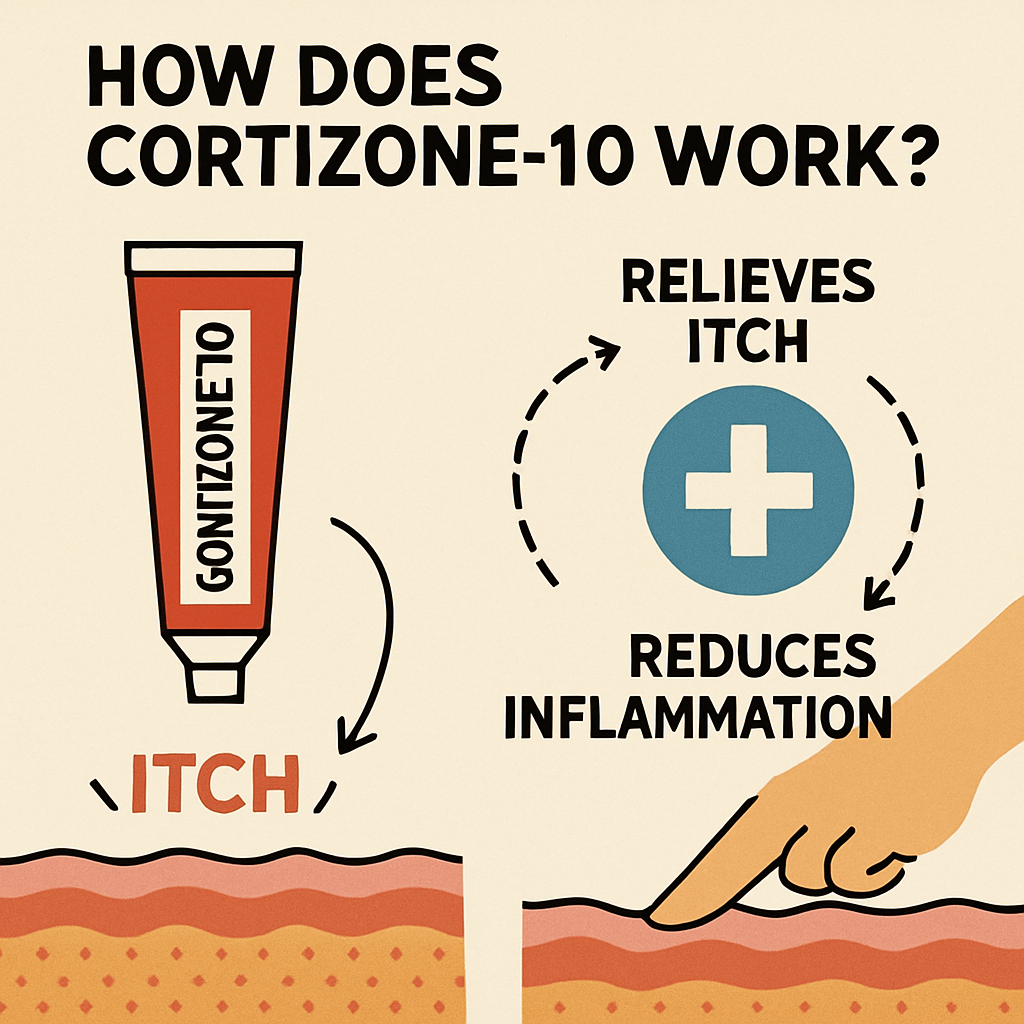
Hydrocortisone reduces inflammation in the skin. In eczema, inflammation drives itching, redness, and swelling. When you apply hydrocortisone, the skin’s inflammatory signals calm down, which can reduce symptoms and help the skin start repairing.
Cortizone-10 does not “cure” eczema or rebuild the barrier by itself. Think of it as a short-term tool that can help you break the itch-scratch cycle while you also moisturize consistently and remove triggers.
Effectiveness of Cortizone-10 for Eczema
So, is Cortizone-10 good for eczema? It depends on how severe the flare is, where it is located, and whether you are using it correctly.
Evidence Supporting Use of Cortizone-10
Low-potency topical steroids like hydrocortisone are widely used for mild eczema, especially in sensitive areas where stronger steroids may not be appropriate. For a small patch that is mildly inflamed, hydrocortisone can reduce itch and redness and make daily moisturizing more comfortable.
How long does it usually take Cortizone-10 to start working on eczema flare-ups? Many people notice some itch relief within hours, with visible improvement in redness over the next day or two. If nothing is improving after several days of correct use, the flare may be too strong for OTC hydrocortisone, the diagnosis may be different, or a trigger is still active.
Does Cortizone-10 treat eczema itself or only relieve symptoms like itching and redness? It treats inflammation, which is part of eczema, but it does not address the underlying tendency to flare. That is why it works best as a short-term bridge within a broader routine.
Expert Opinions
Most dermatology guidance treats OTC hydrocortisone as a first step for mild, limited flares, not a long-term maintenance strategy. Dermatologists tend to be cautious about frequent, prolonged use on delicate areas and emphasize correct application and duration.
When is over-the-counter hydrocortisone not strong enough for eczema anymore? Common signs include:
- Flares that cover larger areas or are rapidly spreading
- Significant thickening, cracking, or oozing
- Intense itching that keeps returning immediately when you stop
- Symptoms that are not improving after about a week of proper use
- Frequent relapses that suggest you need a stronger anti-inflammatory plan
How many days in a row is it safe to use Cortizone-10 on eczema patches? Many OTC labels recommend short-term use and advise seeing a clinician if symptoms persist beyond about 7 days. For recurrent or sensitive-area eczema, professional guidance is safer than repeating back-to-back courses.
Most people do best applying a thin layer to active patches once or twice daily, then stopping as soon as the skin is calm. Avoid covering large areas with OTC steroid cream without guidance. For eyelids, groin, or use in children, get clinician advice first because thin skin absorbs more.
Comparison with Other Topical Steroids
Topical steroids for eczema come in multiple strengths and vehicles. The “right” choice depends on body location, patient age, severity, and the skin’s thickness.
Common Topical Steroids for Eczema
Hydrocortisone 1% is low potency. Prescription options range from low to very high potency and may be formulated as a topical corticosteroid cream, lotion, solution, gel, or steroid ointment. Ointments are often preferred for very dry eczema because they seal in moisture and can sting less than creams on inflamed skin.
People also ask about steroid cream vs hydrocortisone. Hydrocortisone is a steroid cream option, just at the mild end. The bigger decision is potency and where it is being used, not whether it is a “real” steroid.
A practical dosing tip is fingertip units eczema guidance. One fingertip unit is the amount squeezed from the tip of an adult index finger to the first crease, and it typically covers about two adult palm-sized areas. Using too little is a common reason eczema does not improve, even with the right medication.
Advantages and Disadvantages
Advantages of Cortizone-10:
- Accessible and useful for mild, localized flares
- Lower risk of side effects compared with stronger topical steroids when used appropriately
- Helpful for short-term itch relief while you rebuild the barrier
Disadvantages and limits:
- Often not strong enough for moderate to severe eczema
- Can be overused as a quick fix without addressing common eczema triggers
- Not ideal for long-term daily use, especially on thin skin areas
Potential risks with any topical steroid include thinning of the skin, visible blood vessels, stretch marks, and flare rebound if misused. These effects are more likely with stronger products, longer use, and use on delicate areas.
If you are frequently relying on OTC hydrocortisone, it is usually a sign to step back and build a clearer plan: fragrance-free moisturizer twice daily, gentle cleansing, trigger reduction, and a prescription regimen if needed. In many cases, a clinician can recommend a more effective short course of a prescription topical corticosteroid and a maintenance strategy that reduces repeat flares.

Conclusion
Summary of Findings
Cortizone-10 can be good for eczema when the flare is mild and limited, and when your goal is to calm itching and redness quickly. It is less effective for thicker, widespread, or recurring eczema, and it does not replace barrier repair or trigger management. If you are not improving within about a week, or if flares keep returning, it is reasonable to seek dermatology guidance.
Recommendations for Eczema Relief
For many people in Bellevue, the most reliable approach combines short-term inflammation control with long-term skin care:
- Use a gentle, fragrance-free cleanser and keep showers lukewarm
- Moisturize at least twice daily and after bathing
- Identify and reduce common eczema triggers like fragranced products and harsh detergents
- Use Cortizone-10 sparingly for small flares, and stop once the patch clears
- Seek evaluation for frequent flares, suspected infection, or uncertain diagnosis
Disclaimer
This article is for general educational purposes only and does not provide medical advice, diagnosis, or treatment. Do not use hydrocortisone or other topical steroids on broken skin, infected skin, or near the eyes unless a clinician directs you to. If symptoms are severe, worsening, spreading, or not improving, or if eczema affects a young child, seek guidance from a qualified healthcare professional.