Quick Summary
- Adult male acne is driven by oil, clogged pores, inflammation, hormones, and shaving irritation; stress, diet, and products can worsen it.
- Start with a simple OTC routine: gentle cleanser, benzoyl peroxide or salicylic acid, oil-free moisturizer, and daily SPF.
- If acne is deep, painful, scarring, or widespread, prescriptions like retinoids, antibiotics, or isotretinoin may be needed.
- In-office options include chemical peels, light therapy, steroid injections for cysts, and microneedling/laser for scars after control.
- See a dermatologist if OTC fails after 2–3 months or acne affects confidence; tailored plans reduce trial-and-error and scarring risk.
Acne Treatment for Men
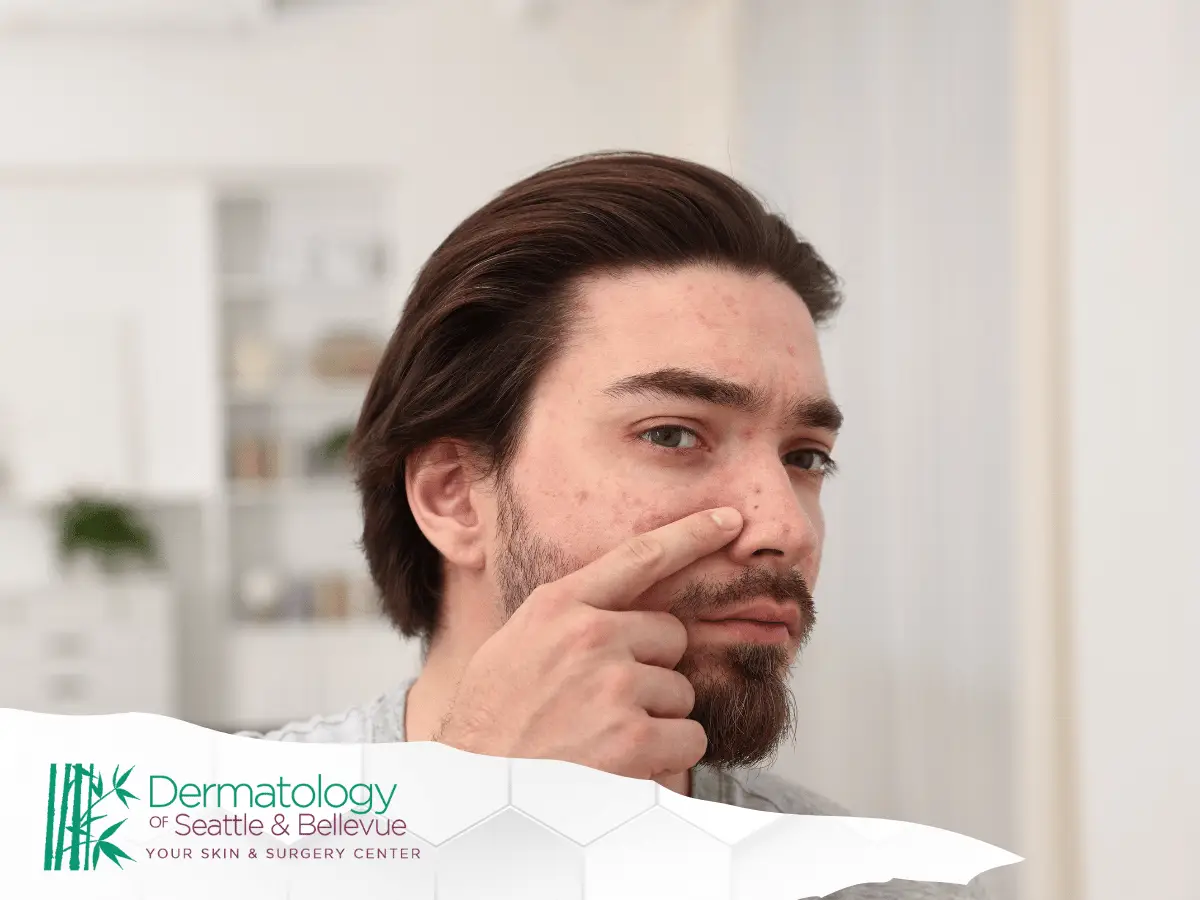
Breakouts aren’t just a teenage problem. A lot of guys in their 20s, 30s, 40s, and beyond quietly deal with stubborn acne on the face, back, chest, or scalp—and most of them are frustrated that “teen acne” tips don’t work anymore. The good news: there are targeted acne treatments for men that actually work once you understand what’s driving your breakouts and match treatments to your skin, lifestyle, and hormone profile.
This guide walks through why men get acne (even in their 30s and 40s), which treatments are worth your time and money, and when it’s time to see a dermatologist in Bellevue for a personalized plan.
Understanding Acne in Men
Acne in men is often driven by a combination of oil production, clogged pores, inflammation, and hormones—and the balance looks a little different than in women. Men typically have:
- Higher baseline levels of androgens (like testosterone), which stimulate oil glands
- Thicker, oilier skin, especially on the face, back, and chest
- Shaving and facial hair care routines that can irritate follicles and worsen breakouts
Genetics, stress, diet, and medications all play a role too. That’s why two men with the “same” acne on the surface may need very different treatment plans underneath.
Why Am I Getting Acne in My 30s, Male?
If you’re a guy in your 30s asking this, you’re far from alone. Adult male acne can show up even if you “grew out of” breakouts in your teens. Common reasons include:
- Hormonal shifts and stress – Big life changes, chronic stress, and poor sleep all affect hormones and inflammation, which can wake up quiet oil glands.
- Skin and hair products – Thick pomades, beard oils, or heavy moisturizers can clog pores along the hairline, jaw, or back (pomade acne and “bacne” are common).
- Gym and sports habits – Sweat, tight gear, and not showering soon after workouts can trap oil and bacteria against your skin.
- Shaving irritation – Ingrown hairs and razor bumps can blend with acne, especially on the neck and jawline.
- Medications or supplements – Some steroids, testosterone supplements, or other meds can trigger or worsen acne.
Adult male acne often sticks around until we address these underlying drivers—not just put a random “acne wash” on top.
Common Misconceptions About Male Acne
A few myths still keep a lot of men from getting real relief:
- “Acne is just dirty skin.”
- Over-scrubbing or using harsh soaps actually makes things worse by irritating the skin barrier. Acne is about oil, clogged pores, bacteria, and inflammation—not poor hygiene.
- “Strongest products = best results.”
- Using the highest-strength benzoyl peroxide or scrubs every day can lead to redness, burning, and more breakouts. Consistency beats aggression.
- “Only teenagers need treatment; mine will pass.”
- Adult male acne can last for years, and deep breakouts can leave permanent scars. If acne bothers you, it’s absolutely worth treating now.
- “Dermatology is for cosmetic stuff; I’ll just live with it.”
- Acne is a medical skin condition with real, evidence-based treatments. Getting professional help is not vanity—it’s smart health care.
Best Acne Treatment for Men
There isn’t one single “acne cure for men” that works for everyone. The best acne treatment for men depends on how deep the breakouts are, where they show up (face vs. back vs. scalp), and how sensitive your skin is. Most guys do best with a layered approach: a solid daily routine plus medication tailored to the type and severity of acne.
Over-the-Counter Products
For mild acne or as a foundation under prescription care, over-the-counter (OTC) options can do a lot of heavy lifting if you use them consistently:
- Gentle foaming cleanser – Look for “non-comedogenic” and “fragrance-free.” You want something that removes sweat and oil without stripping the skin. Wash twice daily and after workouts.
- Benzoyl peroxide (2.5–5%) – Great for inflamed pimples and “angry” red bumps. Use as a spot treatment or short-contact wash (especially on the chest and back). It kills acne-causing bacteria and reduces inflammation.
- Salicylic acid (0.5–2%) – A beta hydroxy acid that helps clear clogged pores and prevent blackheads. Often found in cleansers, pads, or toners.
- Oil-free, non-comedogenic moisturizer – Crucial even for oily skin. Keeping the barrier healthy makes your other acne treatments more effective and reduces irritation.
For many men in Bellevue with mild breakouts, a routine like this—gentle cleanser, targeted acne active, light moisturizer, and daily sunscreen—can significantly reduce pimples within a few weeks if used consistently.
Prescription Treatments
If OTC products aren’t cutting it—or if you have deeper, painful breakouts, scarring, or acne on the body—prescription options are usually the most effective acne treatment for men. Common categories include:
- Topical retinoids (tretinoin, adapalene, tazarotene)
- Help unclog pores, reduce inflammation, and prevent new breakouts.
- Also improve texture and early acne scarring over time.
- Topical antibiotics (clindamycin, others)
- Used short-term and often combined with benzoyl peroxide to cut down on bacterial resistance.
- Oral antibiotics
- Helpful for moderate to severe inflammatory acne, especially on the back or chest.
- Usually used for a few months, then transitioned to topicals for maintenance.
- Oral isotretinoin (Accutane)
- The most powerful option; can be close to a “reset” for severe, scarring, or stubborn acne.
- Requires careful monitoring and lab work, but for the right patient, it can be life-changing.
In a dermatology clinic, we tailor these to your skin type, shaving habits, sports, job, and how aggressive you want to be. A well-designed prescription plan is often the fastest, most reliable way to get adult male acne under control.
Natural Remedies
Many men are interested in more “natural” approaches—but it’s important to be realistic. Natural strategies can support clearer skin, but they rarely replace evidence-based medical treatment when acne is moderate or severe. That said, they can help:
- Gentle, non-irritating routines – Avoid harsh scrubs, alcohol-heavy toners, and DIY acids that damage the barrier.
- Zinc, niacinamide, and green tea – These ingredients (in topical or oral form) can reduce inflammation and oiliness for some people.
- Tea tree oil – Has mild antibacterial properties but can be irritating and should be diluted; patch-test first.
- Lifestyle adjustments – Better sleep, stress management, and balanced nutrition support your skin from the inside out.
Think of “natural” options as a supporting cast, not the lead actor. If you’re trying to handle persistent breakouts with home remedies alone and not seeing progress, it’s a sign to bring in medical-grade treatments rather than just adding more “natural” products on top.
Best Acne Removal for Men
“Acne removal” can mean two things: getting rid of active breakouts and dealing with marks or scars left behind. For most men, the best results come from combining professional treatments with a smart at-home routine.
Professional Treatments
In-office dermatology treatments can speed things up, especially for deeper or stubborn acne:
- Chemical peels
- Use controlled acids (like salicylic, glycolic, or Jessner’s solutions) to unclog pores and reduce oil.
- Help both active breakouts and early scars or dark marks.
- Blue-light or light-based therapies
- Target acne-causing bacteria and inflammation.
- Useful for men who can’t tolerate certain medications or want to avoid long-term antibiotics.
- Corticosteroid injections for cysts
- Tiny injections into deep, painful cysts to shrink them quickly.
- Great when you have a big “emergency” breakout before an event.
- Microneedling or laser for scars
- Not for active acne, but excellent once breakouts are under control.
- Can soften pitted scars and improve texture on the cheeks, temples, and jawline.
A dermatologist can help you prioritize—treating active acne first, then planning scar treatments once your skin has calmed down.
At-Home Solutions
There’s a lot you can do between office visits to support acne removal at home:
- Shower as soon as you can after workouts – Especially if you’re getting breakouts on the back, shoulders, or buttocks.
- Use a benzoyl peroxide wash in the shower – Apply to acne-prone areas, leave on for a minute or two, then rinse. (Use white towels—BP can bleach fabric.)
- Spot-treat early – At the first sign of a deep bump, apply a thin layer of benzoyl peroxide or a retinoid as directed instead of waiting until it’s huge and painful.
- Avoid picking or squeezing – This is the fastest way to turn a short-lived pimple into a permanent scar or dark mark.
If you’re doing all this consistently and still breaking out, it’s a sign you need prescription-level help rather than yet another over-the-counter experiment.
Best Acne Products for Guys
With so many products marketed as the “best acne treatment for men,” it’s easy to get overwhelmed—or to end up with a cabinet full of harsh products that don’t play well together. A simpler, targeted routine almost always wins.
Top Rated Products
Not brand names specifically, but categories most men benefit from:
- Gentle foaming cleanser – For normal to oily skin. Twice daily is usually enough.
- Acne treatment gel or cream – Containing benzoyl peroxide, salicylic acid, or a prescription retinoid.
- Lightweight moisturizer – Gel or lotion texture, labeled “oil-free” and “non-comedogenic.”
- Daily sunscreen (SPF 30+) – Preferably non-greasy and non-comedogenic to avoid clogging pores.
If your routine doesn’t include these basics yet, start here before chasing niche products or complicated 10-step systems.
Ingredients to Look For
When shopping for the best acne products for guys, scan the ingredient list for:
- Salicylic acid – Unclogs pores and helps prevent blackheads and whiteheads.
- Benzoyl peroxide – Kills acne-causing bacteria and reduces inflammation.
- Retinoids (adapalene OTC, tretinoin Rx) – Help prevent clogged pores and improve texture over time.
- Niacinamide – Calms redness, supports the skin barrier, and may help regulate oil.
- Zinc – In some formulations, helps reduce inflammation and shine.
Equally important is what to avoid: heavy fragrances, thick mineral oils, and products that leave a greasy film on the skin or hairline.
How to Choose the Right Product
A few practical tips for guys in Bellevue trying to build a routine that doesn’t feel like a second job:
- Match the strength to your skin – Sensitive skin? Start with lower percentages and use every other night. Tougher, oilier skin can often handle stronger formulas more frequently.
- Start with fewer products – Choose 3–4 core items and use them consistently for 6–8 weeks before deciding if they “don’t work.”
- Consider your beard and shaving routine – If you shave daily, avoid overly drying products that make the skin raw or irritated. Your dermatologist can adjust prescriptions around your shaving habits.
- Look at your whole body, not just your face – If your chest and back break out, you may need a wash or spray that’s easy to use in the shower.
If you feel lost in the skin-care aisle, bringing a photo of your current products to a dermatology visit can help us simplify and optimize your routine.
Lifestyle Changes for Clear Skin
Skincare products matter, but they’re not the whole story. Lifestyle factors can either fuel or calm inflammation and oil production, especially in men with hormonally sensitive acne.
Diet and Nutrition
There’s no single “acne diet,” but some patterns are worth paying attention to:
- High-glycemic foods (sugary drinks, white bread, pastries) can spike insulin and hormones that drive oil production.
- Excessive dairy, especially skim milk, has been linked to acne in some studies. Not everyone is sensitive, but it’s worth noticing patterns.
- Balanced meals with lean protein, healthy fats, and fiber-rich carbs can help keep blood sugar more stable.
You don’t need a perfect diet, but if you notice certain foods reliably trigger breakouts, reducing them may help your medical treatments work better.
Skincare Routine
A simple, consistent routine beats an intense but short-lived effort. Most men do well with:
- Morning:
- Gentle cleanser
- Acne treatment if prescribed (or as advised)
- Light moisturizer
- Sunscreen
- Evening:
- Cleanser (especially after workouts or outdoor work)
- Prescription retinoid or other night treatment
- Moisturizer if skin feels dry or tight
If that sounds like a lot, remember: you’re talking about 3–5 minutes, twice a day. The payoff is fewer painful breakouts and less risk of scarring.
Stress Management
Stress doesn’t cause acne out of nowhere, but it can absolutely make existing acne worse by affecting hormones, sleep, and habits (like touching your face more or skipping your routine). Helpful strategies include:
- Regular exercise (followed by a shower and change of clothes)
- Protecting your sleep schedule as much as possible
- Finding one or two ways to decompress—walking, lifting, hobbies, or time offline
You don’t have to be perfect here. But even small improvements in stress and sleep can make your acne treatments more effective.
Conclusion
Long-term Acne Management
There is no one-time “acne cure for men,” but there is long-term control. The men who do best over time usually:
- Use a simple, sustainable routine instead of constantly switching products
- Combine over-the-counter care with prescription treatment when needed
- Address lifestyle factors like sweat, shaving, and products on the hair and beard
- Treat scars only after active breakouts are under control
Clear skin isn’t about perfection; it’s about progress and preventing new damage.
When to Consult a Dermatologist
It’s time to see a dermatologist—especially if you’re in the Bellevue/Seattle area—if:
- Your acne is painful, cystic, or leaving scars
- You’ve tried OTC products for 2–3 months with little improvement
- You’re getting breakouts on the back, chest, or scalp that are hard to treat alone
- Acne is affecting your confidence at work, dating, or in the gym
A customized plan can save you years of trial and error—not to mention permanent scarring.
Disclaimer
This article is for educational purposes only and does not replace individual medical advice, diagnosis, or treatment. Acne treatments—including prescription medications and procedures—should be chosen with a licensed dermatologist who can review your full health history and examine your skin in person.